The Heath brothers write to help readers create change in their lives, communities, and organizations — which they realize is no easy task. To enable success, they focus our attention on the importance of engaging the rational and emotional parts of our brain.
The Perspective
The authors write from a purely psychological, secular perspective. They use the metaphor of the Rider (the rational mind), the Elephant (the emotional mind), and the Path as a framework for understanding how to direct change. “The world doesn’t always want what you want. You want to change how others are acting, but they get a vote … To change behaviour, you’ve got to direct the Rider, motivate the Elephant, and shape the Path” (p. 18).
The Key Points
The Heaths focus on three major points:
Direct the rider.
When navigating change, the Rider is that part of our brain that logically thinks through every possible scenario. To direct him, one shouldn’t focus on what isn’t working or what needs to be changed. Instead, we should prioritize the “bright spots.” By focusing on what already works well, individuals can reinforce productive behaviors or habits and minimize the mental exhaustion change brings.
The authors also highlight the importance of “scripting the critical moves” to give the Rider a clear next step. For example, it’s more effective to tell someone trying to get healthier, “Buy 1% milk,” rather than the vague instruction, “Shop for healthy food.” That level of specificity helps the Rider know exactly what steps to take instead of wasting mental energy deciding what to do. As they put it, the Rider needs to know where he is going, “… and for that to happen, you need a gut-smacking goal!” (p. 81).
Motivate the elephant.
The Elephant is an entirely different beast. To walk through change, we must convince the emotional part of our brain to move.
That’s easier said than done because the Elephant always looks for the easiest path — and change is seldom easy. Thus, the authors stress the importance of “shrinking the change” so we can gain confidence it can be accomplished. “If people are facing a daunting task [and change is always daunting to some!] and their instinct is to avoid it, you’ve got to break down the task … making it small enough that they can’t help but score a victory” (p. 134).
Shape the path.
Confusion kills momentum. For that reason, not only does a person need to know what to do and be motivated to do it, the situation itself must be primed for change.
That’s why the authors encourage readers to build systems that enable right behaviors. In charity work, that can be as simple as equipping your team with goal-setting training and clear processes, so they know exactly what it looks like to take a relational, empowering approach with clients.
Finally, the authors encourage readers to “rally the herd,” i.e., surround themselves with people doing what they want to do. As the old saying goes, there’s strength in numbers — so changing together is a great way to enhance the chance for success.
Details We Love
We appreciate the Heath brothers’ use of the Rider, Elephant, and Path to make the intricacies of change theory accessible. While many change theorists present a more academic framework, the Heaths understand the human aspect of change, highlighting the importance of its logical, emotional, and situational elements.
In poverty alleviation, pursuing organizational change — or working with a client to move closer to flourishing — often involves mid-course setbacks. Thus, it’s easy to feel defeated. That’s why we appreciate the authors’ emphasis on “engineering hope by shrinking the change.” Doing so (especially early on) makes interim change achievable, increases confidence, and makes long-term change more probable.
Finally, we appreciate the authors’ insight on reigning in emotions that may distract us from decisions based on best practices (something they call “pre-loading difficult decisions”).
As you try to make a switch, the hardest struggle will be to maintain your motivation, to keep your Elephant on the road. This puts a huge burden on your Rider, who has to rein in the Elephant when it strays … Even a simple checklist can make a difference [because it removes the Elephant, and it’s just the Rider and the Path], p. 223.
When ministry workers decide their processes beforehand and build them into their workflow, it becomes easier to stay aligned with effective charity principles.
Considerations
While Switch offers fantastic psychological guidance, as mentioned before it’s written from a purely secular perspective. Therefore, the authors don’t address the spiritual side of personal transformation. To put it another way, while psychological insight and strategic methodology is of some value in organizational change, deeper personal reformation involves a more profound shaping of the mind, body, and will. Repentance from sin and a reliance on the Holy Spirit are critical to that success.
As well, the authors struggle to balance the tension between “shaping the path” and effort and hardship as a means to build character. They comment that “what looks like a people problem is often a situation problem,” explaining that exhaustion is often mistaken for laziness. Yet, while it is helpful and essential to make change accessible and achievable, individuals shouldn’t be excused from taking ownership of their actions — past and present. Every person has a stewardship responsibility to exercise agency and care over what God has placed in our hands, whether that path is easy or difficult.
Who Should Read This?
If you’ve ever wondered why your “campaign” didn’t lead to the organizational change you hoped for …
If you’re a case manager wondering how to help clients “shrink the change” or “see the bright spots” …
If you’re a ministry leader trying to get your team or congregation on board with effective charity principles or a refined benevolence program …
Switch will prove helpful in establishing lasting cultural and programmatic change — and alongside the Scriptures — serve as a useful supplement to the personal change you hope to lead others to as you help them shape their path to a better future.
Switch can be purchased at Amazon.If you purchase the book through this link, True Charity will earn a small amount as an Amazon Associate.
https://www.truecharity.us/wp-content/uploads/2025/12/Switch-by-Chip-and-Dan-Heath-1.jpg8001200Bethany Herronhttps://www.truecharity.us/wp-content/uploads/2023/09/TC-logo-01.pngBethany Herron2025-12-12 10:54:312025-12-23 18:29:54How to Change Things When Change is Hard: A Bird’s Eye View on the Book Switch by Chip and Dan Heath
“It is not because we are hostile to benevolence … but because we think that a free benevolence will spread a more abundant blessing upon the land than an enforced benevolence molded into lifeless stone by the hand of legislation.”
With that quote from Thomas Chalmers, Dr. George Grant, Pastor Emeritus of Parish Presbyterian Church in Franklin, TN, prolific author, and advocate for the poor, begins his exploration of what’s wrong with poverty alleviation in America — and what we can do to fix it.
The Perspective
His perspective is three-fold: First, he believes, “Charity is integral to the fulfillment of the Great Commission. Evangelism is weakened without it. In fact, evangelism is not true evangelism without it” (p. 26).
Second, he contends, “In every way, shape and form imaginable, government welfare tends to obstruct compassion, short-circuit efficiency, and stymie progress. Government welfare is a hopeless mess” (p. 127).
And finally, he believes, “Free enterprise, ethically restrained by God’s standards, can transform poverty into productivity like nothing else on earth” (p. 139). And further, “Any kind of group or organization can operate a soup kitchen, open a shelter, give away cheese and butter, redistribute wealth, and provide a job service. But only the church can provide the things that the poor need most. Only the church — as she holds steadfastly to the Word revealed, the Word incarnate, and the Word made manifest — can transform poverty into productivity” (p. 151).
The Key Points
In the introduction, Dr. Grant points out 16th century Elizabethan Poor Laws reflected “a justice and compassion … administered not by an army of benevolent bureaucrats, but by a gracious citizenry” (p. xxi).
Unfortunately, “That old consensus died in 1964” (p. xxi). In its place, the War on Poverty brought about a number of unintended but inevitable consequences: It stopped the progress of America’s poor, contributed to the disintegration of poor families, provided incentives to avoid work, exacerbated government waste, reduced opportunities for the poor in the marketplace, and contributed to the demise of American industry.
From there, the book is divided into two major sections: Biblical Principles and Practical Application.
In the first, he affirms the inseparability of the gospel and charity as evidenced in the parable of the Good Samaritan (Luke 10:25-37), then moves to the principle that authority is gained by service, that work is the principle means of poverty alleviation, charity should begin with — and proceed from — Christian families rooted in a community of faith, deacons should be the principle drivers of charity work, charity should never exceed what God’s Word commands, and that it’s time for the church to get to work.
In the second, he addresses what the government should and should not do: Stop paying people not to work, eliminate wage and price controls (including minimum wage laws which have “created a permanent welfare underclass,” p. 131), back off occupational licensing and regulation (which have excluded the poor from the marketplace), and stop subsidizing industry (which has sustained declining industries and stymied modernization and technological advancement). In short, “It seems the more government meddles with the apparatus of the economy, the worse things get. Especially for the poor” (p. 134).
The remedy is to return to a free-enterprise system that reverses all of that. “In short, the government should get out of the way!” (p. 137).
But the church — and individual Christians — must realize “Government cannot get out of the way if the church does not stand in the gap” (p. 139), which leads to his final two chapters: “What the Church Should and Should Not Do” and “What You Should and Should Not Do.”
In the first, he contends, “Despite the magnitude of the Biblical evidence to the contrary, the church has, over the last generation, acted as if charity was not particularly important (p. 142), resulting in its loss of position as “the authoritative voice and conscience of Western culture” (p. 144).
In Grant’s view, the culprit has been the church’s indulgence in “theological junk food” (such as demonology, angelology, and eschatology) and a failure to return to “nurturing the flock of God and the world at large with the rich truths of practical Biblical instruction …” (p. 147-148). He believes “this hermeneutical irresponsibility … encourages moral irresponsibility,” which in turn leads “to ecclesiastical irresponsibility” (p. 150).
The remedy is to make communion more than “a mere ceremonial nicety” and return it to its role in “making present among the people the reality of the New Covenant … the Body of Christ … and of the divine sacrifice on Calvary” (p. 151). As well, it’s to remember, “the church renews the minds of the poor through the teaching of the Word. Right doctrine shatters old habits, explodes bad thoughts, and establishes real hope” (again, p. 151).
He proposes the local church prioritize its role as protector of families, establish a charity outreach program (e.g., food pantries, sheltering options, emergency counseling, etc.), assist poor churches in establishing “indigenous care programs” (p. 154), systematically monitor local charities, and mobilize existing community resources (such as businesses, service groups, and civic coalitions).
Finally, in chapter 13 (“What You Should and Should Not Do”) Dr. Grant calls us to demonstrate our love for God through our obedience, noting the King James translators chose to render “love” with “charity” in a number of passages that describe Christian conduct (e.g., multiple uses in 1 Corinthians 13, though see comments in “Considerations” below). Thus, our love for God should manifest in charity to others.
He posits a wealth of ideas to express that love, everything from informing and supporting church leaders, to opening our homes as shelters for abused children and unwed mothers, cultivating a garden and donating the harvest to a food bank, use of small family businesses for internships, and coordinating community-wide efforts to help the poor “move from poverty to productivity” (pp. 163-164).
Details We Love
We appreciate Dr. Grant’s thorough and insightful critique of governmental failures in the War on Poverty. He is very much a kindred spirit in recognizing civil society as the leader in a resurgent effort to serve the poor.
Specifically, we join him in recognizing God has uniquely commissioned the Church (universal and local) to address those needs and appreciate his very robust use of God’s Word to support that contention. We applaud his call to the Church to be thoroughly biblical in its approach, especially his emphasis on work as the pathway out of poverty and that churches, families, and individuals should focus on doing what God’s Word calls us to do — but no more.
Considerations
Dr. Grant asserts “evangelism is not true evangelism without charity.” In other words, legitimate proclamation of the gospel requires attendant service to the poor. Not all readers will accept that claim, noting that at times Christ and the apostles prioritized proclamation over alleviation. That said, few will disagree with his drawing attention to the Church’s responsibility to serve the poor as an expression of Christ’s love.
As well, many preachers and teachers handle angelology, demonology, and eschatology in a balanced way that doesn’t hinder work among the poor. For those congregations, Dr. Grant’s designation of those doctrines as “theological junk food” will not ring true.
Also, as alluded to earlier, some of the examples cited to support the King James’ substitution of “charity” for “love” don’t bear that out. As well, the 17th century meaning of “charity” doesn’t necessarily equate with its 21st century sense.
Finally, readers should keep in mind many of the good suggestions Dr. Grant offers to affect poverty relief involve a great deal of effort, e.g., the formation of community-wide coalitions (see pp. 154 and 163). As discussed in our Coalition Building Toolkit available to True Charity Network Members) coalitions take years to build and there are significant roadblocks that can hamper or even shut down those efforts. One of the more significant is a lack of shared values. Indeed, those who share Dr. Grant’s conviction that biblical poverty alleviation is the only legitimate form of charity may find it difficult to form long-term partnerships with those who think differently.
You can purchase In The Shadow of Plenty: Biblical Principles for Caring for the Poor here. If you purchase it through this link, True Charity will earn a small amount as an Amazon Associate.
https://www.truecharity.us/wp-content/uploads/2025/10/In-The-Shadow-featured-image.jpg9341400Steve Lyonhttps://www.truecharity.us/wp-content/uploads/2023/09/TC-logo-01.pngSteve Lyon2025-11-03 10:31:132025-11-12 10:31:40A Review of In the Shadow of Plenty: Biblical Principles for Caring for the Poor by George Grant
As an accompanying resource to the best-selling book, When Helping Hurts, The Chalmers Center’s Helping Without Hurting in Short-Term Missions by Steve Corbett and Brian Fikkertoffers churches practical guidance on the right way to conduct short-term mission trips to materially poor communities.
In the 1960s and 70s, these trips became popular — and that trend continues with churches deploying millions of members and spending an estimated $1.6 billion annually. The authors note those resources could be better used by local pastors, charity workers, and missionaries who best know their communities’ needs.
That raises an important question, “If we have that kind of money and it can be used in that way, why not just send it and stay home?” The answer is that when rightly executed, short-term mission trips allow us to engage with God’s people and witness His work in communities across the globe.
I’ve participated in many such trips, both healthy and harmful, and found this book eye-opening — and sobering. It has dramatically shifted my perspective for the better. Before, I viewed short-term missions as a sacrificial, two-week gift of my time to “fix” decades of poverty. Now I understand it’s a gift for us to connect with and encourage believers who live thousands of miles away. Seeing mission trips as opportunities for fellowship with brothers and sisters in Christ has allowed me to focus less on what I can do for them and more on fruitful ways to support the valuable work they do through my prayer, encouragement, advocacy, and financial support.
The Perspective
This book is written from a Christian perspective and is directed to American churches who routinely send mission teams internationally to alleviate poverty. That said, its examples and principles also apply to domestic, cross-cultural projects.
The Key Points
Part One, “A Different Sort of Trip” challenges the common idea that short-term missions should focus on providing relief to low-income communities. Instead, those communities need long-term development which means more is required than distributing material goods and the time invested in a short-term trip.
A better approach is to partner with an existing organization or church already practicing ongoing, effective charity in their local context. Because those boots-on-the-ground poverty fighters know their communities and what’s best for them, an outside church should establish a supportive, ongoing partnership with them.
That means an emphasis on spending time with them, listening and learning about their daily lives, and offering encouragement. To put it another way, our emphasis should be on offering our presence rather than our projects, to “be with” rather than “do for.”
After an honest evaluation of your church’s mission programs, you may find a shift in mindset and execution is needed. This can prove difficult, especially if your church has been doing things a certain way for many years. In Part Two, Corbett and Fikkert offer extensive advice on “Implementing a Trip.” They cover how to navigate cultural differences, find a partner organization, shift existing trip practices, build and train a mission team, and apply field experience upon returning home.
The Leader’s Guide walks team leaders through basic principles and gives background for planning a healthy short-term trip. The Participant’s Guide (which includes videos) can be used for team training before, during, and after the trip. It will shape your team’s perspectives and expectations before going on the field and prepare them to effectively continue poverty-alleviation ministry once they return.
Details We Love
The authors are committed to helping the American church understand how poverty alleviation and strengthened economies can be helped, not hurt, by our efforts. They emphasize subsidiarity, i.e., the importance of strengthening community relationships, which is built on the principle that local churches and organizations know more about their neighbors’ needs than an outside group 2,000 miles away.
Considerations
It would be best for readers to start with When Helping Hurts, since Helping Without Hurting is intended as a sequel. Many of the principles and concepts will be better understood if the books are read in that order.
At True Charity, our focus is on long-term, short-distance ministry, which is the most effective for poverty alleviation. While Helping Without Hurting focuses on short-term, long-distance missions, it still provides valuable insight for building relationships with people from diverse backgrounds within our cities, states, and country.
Who Should Read This?
The American church is sending millions of its members across the globe — and the potential impact is significant. Yet sadly, “The church of Jesus Christ is spending billions of dollars annually on approaches that often do lasting harm both to materially poor people and to those of us who are seeking to serve them. The poor deserve better than this … our King deserves better than this.” (Helping Without Hurting in Short-Term Missions, pg 39). That’s why this book is a must-read for any church involved in short-term missions.
Helping Without Hurting in Short-Term Missions can be purchased at Amazon.If you do so through the link provided, True Charity will earn a small amount as an Amazon Associate.
This article is just the tip of the iceberg for the practical resources available through the True Charity Network. Check out all of the ways the network can help you learn, connect, and influence here.
Already a member? Get access to all of your benefits through the member portal.
https://www.truecharity.us/wp-content/uploads/2025/02/Helping-Without-Hurting-in-Short-Term-Missions-A-Synopsis.jpg8531280Alyssa Glasgowhttps://www.truecharity.us/wp-content/uploads/2023/09/TC-logo-01.pngAlyssa Glasgow2025-02-11 22:32:012025-08-26 13:49:51Helping Without Hurting in Short-Term Missions: A Synopsis
When Helping Hurts is a rallying cry for the Church that simultaneously convicts and compels. Steve Corbett and Brian Fikkert set out to awaken American Christians to the stark contrast between their beach vacations and the grinding poverty in foreign slums. However, they don’t intend to stop at motivating just any action. They also provide a framework for understanding when “helping” is counterproductive and how to make a real difference by “walking with the poor in humble relationships.”
The Perspective
This book is written from a distinctly Christian perspective and is directed at the local church, with concepts easily applied by nonprofits, as well. This book also takes a global perspective on poverty but does not neglect the manifestations of poverty at home. The authors assert that it is unacceptable to do nothing and equally unacceptable to just do anything. “We do not necessarily need to feel guilty about our wealth. But we do need to get up every morning with a deep sense that something is terribly wrong with the world and strive and yearn to do something about it.”
The Key Points
Part 1: Foundational Concepts About Poverty. This book takes the theological perspective, along with the apostle James (1:27), that religion is not merely an exercise in personal piety but an exercise in living out piety in service to others. The authors express that many Christians make the mistake of exalting the King while caring nothing for his kingdom.
Furthermore, root cause analysis is critical to addressing poverty. The well-off tend to define poverty in physical terms—the poor tend to describe it in psychological terms such as humiliation, shame, powerlessness, and isolation. While root causes vary situationally, all can be categorized in terms of a breakdown of four key relationships: the relationships of individuals with themselves, with others, with God, and with creation.
Adapted from the graphic used in When Helping Hurts, by Brian Fikkert and Steven Corbett.
Dysfunctions in these relationships affect all of us regardless of how much money we have in the bank. Because of this, we must come alongside the poor with humility, not as superior saviors. However, though we all experience some brokenness, the authors are quick to point out that the physically poor are in an especially dire situation, held captive by a “spider’s web” of interconnected problems which makes it very difficult for them to escape unaided.
They clarify that the goal of poverty alleviation is not to merely transform the poor into the middle class (“a group characterized by high rates of divorce, sexual addiction, substance abuse, and mental illness”). Rather the goal is to “reconcile the four foundational relationships so people can fulfill their callings of glorifying God by working and supporting themselves and their families with the fruit of that work.”
The authors also add that both individual characteristics, such as worldview, and broken systems contribute to dysfunctions in these relationships. Addressing poverty means addressing internal and external circumstances.
Part 2: General Principles.One of the most important contributions of this book to the effective poverty lexicon is the three types of charitable interventions. While poverty is complex, its solutions can be grouped into three broad categories: relief, rehabilitation, and development. A temporary crisis, such as a natural disaster or unemployment, requires relief, characterized by one-way giving designed to alleviate immediate suffering. Returning to the pre-crisis state, such as rebuilding a home or finding a new job requires rehabilitation, characterized by the recipient becoming an active participant in his or her own recovery. Advancing to a higher level of flourishing than previously experienced, such as getting a better home or job, requires development. Development and rehabilitation require the same basic intervention—both require active participation from the individual advancing.
Adapted from the graphic used in When Helping Hurts, by Brian Fikkert and Steven Corbett.
Effective relief is seldom, immediate, and temporary. Effective development recognizes the importance of doing with not for. A general admonition is to never do things for people that they can do for themselves.
The book also instructs leaders to invert the way they approach the poor. Do not see them as only having needs. Begin with their assets; assume they can do something and ask them about their capabilities before you design any programs to address their needs. The authors preview several tools to assist with this asset-based community development (ABCD). These include asset mapping, techniques for identifying the assets of a community; participatory learning and action, optimized for groups used to making community decisions; and appreciative inquiry, an approach that emphasizes what is working already and seeks to amplify it.
The authors also remind us that participation from the poor is an end unto itself, even if it does not seem to change the program much. Participation means people are overcoming their sense of powerlessness.
Part 3: Practical Strategies. The third section of the book provides some practical models of ministry at home and abroad.
In the US, they observe that poverty has “suburbanized.” The majority of the poor no longer live in inner cities but in rural and suburban areas in easy reach of churches. They acknowledge a wide range of obstacles the poor face, including difficulty accessing work, sufficient financial tools, and avenues for wealth accumulation. They also address the barriers created by low-quality schools and expensive healthcare and housing but recognize that it is difficult for a single church or nonprofit to impact these areas with limited resources. They propose strategies to address the most accessible elements of the problem, such as job training, financial education, food co-ops, and affordable Christmas markets. They also encourage churches to provide temporary employment to people and use their congregations to connect the poor to better long-term employment.
In a developing world context, they assess the value and limitations of the short-term mission team, which they compare to an elephant dancing with a mouse. Despite their potential to trample local efforts, mission teams can also do a lot of good, and the book provides some approaches for this purpose. Beyond the short-term interventions, they also unveil some the pros and cons of strategies like microfinance, savings and credit associations, business training, and social enterprises in developing countries. All of their strategies focus on empowering people to help themselves and are pragmatic about the limits of what a foreign partner can do.
Part 4: How to get started.A local church can work either at the level of an individual household or at the community level, generally through an organization or church based in the community. There are pros to both approaches. It is easier to start small by working with individuals. However, in many cases, helping an individual make major improvements to her life will result in her leaving a poor community and may have a net negative effect on those who remain. Hence the value of more collective efforts.
In either case, Corbett and Fikkert lay out five key principles for fostering change
1) Foster triggers for change. Change is usually inspired by a “trigger,” such as a recent crisis, the status quo becoming unbearable, or the introduction of a new idea. Organizations can look for clients who have experienced a crisis, refuse to alleviate the continued consequences of bad decisions, and use new possibilities to impact the triggers that will inspire change.
2) Mobilize a supportive community. Volunteers have an important role to play in supporting, mentoring, and connecting people in poverty to better opportunities. Mobilize them, and place them in structures that facilitate relationships, not dominance.
3) Look for an early, recognizable success. “Start small, start soon, and succeed.” The best way to get started is with a small goal or objective that a poor person can choose, contribute to meaningfully, and see accomplished. This helps build confidence for more ambitious projects.
4) Learn the context as you go. It is important to understand the details of a person’s situation, but some can be learned in progress to facilitate more rapid action. There should be a natural loop of trying something together then reflecting together and trying something new.
5) Start with the people most receptive to change. Since development cannot be done to someone, it naturally requires a willingness to change. The authors list a seven-step continuum describing levels of receptivity to change. Because your resources are limited, in any program, it makes sense to triage assistance by willingness to change.
Details We Love
This book is paradigm-forming and has sounded a clarion call for Christians concerned about the poor. They build the case for why all Christians should care, and why caring, coupled with sound understanding, should lead to more effective practice.
While it is impossible to unpack the implications of these ideas fully in a single book, the authors do their best to lay out practical strategies.
The ideas of this book inform the entire True Charity philosophy. Central to the book is the idea that development requires what we call “challenge.” Although they do not spend any time talking about outcome measurement, they clearly support a results-focused orientation—with the appropriate caveat that people are not widgets, and building the relationships that lead to good outcomes is an intensive process. We also appreciate that they acknowledge the centrality of relationships and faith in effective charity, recording an instance when they turned down a government grant because it would have required them to extract the Christian elements from their job-training program. It follows that while the government has some role in poverty alleviation, it cannot be a primary one.
Considerations
In their efforts to clarify the root of poverty, the authors express all the malfunctions of the four relationships in terms of poverty: “poverty of being,” “poverty of community,” “poverty of stewardship,” and “poverty of spiritual intimacy.” This introduction of new terms then forces them to explain why “material poverty” is a matter of greater cause for mobilization than a wealthy person suffering from “poverty of community.” While we agree with their central point that imperfection is universal and humility is critical, the reframing of all maladies of existence as “poverties” and proclaiming that we are all poor tends to confuse people as to why they should care especially about the “material poor.”
The authors point out examples of broken systems to explain the interaction between personal choices and factors beyond a person’s control. While the general point is well taken and the authors attempt to be fair, several of their specific examples of the effects of racism, predation, and other injustices are more debatable than they acknowledge. In other words, systems asserted as examples of root causes, are often the aggregate effect of personal choices or political incentives other than those the authors identify. In any event, the book is not intended as political or economic commentary and should not be read as such.
Who Should Read This?
This is a foundational read for any Christian nonprofit leader or church leader. If you have not read this yet, it should be next on your list. Any Christian could benefit from the perspective provided by this book.
2025 Update: Dr. Brian Fikkert, co-author of When Helping Hurts, has now been announced as a keynote speaker at the 2025 True Charity Summit on April 9–11 in Huntsville, Alabama.
This article is just the tip of the iceberg for the practical resources available through theTrue Charity Network. Check out all of the ways the network can help you learn, connect, and influencehere.
Already a member? Access your resources in the member portal.
https://www.truecharity.us/wp-content/uploads/2021/08/when_soup-01.png10801920Nathan Mayohttps://www.truecharity.us/wp-content/uploads/2023/09/TC-logo-01.pngNathan Mayo2025-01-20 16:19:552025-08-26 13:50:16A Framework for Flourishing: A Synopsis of When Helping Hurts
Writing as a former Marxist, Jerry Bowyer presents biblical and historical evidence that refutes leftist claims Christ condemned wealth and mandated its redistribution to the poor. Instead, he shows us Jesus only denounced the use of economic power to oppress them.
The Perspective
The author cautions us that some modern theologians have imported socialist/Marxist notions of wealth distribution into key biblical texts, resulting in what is commonly known as liberation theology. He reminds us that “socialism sets up political and economic hierarchies — always.” Therefore, we must recognize “Liberation theology has stolen these passages from us … [and] take this ground back for Biblical Christianity.” (p. 16)
Key Points
Jesus only condemned the oppressive use of wealth by elitist power brokers in Judea and Jerusalem. He never condemned the accumulation of wealth in Galilee.
NT scholarship in the 70’s and 80’s allowed Marxist-influenced social science models to influence their observations Galilee was “backward and poor” and that large numbers were ousted by landowners leaving them with no source of income. More recent scholarship and archaeological digs demonstrate that wasn’t the case.
Indeed, Galilee (where Christ spent His childhood and most of His ministry) was a decentralized, “entrepreneurial society with broad ownership of property and reasonable prosperity based on [locally owned] farming, fishing, building, and manufacturing of stone jars” (p. 40). In addition, Nazareth was known for its olive-oil production — and the father and son team of Joseph and Jesus likely participated in a documented regional building boom that required the talents of highly-skilled craftsman who benefitted from “a fairly high level of income and social influence” (p. 43).
Additionally, Galilee wasn’t as heavily taxed as its southern counterpart, freeing up capital for free-enterprise investment. And all of lower Galilee was strategically located on the major trade route from Egypt to Asia Minor, giving it access to merchants ferrying goods to distant points in the Roman Empire. In sum, “Jesus grew up in a commercially vibrant region, a conduit from the ancient empires of the east to the more modern Mediterranean ports that served as connections to Greece and Rome.” (p. 36).
Bowyer’s point is that had Christ wished to condemn productivity and wealth carte blanche, He could have easily done so in Galilee. Yet He never did.
Judea, on the other hand, operated in a calcified, hierarchical economy dependent on Roman and Temple taxation. Consequently, it accommodated corruption — and oppression by those in power. The author believes Mary addressed that issue in her response to Elizabeth’s exuberance Mary would give birth to the Savior: “He has done mighty deeds with His arm; He has scattered those who wereproud in the thoughts of their heart. He has brought down rulers from theirthrones, and has exalted those who were humble. ‘He has filled the hungry with good things; and sent away the rich empty-handed.’” (Luke 1:51-53, referring to Ps. 107:9, NASB).
Christ’s condemnation of excesses in the Judean power structure can also be seen in differences between the “Sermon on the Mount” (Matt. 5-7, spoken to a largely Galilean audience) and the “Sermon on the Plain” (Luke 6:17-49, delivered to a crowd from Judea, Jerusalem, and Tyre and Sidon [with whom Judean elites had close economic ties]). For instance, the former addresses those “poor in spirit” (Matt. 5:3); the latter, those who are poor (Luke 6:20). The former offers hope for those persecuted on Christ’s account (Matt. 5:11-13); the latter replaces that with condemnation of the rich (Luke 6:14-15).
Other examples include Christ’s encounter with the rich young “senator” (Bowyer’s terminology, Mark 10:17-25) and Zaccheus (Luke 19:1-10); His driving money changers out of the Temple (John 2:12-17 and Matt. 21:12-13); and the toleration of shepherds (considered so untrustworthy they weren’t allowed to testify in court; and who were banned from regular religious practice because their seven day work week kept them in a constant state of ceremonial impurity) because they were “necessary to the operation of the ruling class and its revenue center in Jerusalem.” (p. 26)
Powerful economic forces were a key driver in the Crucifixion
Early Christian historian Eusebius documented Pontius Pilate’s intense dislike for the Jews and the harsh way he treated them. Thus, Bowyer rightfully asks why he was so accommodating to the mob who demanded the Lord’s death. He offers two answers:
First, they threatened to brand Pilate as an enemy of Caesar, a charge for which the Roman emperor Tiberius had one of Pilate’s contemporaries — Sejanus — executed (along with his family, friends, and political allies). Second, the Roman financial collapse of A.D. 33 (precipitated by the failure of important Roman banks and the loss of agricultural revenue) drove the empire into a destabilizing economic panic. Thus, “the usually hard-line Roman cynic Pilate was much more easily pushed around, including being pushed into rubber-stamping the unjust execution of the peaceful Jesus of Nazareth …” [sic]
“Forgive us our debts …” in the Lord’s prayer (Matt. 6:12) — and the use of Is. 61:1 in His inaugural sermon (Luke 4:17-21) — should be understood in the light of the seven year release-of-debt provision in Deuteronomy 15.
Jesus articulated both as a corrective to the first-century rabbinic principle of “prosbul,” developed by experts in the Torah so they could still lay claim to debts owed.
He also believes Christ’s statement during His burial anointing that “you will always have the poor with you” (Mark 14:7, et al) is a prophetic statement of judgment against the Jewish hierarchy for their refusal to obey Deuteronomy 15 — and that the destruction of Jerusalem in AD 70 was a direct result of that disobedience, noting the economic devastation lasted two millennia.
Details We Appreciate
The author is correct to challenge the biblical basis for Marxist/socialist notions of wealth distribution (which seeks to replace God with government). Doing so mars our ability to reflect God’s image. It assaults the dignity that comes from the regenerate work of the Spirit to produce Christ-like character and its attendant virtues: industry, personal responsibility, creativity, faithfulness, and integrity (among others). Indeed, wealth redistribution works against True Charity’s commitment to champion a resurgence of civil society in the fight against poverty.
As well, we appreciate his caution that “any follower of Jesus who wants to assert any ideology that requires concentrations of power in the state must first show us why those who operate the levers of power in our time will do it less selfishly than those who pulled the levers in Jesus’ time” (p. 133-4). Along the same lines, “No group is virtuous enough or smart enough or great enough or has enough common sense or diplomas or four-dimensional chess skills to wield power over others and not turn whatever capitol they rule from into a swamp land” (p. 134). Indeed, “Christians should be the last people to sign up for massive concentrations of economic power in the state.” (p. 135)
Considerations
The book suffers from two major weaknesses:
First, a lack of focus. It is not a theology of Jesus’ teaching on social justice and economics, as the subtitle implies. Rather, much of it is an amalgam of economic and biblical facts (some misapplied and some — unfortunately — wrong) that don’t support the subtitle. Bowyer mistakes volume of content for relevant content, which weakens his argument. That’s most pronounced in the second half of the book.
Second, incorrect or inadequate exegesis. For instance, the Judean/Galilean divide is an irrelevant dichotomy. It assumes the Galilean economy was bereft of the misuses alleged to the southern economy, was therefore more virtuous, and thus passed muster with Jesus. Yet a clear theology of human nature demonstrates “all have sinned and fall short of the glory of God” (Ro. 3:23; see also 1 Ki. 8:46, Ps. 14:1-3, Eccl. 7:20, et al). That means there were economic sinners in Galilee, too (which the author admits on p. 134) and Christ’s condemnation of wealth’s misuse applied there just as much. Thus noting where the message was delivered does little to support his contention that Christ affirmed the Galilean economy (and thus a biblical accumulation of wealth) and condemned the Judean one.
As well, parsing differences in the crowds to whom the Lord delivered the Sermon on the Mount (Matt. 5-7) and the Sermon on the Plain (Luke 6:17-49) is tenuous at best. Both groups probably numbered in the thousands and consisted of people from a wide range of persuasions and backgrounds. It is far more likely differences between the two sermons had more to do with His choice of two messages to address the universality of human need than the crowd’s economic proclivities.
Thus, in this reviewer’s opinion, Bowyer wastes the reader’s time by sharing facts that, while interesting, lend no additional support to what is already abundantly clear: The Lord’s condemnation of first century Judaism’s inflated sense of self-righteousness and the misuse of wealth it engendered. Indeed, an exposition of critical texts in support of that truth are absent and would have been more helpful (e.g., Matt. 6:19-34, 23:13-26, and Mark 7:6-13) — as would a clearer examination of how His anointing for burial (Matt. 26:6-13, Mark 14:1-9, John 12:1-8) countermands socialist/Marxist notions of wealth distribution. Likewise, it would have been helpful for the author to at least touch on Paul’s acknowledgment that at times, he lived in material prosperity — with no condemnation from the Lord for having done so (Phil. 4:12).
Other exegetical missteps include the claim Judas Iscariot “was very likely a Judean and somewhat likely from a family with an ideological affinity for the ruling political elite of Judea” (with no evidence to support that claim, p. 72); that the 10,000 talents owed by the slave in the parable of Matt. 18:23-35 is a sum so large it is “sensible” to “see this as a story about the combined debt of a nation over several years” (p. 82) — minimizing the parable’s purpose as an illustration of the overwhelming debt owed by individual sinners to a holy God (and His depthless willingness to forgive that debt); his confusion on p. 114 over whether Adam and Eve’s sin and resultant death might have been a debt paid to Satan “for his work of helping them open their eyes and get knowledge of good and evil …?” — which is heresy (see Col. 2:13-14, 1 Pet. 2:24).
More examples include his contention Christ’s claim “you will always have the poor with you” (see passages on His anointing, listed above) is due to Israel’s violation of the cancellation of debt provision in Deut. 15. Yet that passage clearly affirms that even with the provision in place, “the poor will never cease to be in the land” (Deut. 15:11). And equating Christ’s reading of Is. 61:1 with the reinstitution of Deut. 15 unnecessarily limits that passage to the economically oppressed (who are never mentioned in it as such). Finally, it would have been helpful for Bowyer to explain how Nathanael’s question “Can anything good come out of Nazareth?” (i.e. Galilee, John 1:46) co-exists with evidence he offers that the Galilean economy was “commercially vibrant” and that Joseph and Jesus were in-demand, highly skilled craftsmen who would have enjoyed a good income and a degree of social influence (again, pp. 36 and 43).
Who Should Read This?
For reasons cited above, we only recommend The Maker versus The Takers for readers savvy to the exegetical imbalances cited and who are willing to accept its failure to deliver what the subtitle promises. That said, it is of some value in rightly pointing out the error of socialist/Marxist interpretations of the text and why those came about; for general information on the economy of Galilee and the Roman financial crisis of 33 A.D.; and for its wise caution against the consolidation of power in the hands of any ruling class.
Makers vs. Takers can be purchased at Amazon. If you purchase the book through this link, True Charity will earn a small amount as an Amazon Associate.
https://www.truecharity.us/wp-content/uploads/2025/01/The-Maker-Versus-The-Takers-What-Jesus-Really-Said-About-Social-Justice-and-Economics.jpg8531280Steve Lyonhttps://www.truecharity.us/wp-content/uploads/2023/09/TC-logo-01.pngSteve Lyon2025-01-14 17:07:212025-08-26 13:51:11The Maker Versus The Takers: What Jesus Really Said About Social Justice and Economics
I grew up in poverty, made worse by my father’s addiction and my mother’s conviction she could never escape poverty’s grasp. The trauma it inflicted on me fostered nightmares into my early twenties.
Remarkably, in my mid-twenties they disappeared. I never knew why until I read Created to Heal: How Neuroplasticity Offers Hope for Children and Their Families. I learned about neuroplasticity, which is“the ability of the brain to change both physically and functionally, in response to the world around it.”(pg. 17)
Authors Nicole Wilke, Ph.D., Meredith Morgan, and Alisha Pangborn of Christian Alliance for Orphans (CAFO) explore how the brain works and how God creatively designed it to heal from trauma. Specifically, they demonstrate that since the brain does not finish maturing until age 25, the supportive environment provided by caregivers can rewire a child’s thinking.
Again, I know that firsthand. I married at 21 and after only a few years of living in a stable home with my amazing, protective husband, the nightmares went away. The Lord, in His grace, rewired my thinking.
There is hope for healing.
The Perspective
The Christian Alliance for Orphans (CAFO) is a Protestant coalition of churches, organizations, and individuals committed to supporting vulnerable children around the world. CAFO’s “Center on Applied Research for Vulnerable Children and Families” exists to take the guesswork out of orphan and foster care.
They explore everything from the impact of short-term mission trips on orphans to the improved outcomes family-based care provides them. Indeed, every project is developed to effectively care for children, even when it means changing long-held practices that have proven ineffective.
The driving force behind CAFO’s precise and effective practice is their commitment to model God’s heart for the vulnerable. They believe He has called His people to move past simple service and practice care that leads to real outcomes for children.
The Key Points
Written in response to the overwhelming, discouraging research in the orphan and vulnerable children space, the book emerges as a refreshing voice in the emerging field of neuroplasticity.
Two key points are:
God created the brain to heal
Every experience creates a neural pathway in the brain. Like a well-traveled trail, the more often the experience occurs, the easier it is to arrive at the pathway’s destination. That means positive experiences, such as strong family connections, increase the opportunity for a successful journey to healthy development. Negative experiences, such as material poverty or the death of a parent, create a trail towards delayed mental and emotional development.
The good news is, those trails are not set in stone. In fact, research shows that until age 25, God-centered relationships show great potential to create new pathways toward hope and healing. Which leads to the next point …
Caregiver relationships have amazing potential
Research shows caregiver relationships are the primary vehicle for healing. Ideally, this looks like support for existing relationships, such as the nuclear and extended family, which empower those closest to the child to provide a stable, supportive environment. When that’s not possible, it should involve supporting children with the most consistent, family-like situation possible, such as foster care.
Details We Love
There is so much about this book that aligns with True Charity principles — and we love that.
For instance:
It offers great hope
“Our brains were created to adapt, respond, and grow as a result of input, just like a tree formed by the wind. Lack due to poverty, a neglectful parent, the chaos of displacement, or exposure to violence can have a disastrous impact on the brain. Thankfully, the same mechanism – neuroplasticity – that allows our brains to grow abnormally also makes it possible for the children we love to heal.” pg 69
It supports the family unit
The authors encourage readers to support the family unit whenever possible. Developmental experiences such as Families Count and Embrace Grace provide the support needed to equip parents and young single mothers with the parenting skills needed to provide supportive environments to their children. Meanwhile, dignifying programs such as Christmas Markets provide a wonderful way for parents to be heroes within their home.
It encourages additional supportive relationships
The authors are clear God’s intention for the nuclear family is that it serve as the source for a child’s nurture, stability, and spiritual instruction. However, many children need additional outside support. For instance, Self-reliance Clubs equip children with the skills needed to leave poverty behind; and the Finally Home curriculum teaches survival skills to the caregivers of foster and adoptive families.
Considerations
The CAFO team does a fantastic commendable job of delivering important research in a digestible manner. However, while it includes reflective questions designed to enhance practical application, its lack of in-depth, specific examples may cause some readers to struggle with how to implement its concepts.
Who Should Read This?
Created to Heal: How Neuroplasticity Offers Hope for Children and Their Families is an encouraging read for anyone working with children and young adults. From churches providing skills classes for parents to ministries caring for young women aging out of foster care, this book offers insight into how God’s use of neuroplasticity offers hope for healing to adolescents who have experienced significant trauma.
https://www.truecharity.us/wp-content/uploads/2024/10/Is-Healing-From-Childhood-Adversity-Possible.jpg8531280Bethany Herronhttps://www.truecharity.us/wp-content/uploads/2023/09/TC-logo-01.pngBethany Herron2024-10-14 16:56:272025-08-26 13:52:23Is Healing From Childhood Adversity Possible? A Review of the Book Created to Heal.
In Same Kind of Different As Me, Ron Hall, a wealthy art dealer, and Denver Moore, a modern-day slave and homeless vagabond, share their stories of their past and how God brought them into deep friendship. While very different, both chronicle the journey from brokenness to restoration. The beautiful journey of their friendship proves the power and necessity of bridging social gaps because every human is made in the image of God, needs redemption, and has value to contribute.
The Perspective
The story begins with Denver, a black man who grew up on a 1950s Louisiana cotton plantation riddled with racial injustice and prejudice–so much so that he never attended school. Its oppressive sharecropping system kept the poor, poor, and the rich, very rich.
Tragedy after tragedy took its toll and finally led him to hop a train out of Louisiana with less than $20 in his pocket. Eventually, he settled in Fort Worth. With limited resources and no opportunity for education or to learn a trade, he turned to a life on the streets, sometimes making poor choices. Denver’s journey illustrates that poverty is often complex. It can result from foolish actions, systemic injustice, or a mixture of both.
Ron also had humble beginnings. His father was an alcoholic, so for all intents and purposes, his mother raised him. Most summers, he picked cotton on his granddaddy’s farm until he left for college at Texas Christian University (TCU). While there, he met and married his wife, Deborah and upon graduation, began a career in investment banking. In his spare time, he bought and sold paintings, a side hustle that became an extremely lucrative career. After making twice as much selling art as an investment banker, he set out on his own as a full-time art dealer.
Ron and Deborah came to know the Lord early in their marriage. Filled with zeal and passion for living a life worthy of the Lord, she volunteered at a homeless mission in Fort Worth, dragging her begrudging husband along for the ride. They met Denver, who by that time was homeless with a rough exterior and a heart hardened by years of grief. Neither man was open to a friendship at the start. But through love, persistence, and encouragement, they developed a relationship that has lasted a lifetime. Their unlikely friendship was nothing short of a divine miracle.
The Key Points
Same Kind of Different As Me paints the ultimate picture of how you can’t judge a book by its cover. In other words, there is hurt and brokenness in everyone’s story. Often, it’s displayed in appearance and behavior –which tempts others to draw conclusions that may not be accurate. Denver struggled with making snap judgments about the rich; in the same way, Ron wrestled with prejudice towards homeless people.
Building a genuine relationship is the only way to avoid that mistake. That means looking past the way they look or act to understand them. That’s how Deborah saw Denver. She quickly learned, “There was so much more below the surface image: dysfunction and addiction, yes. But also gifts–like love, faith, and wisdom- that lay hidden like pearls waiting only to be discovered, polished, and set.” She kept encouraging Ron to see those things in Denver–and eventually, he did.
Denver was indeed a hidden pearl. Although materially poor, he had vast wisdom and experienced life in a way Ron never could. As the two men grew to know each other, Ron learned that poverty runs deeper than a lack of possessions or resources. Ultimate poverty is separation from our Creator because of sin.
By this definition, even the materially wealthy can be spiritually impoverished. Ron says, “I have learned that even with my $500 European-designer bifocals, I cannot see into a person’s heart to know his spiritual condition. All I can do is tell the jagged tale of my own spiritual journey and declare that my life has been the better for having followed Christ.” In other words, while our stories may look very different, we all start with a jagged tale. And while many of us will never be wealthy, our lives can be rich through God’s grace.
Denver and Ron’s relationship is living evidence we all have more in common than we think– and every person has something to teach–and learn. As Denver writes, “The truth about it is, whether we is rich or poor or somethin’ in between, this earth ain’t no final restin place. So in a way, we is all homeless–just workin’ our way toward home.”
Details We Love
This true story is proof that a flourishing life means more than meeting physical needs. It takes deep personal connections that inspire and equip others to live the life God intended. As Ron shares at the end of the book, “Denver told me that faith-based organizations, government programs, and well-meaning individuals fed him and kept him alive for all those years on the streets, but it was the love of Miss Debbie that caused him to make a change in his life.”
We also love how Ron and Denver’s friendship illustrates reciprocity; modeling accountability and trust by both men. Denver was empowered to live a productive life off the streets, ministering to the homeless because Ron and Deborah reached into his life “with courage and faced me when I was dangerous…” He told them, “You loved me for who I was on the inside, the person God meant for me to be, the one that had gotten lost for a while on some ugly roads in life.”
The flip side is Denver used the courage he gained to help face “some ugly roads in [his] life.” In the end, he helped rescue Ron from a life of hopeless grief.
Considerations
Readers should be prepared for some coarse language and hard topics such as racism, prejudice, alcoholism, and abuse.
Who Should Read This?
Same Kind of Different As Me contains a convicting message that compassionately examines those on the outskirts of society, helping the reader see them as individuals with purpose. While this story will bring hope and challenge every member of the Church, it is especially ideal for those on the frontlines of poverty alleviation ministry.
https://www.truecharity.us/wp-content/uploads/2024/04/same-kind-of-different-as-me.jpg6841250Alyssa Glasgowhttps://www.truecharity.us/wp-content/uploads/2023/09/TC-logo-01.pngAlyssa Glasgow2024-04-11 09:00:472025-06-15 08:14:55The Power of Unconditional Love: A Synopsis of Same Kind of Different As Me
In contrast to various cultural, philosophical, and religious traditions, Dr. Jonathan Pennington offers a comprehensive definition of human flourishing which spans the Old and New Testaments and is rooted in the revelation of God through Jesus Christ.
Specifically, he uses Biblical etymology to demonstrate flourishing intertwines with fundamental elements of the Bible’s message–including God’s redemptive purpose in Christ (which assures believers of eternal, abundant life).
The Perspective
With a PhD in New Testament Studies from the University of St. Andrews, Dr. Pennington writes from the conviction that biblical hermeneutics, specifically etymology, reveals a greater understanding of flourishing than the English language provides. He asserts that the telos, the ultimate goal of life, cannot be achieved apart from an understanding of God’s redemptive work.
The Key Points
The pursuit of human flourishing transcends worldviews, cultures, and history.
According to Pennington, “…there is nothing so natural and inescapable as the desire to live, and to live in peace, security, love, health, and happiness.” From Augustine to Aristotle, philosophers have sought a means to that end.
That pursuit can be clearly seen in three eras of Western civilization:
The first era, rooted in Greek philosophy and epitomized by Augustine, underscored the intimate relationship between human flourishing and a trinitarian God. It was contingent on centering one’s life around God, with happiness emanating from harmonious fellowship with Him and others.
The second era divorced flourishing from God via the anthropocentric (man-centered) emphasis of the Enlightenment. Emphasis was placed on love for self and others, with universal beneficence as the central goal. This period also saw the emergence of ideologies like Marxism.
In the third era (the late 20th century) there was a resurgence of focus on individual, experiential satisfaction as the cornerstone of flourishing. It prioritized personal fulfillment and subjective well-being over communal or divine alignment.
Seeking a transcendent, Biblical understanding of the pursuit of human flourishing.
Pennington believes many modern-day Christians resist the claim flourishing is a Biblical theme. Yet, he contends it is central to the original design of Creation and the redemption reign of Christ. His argument stems from an etymological dive into the Biblical concepts of shālôm, ashrê, bārak, and tāmîma:
The Hebrew word shālôm (eirēnē in Greek) is often understood as “peace” (i.e. the absence of conflict). Pennington contends that while peace can be the result of shālôm, ithas the deeper meaning of wholeness or maturity.
Two passages in Isaiah illustrate his point:
“For to us a child is born, to us a son is given, and the government will be on his shoulders. And he will be called Wonderful Counselor, Mighty God, Everlasting Father, Prince of Peace.” (Isaiah 9:6)
He also notes, “Another good example is Isaiah 32:15-20, which describes the time when the Spirit will be poured out, making all the land fruitful, resulting in justice, righteousness, and peace.”
The Hebrew word ashrê (makarios in Greek) is typically translated “blessed.” Yet, Pennington notes linguists find that rendering deficient. Found mostly in Proverbs and Psalms, ashrê describes “the happy state of the one who lives wisely…[in] covenantal obedience to God.”
Again, examples include:
“Blessed is the man who walks not in the counsel of the wicked, nor stands in the way of sinners, nor sits in the seat of scoffers.” (Psalm 1:1)
“Blessed is the nation whose God is the Lord, the people whom he has chosen as his heritage!” (Psalm 33:12)
In these and other passages, man does not receive unmerited favor from God. Instead, according to Pennington, in accordance with God’s natural law and common grace, man simply lives a joy-filled life on earth when following the commands of God. Following God’s order for life creates a situation in which individuals and communities flourish. Instead of using makarios to pronounce blessing in the beatitudes, Jesus uses it to paint “a picture of true God-centered flourishing.” He makes an appeal and casts an inspiring vision, even as the Psalms, Proverbs, and Isaiah do, for what true well-being looks like in God’s coming kingdom.
The Hebrew word bārak (eulogeō in Greek)is also translated “blessed” and highlights, “God actively giving and enabling his word to go forth, resulting in benefits such as fertility, authority, peace, and rest.”
This type of blessing only takes place within a relationship, emphasizing the relationship itself is the greatest blessing, attended by the secondary favor that comes from that relationship. God’s interactions with Abraham is an example.
The Hebrew word tāmîma (teleios in Greek) is often translated “wholeness.” Pennington explains there are over 200 uses of this word in Scripture with varying shades of meaning that revolve around “the idea of wholeness, completeness, and perfection in the sense of wholehearted dedication to God.”
Details We Love
Dr. Pennington presents a convincing overview of God’s heart for man to flourish. More so, his Biblical exploration provides real world implications for followers of Christ serving in charity work. Namely, that we clearly understand we work to alleviate poverty in Jesus’ name and to lead others to flourish as they center their lives on Christ as King. As Pennington says, “[Our work] must be motivated, informed, and colored by the reality of God’s coming kingdom, centered on Jesus the Son, and empowered by the Holy Spirit. Without this anchoring, the pursuit of human flourishing is not biblical….These are practices that testify to the reality of God’s coming reign and are in alignment with what God himself is doing.”
Considerations
Readers should be prepared to engage with a deep and comprehensive study of Biblical terms. It should also be noted this exploration is not directly written to address serving those in poverty. Instead, Pennington seeks to provide a Biblical basis for the work of God’s people toward individual, corporate, and societal flourishing, centered on the rule and reign of Christ.
Who Should Read This?
A Biblical Theology of Human Flourishing is ideal for church leaders, pastors, and those involved in Christian ministry. It’s also valuable for Christian nonprofit leaders who seek a biblical, holistic view of human flourishing.
https://www.truecharity.us/wp-content/uploads/2024/03/Is-the-Pursuit-of-Human-Flourishing-Scriptural.png8531280Bethany Herronhttps://www.truecharity.us/wp-content/uploads/2023/09/TC-logo-01.pngBethany Herron2024-03-12 12:51:592025-06-16 20:02:17Is the Pursuit of Human Flourishing Scriptural?
Agency, by Ian Rowe,focuses on how to give children the best opportunity for a flourishing life. It analyzes two competing visions of success (individual grit vs. systemic redress of inequity) and finds both inadequate. Instead, Rowe charts a middle way that acknowledges the moral will of the individual and the human relationships that shape it (i.e.,family, church, school, and neighborhood).
While not explicitly about poverty alleviation, it’s filled with facts easily translatable to the topic. His analysis is nuanced, intellectually honest, and well-cited; and while his conclusions are framed to empower youth, adults can benefit as well.
The Perspective
Rowe is a second-generation Jamaican immigrant and educator who understands the plight of the poor. He grew up in poverty in inner-city New York and has seen it through the eyes of children he’s taught. Considered an education thought leader, he currently directs a network of innovative charter schools and has worked with the American Enterprise Institute, Teach for America, the Bill and Melinda Gates Foundation, and MTV.
While Rowe implies his personal Christian faith, the book is written for a secular audience and makes a pluralistically faith-friendly case that is not explicitly Biblical.
The Key Points
“Agency” is the missing ingredient in the lives of poor children
Agency is “the force of free will, when it is governed by morally discerned choices (pg. 20).” It isn’t just the ability to act. It’s consciousness of that ability combined with the moral direction that guides it. In other words, you know what you should do and that your actions will make a difference. It may not be sufficient to accomplish everything you want, but it’s necessary to accomplish anything worth achieving.
Rowe contends the political left places too much emphasis on external forces that restrict one’s ability to thrive (i.e., the “blame-the-system” mindset). This perpetuates a victim mentality that condemns its adherents to a life of rage and self-perpetuating despair.
He challenges the political right’s contention that youth in poverty are victims of their choices (i.e., committing crime, having children out of wedlock, dropping out of high school, and the like). He points out that pundits telling them to demonstrate more grit and character are calling for them to draw on reserves of character which they were never granted. Agency is a gift bestowed by loving families and communities. Youth in poverty are not given this gift which explains why young people in poverty make disproportionately poor choices. Although a few find it on their own, the majority never unearth it.
Agency also offers a solution that runs deeper than redistributing economic opportunity. Rowe believes the proper source of agency originates in local institutions that raise a child: family, neighborhood, school, church, and other elements of community life.
The decline of healthy families is a driver and symptom of a lack of agency
Rowe didn’t always believe agency was a critical ingredient to young people’s success. Early in his career, he focused on educational mechanics as a possible path to opportunity.
Two important experiences changed his mind. First, he realized data-driven, billionaire-funded philanthropy failed to improve education outcomes, pointing out that children needed solutions that couldn’t fit into the school day. Second, while running charter schools in a rough Bronx neighborhood, he discovered a mobile DNA testing unit emblazoned with the moniker “Who’s Your Daddy?” The neighborhood’s “ho-hum” acceptance of this service jarred him into realizing that disintegrated family ties made classroom and eventual career success almost impossible.
The book goes on to unpack the alarming trends, causes, and implications of that level of family breakdown. “The research is clear and widely accepted: single parenthood among young adults is one of the strongest predictors of child poverty, school suspensions, incarceration, and educational disadvantage (pg. 88).” National leaders of many stripes have tried to acknowledge that. Unfortunately, they’ve been booed into silence by “tolerant” elites who eschew any advice that sounds judgemental. Ironically, they practice what they criticize by adopting conventional family structures in their own lives.
On a more encouraging note, Rowe unpacks the success of a national campaign to reduce teen pregnancy initiated by President Clinton. Funded almost entirely by the private sector and fueled by wide media attention, it appeared to make a very sizable dent in the teen pregnancy rate over the next decade. Unfortunately, many teens who delayed pregnancy ended up single mothers by age twenty. So, while the campaign suggested a powerful guiding coalition can affect a deliberate cultural shift, it also showed the inadequacy of not directly addressing non-marital births.
The FREE framework is the key to instilling agency in the next generation
While family is central to the formation of agency, it doesn’t exist in a vacuum. For maximum impact, Rowe outlines four key points of public emphasis that should be promoted at all levels of society. These elements will increase agency in children and give young people their brightest possible future. The elements of the “FREE” acronym are:
Family: Children should be literate about the success sequence (i.e. graduate high school, get a job, get married before children) and the impact it has on one’s economic success. They should understand that while they have no choice about the family they are from, they can control the family they form (two committed parents, then children).
Religion: Religious communities have the power to speak with the moral authority other institutions lack. All levels of government should pay homage to faith leaders and actively include them in public coalitions and conversations. Children should be instructed in their religious traditions and be informed about the positive impact faith has on life outcomes.
Education: Primary and secondary schools should focus on increasing academic achievement with particular attention paid to the gap between each student and proficiency standards for their grade level (rather than gaps between racial groups). For instance, many schools decry the “inequity” of black children who underperform their white counterparts–even though those white students only perform at 40% of grade level. “Raising” black children to 40% proficiency would be a hollow victory because then both groups would be left with 60% of their students below grade level. Rowe advocates bridging the “gap to 100” through national school choice, expanding content-rich curricula, and replacing racial affirmative action with income-based preferences in admission.
Entrepreneurship: Stewardship, initiative, and selfless service are the defining terms of the entrepreneurial spirit. They apply to everyone in the workforce (whether they start a business or not). Thus, they should be taught to all children through entrepreneurial activities like self-reliance and micro-investment clubs.
Details We Love
Ian Rowe shares our desire to revitalize civil society, not only as a way to uplift the poor but to build a flourishing life for all. He challenges left and right-wing reductionism, offering instead complex diagnoses skillfully distilled into a compelling vision for how children should be taught; and concrete ideas for policymakers, philanthropists, and educators. It’s full of innovators’ anecdotes and enough charts and graphs to give you confidence he hasn’t conflated facts with opinion. In short, Agency will significantly enhance your understanding of poverty and its solutions.
Considerations
Depending on one’s faith orientation, some may find it too religious; others may be dissatisfied it doesn’t explore God’s Word enough. By the same token, its bi-partisan challenges may make party loyalists uncomfortable. In the end, we think those tensions make Agency a book worth sharing widely. It stakes its claim to the shrinking territory known as “common ground.”
Who Should Read This?
Agency will be a valued resource for anyone looking for a quick summary of the history and trends among America’s poor. Those working with youth will find its focus on education especially useful. The reader should be aware that while the principles of the FREE framework apply to all levels of intervention, it emphasizes big-picture, national policy solutions rather than micro-interventions to be used by teachers or case managers. Therefore, it’s best suited for those seeking to “zoom out” from their neighborhood to see the bigger picture.
Agency: The Four Point Plan (F.R.E.E.) for ALL Children to Overcome the Victimhood Narrative and Discover Their Pathway to Power can be purchased at Amazon. If you purchase the book through this link, True Charity will earn a small amount as an Amazon Associate.
https://www.truecharity.us/wp-content/uploads/2024/02/A-Pathway-to-Success-for-Americas-Youth-A-Synopsis-of-Agency.png8531280Nathan Mayohttps://www.truecharity.us/wp-content/uploads/2023/09/TC-logo-01.pngNathan Mayo2024-02-15 22:42:162025-06-16 20:06:07A Pathway to Success for America’s Youth: A Synopsis of Agency
In Serving a Movement, Keller writes to encourage the Church to rediscover what it means to live out Missio Dei – the mission of God. He explores the missional movements of the past and seeks to provide a holistic, biblical commission to the modern Western Church. Keller’s purpose is to encourage the body of Christ to “keep the text in context,” meaning to ensure that the spoken Gospel of Christ is delivered in partnership with godly social action.
The Perspective
The late Tim Keller had extensive experience leading a vibrant church in New York City. He writes from a place of deep understanding and firsthand ministry. Keller’s perspective is grounded in a Judeo-Christian worldview. He combines theological depth with practical wisdom, drawing from historical examples and contemporary experiences to make his points, all while being grounded in biblical truth.
The Key Points
Keller hits on many points within his book. Two central, recurring themes revolve around the call of the Church to balance word and deed, especially in social action and care for the poor, and the rediscovery of the Missio Dei.
Here are three key takeaways:
1. Integrating Evangelism and Social Action
There must be a partnership, or balance, between word and deed. The Church’s mission is not only to call people to salvation in Christ, but also to proclaim the coming of the Kingdom of Christ and to confront societal idols like materialism and hyper-individualism.
In Keller’s book, the Church is encouraged to engage in both relational evangelism and social, community mission, to show that the Gospel renews not just individuals but entire communities and creation.
2. Adapting to Cultural Shifts
Keller addresses the need for the Church to understand and adapt to cultural changes, particularly in a post-Christian, increasingly secular world. He argues that the Church itself should be made up of resilient, servant-minded community members who sacrificially serve for the common good and welcome doubters, fostering local unity.
Ultimately, Keller encourages the Church to find new ways to engage with the culture. This includes calling every believer to take up their role as a missionary – a missionary who balances word and deed.
3. Leadership and Vision in Missional Living
Emphasizing the importance of leadership, Keller calls for the training and equipping of people within the Church for missional living. This involves discipling lay people for ministry, moving beyond volunteering to relational evangelism. The call for those being discipled is to proclaim the Word while the call of God’s grace to be oriented to biblical justice.
Details We Love
Shalom. Missio Dei. Imago Dei. Biblical Justice. Kingdom of God.
Many of these themes are at the heart of True Charity. Keller’s approach is centered around a holistic view of Scripture that calls the local church to move from an evangelism-only focus to a faith that engages their community and those in need – seeking Kingdom transformation. Every day, churches in the West wrestle with their call. Is the mission to simply proclaim the Gospel? Or is it to proclaim the coming Kingdom of Christ? Keller argues that the biblical view is a partnership between the two; this partnership seeks the spiritual Shalom of individuals while working towards the Shalom of those in the city.
Considerations
Keller walks through many differing views of the mission of the Church. Therefore, readers should be prepared to engage with various understandings of the local church. Moreso, Keller himself writes from a conservative Christian background rooted in the doctrine of grace, which some readers may find controversial.
It should also be noted that this book is not directly written to address serving those in poverty. Instead, Keller seeks to call the local church to engage with their communities – politically, socially, and relationally – bringing a taste of God’s Shalom to a world that is crying out for biblical justice.
Who Should Read This?
Serving a Movement is ideal for church leaders, pastors, and those involved in Christian ministry. It’s also valuable for the Christian nonprofit leader who is seeking a biblical, holistic view of the Church’s mission in their daily work.
Serving a Movement can be purchased at Amazon. If you purchase the book through this link, True Charity will earn a small amount as an Amazon Associate.
https://www.truecharity.us/wp-content/uploads/2023/12/Balancing-Word-and-Deed.png8531280Bethany Herronhttps://www.truecharity.us/wp-content/uploads/2023/09/TC-logo-01.pngBethany Herron2023-12-12 21:16:012025-06-16 20:28:38Balancing Word and Deed: A Review of Keller’s Serving a Movement
As a child, Pastor Tom Nelson wrestled with the disconnect of growing up in a materially impoverished reality while pursuing a flourishing faith. As an adult, he became a pastor and realized that economics and faith should go hand in hand in the pursuit of human flourishing and the pursuit of loving our neighbors. Nelson believes we are called to be stewards of God’s creation and that it’s important to learn stewardship over all areas of life. This book aims to provide a space for those conversations.
The Perspective
In Nelson’s words, “I am delighted that so many have recently written on the deep and significant connections between faith and work, making the case that our individual work truly matters to God and to our neighbors. Yet while our personal vocations do, of course, matter a great deal, they are by no means the entire story. Our work always takes place within larger economic realities; we are part of a much bigger story.”
Often there is a large separation between conversations of faith and conversations of economics in what the role of money, work, and free markets have in the Christian faith. But shouldn’t these go hand in hand? As a pastor, Nelson has conversations with many people in his congregation asking how they should navigate the economic realities of capacity, wealth, and value, and he guides them with biblical principles.
The Key Points
This book reflects the complexity of human flourishing, generosity, and poverty, and how to understand those from a biblical perspective.
1. The Pursuit of Human Flourishing
“We were created with community in mind. We were created to flourish, to be fruitful, and to add value to others in the world.”
Nelson talks about the pursuit of human flourishing as a pursuit of overall well-being, peace, and joy in every aspect of life. We often see this expressed through healthy relationships with others and God, as well as the opportunity to create value for ourselves and others. It’s important when trying to help people flourish that we remember both how vital relationships are to every human being and that a flourishing life is a fruitful life that in turn aids in the flourishing of others.
Nelson focuses a lot of attention on the “Sunday-to-Monday” gap. He says, “I believe the wind of the Spirit is blowing across our nation and the globe, stirring up churches and church leaders to strategically address the Sunday-to-Monday gap, to more passionately and intentionally bring faith, work, and economics together in a seamless fabric of missional faithfulness and fruitfulness.”
2. Generosity
“Stewardship is not a subcategory of the Christian life. Stewardship is the Christian life.”
This book points to three main concepts to consider with your generosity.
1) God owns it all.
2) We give God our best.
3) The local church is plan A for the world.
Often when we talk about money, we humbly talk about what God has blessed us with. What if instead we thought about finances as what God has entrusted us with?
In this book, Nelson encourages the church to live with an understanding that God is the giver of all good things and has entrusted us to be good stewards of creation. The author emphasizes that God puts a radically important calling on our financial decisions to reflect and honor that calling of stewardship. Consequently, we should be quick to consider how we can support God-honoring work, whether that be your church or a local gospel mission. We should make these things priority number one of our budgets, and not an afterthought.
Finally, Nelson alludes to the concept of subsidiarity in his belief that investment in the local church is the best route toward human flourishing: “[L]ocal churches are able to establish an ongoing faithful presence in a community that transcends any one individual. This faithful presence allows for the continued fulfillment of the church’s mandate to be salt and light in a particular cultural context.” Solutions closer to home provide a personal relationship that large-scale solutions simply can’t replicate.
3. Poverty
“The image of a common table should shape our engagement with the materially impoverished. There are no vertical relationships at a common table, only horizontal interactions. As image bearers of God, humans are to extend neighborly love on a level playing field—person to person, not helper to helped.”
Poverty is so much more complex than a lack of resources, so the solutions and paths to aid those in poverty are much more complex than gifting resources. There can often be a poverty of spirit, a poverty of relationships, a poverty of direction. These problems can’t be solved by material means, so we must look to different avenues if we want to love neighbors who are experiencing poverty.
Nelson observes that, “Short-term, quick-fix solutions to poverty may alleviate guilt or overcome initial inertia, but they do not work when it comes to addressing the complex and systemic dimensions of poverty. Often quick fixes do more harm than good.”
We also appreciate the way Nelson encourages the reader toward generosity. The reality is that not everyone has the time and talent to serve people in poverty as a vocation, but anyone can take part in effective and uplifting solutions by generously investing in effective churches and charities. Nelson’s conception of stewardship makes readers account for their allocation of finances, relationships, work, and time.
Considerations
As a pastor, Tom Nelson is writing much of this book in how economics relates to the church. However, nonprofit workers and those running outreach missions can also benefit from these lessons. Though secular organizations are not the primary focus of the book, a lot of sound economic insight can be applied to determine the relative efficacy of secular organizations.
Also important to consider is that while Nelson encourages a heart of generosity, he does not go into detail on how to give in a way that empowers the individual being served; his primary response is to support the local church. He briefly touches on creating value through exchange but leaves out the importance of challenge in a charitable context, as his primary focus is not developmental charity work.
Who Should Read This?
This book is written for Christians and church leaders wanting to ask questions and be advised on how to navigate the world of economics. It equips pastors to lead their congregations in God-honoring stewardship. It would also benefit donors who want a deeper understanding of how to steward the finances that God has entrusted to them.
This article is just the tip of the iceberg for the practical resources available through theTrue Charity Network. Check out all of the ways the network can help you learn, connect, and influencehere.
Already a member? Access your resources in the member portal.
https://www.truecharity.us/wp-content/uploads/2023/09/The-Economics-of-Neighborly-Love.jpg5761024Joey Otthttps://www.truecharity.us/wp-content/uploads/2023/09/TC-logo-01.pngJoey Ott2023-09-18 06:00:002025-06-16 22:33:33The Economics of Neighborly Love: A Synopsis
Urban youth living in poverty often endure a multitude of traumatic experiences. Author Mike Tenbusch witnessed this firsthand while serving as vice president of the United Way in Detroit, Michigan. He wrote The Jonathan Effect for the sole purpose of helping urban youth overcome the challenges that come with living in poverty. Though it may seem like a daunting task to the outside world, Tenbusch shares practical steps and real-life stories to empower the Church to make real and lasting change through relationships.
The Perspective
“I could be anywhere in the world right now, but I’m choosing to be here with you because there’s something in you I find valuable.”
Tenbusch believes that it is the job and privilege of God’s people to make a purposeful difference in the lives of those who are hurting. He writes from a Christian worldview, focusing on the impact that godly relationships can have when it comes to bringing restoration in urban schools and communities. This impact is affectionately referred to as “The Jonathan Effect.”
The author affirms that individuals are made in the image of God and have intrinsic worth from their Creator. He believes that, as relationships are built, students are empowered to recognize their value and become agents of change within their own schools and communities.
The Key Points
The title, “The Jonathan Effect,” is based on the biblical story of the friendship between King David and Jonathan. In Scripture, we see that Jonathan’s intentionality had a profound impact on David’s life. Jonathan saw David’s potential and believed in him, even when others doubted him. He offered unwavering support, standing by David’s side in both triumphs and trials. Jonathan’s loyalty, selflessness, and genuine care created a safe space for David to grow and thrive. This story reminds us of the power of true friendship in someone’s life – the Jonathan Effect. By being a source of unwavering support, belief, and encouragement, we can positively impact students, helping them discover and unleash their potential, just like Jonathan did for David.
There are four specific strategies that Tenbusch believes a Christian should exhibit in a mentoring-type relationship.
1. A Growth Mindset
Help students develop a growth mindset by setting smart goals with them. Encourage them to see that failure is less a setback and more an opportunity to learn and grow. Show them that they have the ability to overcome challenges and achieve their dreams through perseverance and a positive attitude.
2. Identity and Purpose
Break the internal narrative that tells students they are unworthy by providing unwavering support and belief in their potential. Just as Jonathan supported David in his future identity as king, we can remind students of their inherent worth as image bearers and help them embrace their unique purpose. We can encourage them to live out their identity confidently, knowing that they are valuable and capable of making a difference in the world.
3. A Father’s or Mother’s Love
Recognize that many students may not have experienced the love of a parent figure. Build authentic relationships with students and demonstrate a healthy model of love, treating them with the same care and affection you would give to your own child. By showing them unconditional love and support, you inspire them to live differently and break the cycle of brokenness in the next generation.
4. Trust and Forgiveness
Foster a culture of trust within the community, teaching students to trust in themselves and in others. Create a safe and supportive environment where they feel comfortable taking risks and learning from their mistakes. Emphasize the importance of forgiveness, both for themselves and others, as a way to promote healing and growth in relationships.
Details We Love
The Jonathan Effect is packed with reasons why meaningful, intentional, deep relationships are vital for youth to escape generational poverty. At True Charity, we believe that deep relationships have the power to transform lives. We always recommend that current affiliations, such as self, family, and friends, are seen as primary in empowering change. Yet, when these relationships do not exist or are not healthy, it is the responsibility of God’s people to step in and build solid bonds with those we serve. These relationships are meant to be mutually beneficial in which individuals are spurring one another towards a flourishing life.
For more information on how to develop meaningful relationships, we recommend looking at The Mentoring Model Action Plan. (Not a True Charity Network member? Learn more about Model Action Plans here.)
Considerations
This book is primarily written for those in an urban context where many individuals live in parentless or single parent homes. Individuals serving in areas where parents are present but in need of development, might consider not only building relationships with students but also strengthening family relationships. Our friends at Good Dads have a specific curriculum developed to strengthen family relationships through the local school system. (Not a True Charity Network member? Learn more about the benefits of Network membership here.)
It is also important to note that Tenbusch touches on racial reconciliation within his book. There are many differing viewpoints within this area, so readers should be ready to tackle that topic in accordance with their personal convictions.
Who Should Read This?
This book was written primarily for Christians. It is a call for the people of God to build intentional, long-term relationships with the youth within their communities’ schools. Though it is written for a faith audience, organizations that are interested in bringing change through their local schools will find the practical strategies presented in this book to be beneficial.
For more information on effective charity and how your organization can implement programs that deliver long-term results to those being served, visit truecharity.us/join.
Already a member? Access your resources in the member portal.
https://www.truecharity.us/wp-content/uploads/2023/08/book-review_graphic-builder_8_10-02.png10801920Bethany Herronhttps://www.truecharity.us/wp-content/uploads/2023/09/TC-logo-01.pngBethany Herron2023-08-14 22:39:352025-06-30 16:00:47The Jonathan Effect: Helping Kids and Schools Win the Battle Against Poverty
Urban youth living in poverty often endure a multitude of traumatic experiences. Author Mike Tenbusch witnessed this firsthand while serving as vice president of the United Way in Detroit, Michigan. He wrote The Jonathan Effect for the sole purpose of helping urban youth overcome the challenges that come with living in poverty. Though it may seem like a daunting task to the outside world, Tenbusch shares practical steps and real-life stories to empower the Church to make real and lasting change through relationships.
The Perspective
“I could be anywhere in the world right now, but I’m choosing to be here with you because there’s something in you I find valuable.”
Tenbusch believes that it is the job and privilege of God’s people to make a purposeful difference in the lives of those who are hurting. He writes from a Christian worldview, focusing on the impact that godly relationships can have when it comes to bringing restoration in urban schools and communities. This impact is affectionately referred to as “The Jonathan Effect.”
The author affirms that individuals are made in the image of God and have intrinsic worth from their Creator. He believes that, as relationships are built, students are empowered to recognize their value and become agents of change within their own schools and communities.
The Key Points
The title, “The Jonathan Effect,” is based on the biblical story of the friendship between King David and Jonathan. In Scripture, we see that Jonathan’s intentionality had a profound impact on David’s life. Jonathan saw David’s potential and believed in him, even when others doubted him. He offered unwavering support, standing by David’s side in both triumphs and trials. Jonathan’s loyalty, selflessness, and genuine care created a safe space for David to grow and thrive. This story reminds us of the power of true friendship in someone’s life – the Jonathan Effect. By being a source of unwavering support, belief, and encouragement, we can positively impact students, helping them discover and unleash their potential, just like Jonathan did for David.
There are four specific strategies that Tenbusch believes a Christian should exhibit in a mentoring-type relationship.
1. A Growth Mindset
Help students develop a growth mindset by setting smart goals with them. Encourage them to see that failure is less a setback and more an opportunity to learn and grow. Show them that they have the ability to overcome challenges and achieve their dreams through perseverance and a positive attitude.
2. Identity and Purpose
Break the internal narrative that tells students they are unworthy by providing unwavering support and belief in their potential. Just as Jonathan supported David in his future identity as king, we can remind students of their inherent worth as image bearers and help them embrace their unique purpose. We can encourage them to live out their identity confidently, knowing that they are valuable and capable of making a difference in the world.
3. A Father’s or Mother’s Love
Recognize that many students may not have experienced the love of a parent figure. Build authentic relationships with students and demonstrate a healthy model of love, treating them with the same care and affection you would give to your own child. By showing them unconditional love and support, you inspire them to live differently and break the cycle of brokenness in the next generation.
4. Trust and Forgiveness
Foster a culture of trust within the community, teaching students to trust in themselves and in others. Create a safe and supportive environment where they feel comfortable taking risks and learning from their mistakes. Emphasize the importance of forgiveness, both for themselves and others, as a way to promote healing and growth in relationships.
Details We Love
The Jonathan Effect is packed with reasons why meaningful, intentional, deep relationships are vital for youth to escape generational poverty. At True Charity, we believe that deep relationships have the power to transform lives. We always recommend that current affiliations, such as self, family, and friends, are seen as primary in empowering change. Yet, when these relationships do not exist or are not healthy, it is the responsibility of God’s people to step in and build solid bonds with those we serve. These relationships are meant to be mutually beneficial in which individuals are spurring one another towards a flourishing life.
For more information on how to develop meaningful relationships, we recommend looking at The Mentoring Model Action Plan. (Not a True Charity Network member? Learn more about Model Action Plans here.)
Considerations
This book is primarily written for those in an urban context where many individuals live in parentless or single parent homes. Individuals serving in areas where parents are present but in need of development, might consider not only building relationships with students but also strengthening family relationships. Our friends at Good Dads have a specific curriculum developed to strengthen family relationships through the local school system. (Not a True Charity Network member? Learn more about the benefits of Network membership here.)
It is also important to note that Tenbusch touches on racial reconciliation within his book. There are many differing viewpoints within this area, so readers should be ready to tackle that topic in accordance with their personal convictions.
Who Should Read This?
This book was written primarily for Christians. It is a call for the people of God to build intentional, long-term relationships with the youth within their communities’ schools. Though it is written for a faith audience, organizations that are interested in bringing change through their local schools will find the practical strategies presented in this book to be beneficial.
This article is just the tip of the iceberg for the practical resources available through theTrue Charity Network. Check out all of the ways the network can help you learn, connect, and influencehere.
Already a member? Access your resources in the member portal.
https://www.truecharity.us/wp-content/uploads/2023/08/book-review_graphic-builder_8_10-02-980x551-1.png551980Bethany Herronhttps://www.truecharity.us/wp-content/uploads/2023/09/TC-logo-01.pngBethany Herron2023-08-14 10:38:452025-06-16 22:43:23The Jonathan Effect: Helping Kids and Schools Win the Battle Against Poverty
Alienated America starts off as a reporter’s search to answer a fascinating question about civil society (i.e. institutions of voluntary associations like families, churches, clubs, and charities). On the surface, the question seems to be political, but once you get past the first few chapters, you realize that the political question at issue is only a door to a broader social problem. In the presidential primaries for the 2016 election, Donald Trump asserted that “sadly, the American Dream is dead.” This claim didn’t resonate with the majority of Americans or even the majority of politically conservative Americans. Still, it struck a strong chord with a vocal group that propelled him to the top of the Republican ticket. Tim Carney sets out to answer why these working-class people and their white-collar next-door neighbors feel like a flourishing life is so far out of reach that a pronouncement of its death struck them as obvious.
The evidence he uncovers goes deeper than simple partisan or economic narratives to deeper forces weakening civil society and the poor most of all.
The Perspective
Carney is a reporter with a genuine curiosity who values both data and context. He not only cites scientific studies, but he sits with alienated people in bars and diners to learn their stories. Though the book is more academic than religious, Carney is a dedicated Catholic, and his faith comes through even as he pays homage to other strains of Christian and Abrahamic thought. While his political views are also conservative, he is heterodox enough to question unintended side effects of free market processes like economic centralization. He generally sticks close to data and addresses possible objections well, rather than generating a work of unsubstantiated opinion.
The Key Points
1. Civil society has broken down among most of the working class
Carney starts by laying out a version of the American Dream based on more than material prosperity. He frames a broader vision of flourishing involving a vibrant community and strong family and shows that these things still exist in pockets of America.
Unfortunately, these relational networks are in steep decline, not so much among the college-educated elite, but among the working class. In rust belt towns, Appalachia, and inner cities, families are smaller and more broken, churches are empty, PTAs are unattended, and the towns have long since canceled their annual Independence Day parades. So-called “deaths of despair” from suicide and drug overdoses are reaching record highs in these communities.
“The good life” is harder to come by than it has been, but not for simple economic reasons. Objectively, many of these places where people are so dissatisfied with life and so cut off from their neighbors are economically better off than a generation or two ago. The people convinced that “the American Dream is dead” generally make more money than their parents, but they are also isolated from community and more lonely than ever.
We no longer feel like we can make a difference in the world because the easiest place to make a difference is in our own communities. When no one is asking you to sit on a local park planning committee or coach tee-ball, we often retreat to bickering about national issues on social media, where our opinions drive strife but not impact.
2. Natural forces and policy choices drive this alienation
Carney evidences numerous contributors to growing isolation. Most of these generate “vicious cycles,” which means isolation increases them, and they increase isolation. It’s difficult to tease their exact magnitudes apart, but together, they are certainly a toxic brew for civil society.
Market forces: Economies of scale raise living standards by making commerce more centralized, efficient, and affordable. This economic approach has the unintended side effect of making it less personal as well. “Third spaces” like the corner market and drug store soda fountains are less common, less frequented, and less likely to be within walking distance of your house. Rising standards of living provide access to more immersive and impersonal entertainment. Gig services like ridesharing and dog walking mean we no longer have to ask a neighbor for a favor.
The creative destruction of manufacturing brought on by automation and competition benefits the nation on average but often leaves multi-generational scars in communities built around defunct factories. Even if the children of the factory workers move off to the big city and find better work than their parents, the community itself withers and loses what history and tradition it once had. In Carney’s view, these are mostly unfortunate by-products of a largely effective economic system, which should be mitigated rather than eliminated by some other economic regime.
Technology: America has been a highly individualistic society since its inception, but it was historically balanced by tight-knit communities. In more recent times, technology has freed people from constraints that locked them into local life.
Better technology for travel and communication makes it easier for people to follow economic opportunities and move frequently. The internet allows people to participate in faux communities around hyper-specific interests, which provide some of the appeal of a flesh-and-blood community but lack most of the benefits.
Birth control and abortion made the birth of a child a medical choice for a mother, and subsequently turned marriage into a social choice for the father. Out-of-wedlock conception didn’t change dramatically among the poor with the advent of contraceptives. What changed was the decline in “shotgun weddings” prior to birth.
Government policy: Policy choices about neighborhood and community design have made them less walkable and more drivable, minimizing the chance that you will ever meet someone you know when you’re out on the town. Federal government promotion of home ownership and local zoning laws designed to keep neighborhoods low-density have helped make our homes and yards larger and us less likely to ever meet our neighbors. Onerous local or state regulations make it more difficult to donate bagels to a homeless shelter or open a “mom and pop” business that can anchor a neighborhood. Centralized welfare has made it easier to provide for the needy with minimum human interaction and crowded out the need for relational private charities and church communities.
Rising secularization: Concurrent with the growth of government in providing services formerly provided by religious institutions, is a growing insistence that religion be excised from the public square altogether. Catholic hospitals are sued when they refuse to perform abortions and Colorado bakers are sued when they refuse to service same-sex wedding ceremonies.
Religious instruction or even acknowledgment in public schools is inconceivable. Religious practice has been exiled to the inner sanctum of private life and anyone who is unwilling to violate their religious beliefs is in growing danger of losing their livelihood.
Where public leaders should be celebrating the central role of religion in civil society, they are in fact engineering its decline.
3. The secret to restoring civil society among the poor is restoring the church.
While civil society has collapsed in much of the US, it is still vibrant in two types of communities.
The first is the communities populated by the “elites.” Carney documents how the 2,000 residents of the village Chevy Chase, Maryland, are able to staff ten volunteer committees for the local government, plus numerous clubs, and a robust outdoor recreation scene for its families. People know their neighbors in Chevy Chase, and no one there is bowling alone. Unfortunately, for the ability to include the poor in this robust community, the median home price is $1.5 million, and the average annual income is $420,000. Wealth and education at this level is simply not a viable solution to curb the alienation the working class faces.
The second, and more scalable solution, is communities populated by the strongly religious. In towns like Oostburg, Wisconsin, the ethnic Dutch and German protestants worship together, hang out at the local diner together, and assist each other in raising their families. The local school plays and concerts are packed to overflowing because even non-parents show up to see “their kids.” They have significantly higher marriage rates than the national average, but the median home price is only $148,000, and the average household income is $58,000–on par with the national average.
This vibrant community isn’t a feature unique to reformed Protestants; Carney documents robust civil society in dozens of communities with religious affiliations ranging from Latter-day Saints to Orthodox Jews to Muslims. Furthermore, this isn’t a new phenomenon. In America, the church has always been the central organizational institution of civil society. It is a training ground and launching point for other voluntary associations as well. Many charities, sports leagues, and city beautification projects originate with conversations in church foyers.
Most importantly, religious communities don’t require you to be wealthy. The wealthy have many ways to access human connection; the poor primarily have the church.
Details We Love
Market advocates often point out that the standard of living has increased for the American poor in the past 50 years. When properly adjusted for inflation, shrinking household sizes, technological innovation, and taxes/transfers, we find that the poor in America today have higher incomes and can afford more goods per person than ever before. However, if we end the analysis there, it seems like the War on Poverty is on a glide path to sure victory, which provides no explanation for rising rates of deaths of despair.
Carney’s critical addition to this conversation is that while a working-class man is more likely to have air conditioning and a large-screen TV than a generation ago, he is also more likely to be sitting at home alone watching it than a generation ago. His counterpart from the past was more likely to be sitting at a church picnic with his wife and two kids. We’ve figured out reliable institutions to improve our economy (e.g. property rights and trade), but have abandoned reliable institutions to improve our relationships (e.g. marriage, extended family, church, and volunteerism).
In adding this to the conversation, Carney reminds us that “the good life” isn’t just about stuff; it’s about relationships. The materially poor are more relationally poor than at any time in living memory. If the poor are more likely to have food and less likely to have friends than at any time in recorded American history, our charitable interventions should clearly be food co-ops rather than drive-through food distribution.
Carney explicitly talks about subsidiarity, a guiding principle that we agree is essential to navigating the overlapping roles of family, community, church, and government.
Considerations
Carney believes the alienated, unchurched working class and their middle-income neighbors from their broken communities rallied around Trump’s candidacy. He documents that Trump was soundly rejected by the tight-knit religious communities that Carney upholds as ideal. Given the two-party system, most of these politically conservative locales overcame their distaste for Trump in the primaries in time for the general election. In Carney’s words, “Secularization gave us Trump.” Regardless of whether you agree with the connections Carney draws between the sociological phenomenon of alienation and the rise of Donald Trump, he evidences the social change itself quite well, and this is the point we find most interesting to the effective charity movement.
Carney also admits he has a difficult time making concrete recommended solutions for the significant problem he has unearthed. However, we think that a good grasp of the problem is an important first step.
Who Should Read This?
While political sociology books aren’t for everyone, this one is very accessible and unpacks a fundamental shift in American life that is often missing from our national conversation about the poor. Effective charity classics, like When Helping Hurts, lay the theoretical groundwork for why relationships are so important in a flourishing life, and for the poor in particular. This book provides a jarring description of their current situation and puts flesh on a vision of what is possible in 21st Century America.
Leaders who want to be able to effectively articulate the dominant problem the American poor face should add this to their reading list.
This article is just the tip of the iceberg for the practical resources available through theTrue Charity Network. Check out all of the ways the network can help you learn, connect, and influencehere.
Already a member? Access your resources in the member portal.
https://www.truecharity.us/wp-content/uploads/2023/07/alienated-america-02.png10801920Nathan Mayohttps://www.truecharity.us/wp-content/uploads/2023/09/TC-logo-01.pngNathan Mayo2023-07-12 11:45:552025-06-16 23:03:09A Silent Shift in American Poverty: A Summary of Alienated America
Author Mauricio Miller asserts that the programs and systems in place in the United States are based on failed assumptions and attitudes toward the poor. He offers an alternative approach to poverty alleviation that is focused on the strengths and self-determination of individuals.
The Perspective
Miller’s assertions regarding failed assumptions toward the poor stem from his experience in three relevant domains:
1) His family’s experience in poverty:
Fleeing to the United States in the 1950s with him (age 9) and his sister, Miller’s mother was determined to give them a better life. An intelligent and gifted seamstress, she came for opportunity, not charity or to live in “tolerable poverty.” Her plans derailed as she found it difficult to find and keep gainful employment because of others’ assumptions that their poverty was their fault, that they were “lazy, dumb, or dependent on the government.”
Miller’s family and others he knew were hard-working and resourceful rather than “victims waiting for saviors, but he witnessed the system’s “disdain for low-income families, primarily the parents…” even though his mother made a lifetime of sacrifices to create a better life for him.
Miller witnessed perverse incentives through the lens of his sister. Instead of benefitting from her initiative to leave an abusive husband and working to support her children, “…the safety net failed her,” becoming a barrier when she began to strive. Miller learned through this that the “less you have, the more you qualify.” He was motivated to find an alternative where those in similar circumstances could get a choice of benefits for the initiative taken toward independence.
2) His education:
Miller’s mother worked multiple jobs to save for Mauricio’s college at U.C. Berkeley, where his views on and response to poverty continued to form. His college attendance was at the height of 1960s activism and the beginning of the War on Poverty. Particularly inspired by the Black Pride movement and their ability to organize and encourage each other, their desire to control their own future left an indelible impression on him.
3) His nonprofit work and leadership:
During graduate school, Miller joined the nonprofit AND (Asian Neighborhood Design), where he would later serve as Executive Director for 20 years. Using their architectural and design expertise, AND renovated buildings for nonprofits joining LBJ’s War on Poverty. They recruited kids in gangs to work, teaching them construction skills as a way out of gang life. It was during this time that he “saw fundamental flaws in how the war on poverty was being waged.” The program required that they accept the neediest individuals, which incentivized kids to commit crimes and live on the streets to get chosen. Miller saw that help seemed reserved for those who were getting into trouble rather than those who were trying to stay out of trouble. Clients had to show their worst side rather than their talents.
Miller found that more financial support was available for AND if he implied to government funders that parents were “disengaged, uncaring, or incapable” and that the participants were more at-risk and needy. The organization was incentivized to view people based on deficits and communicate that to funders. He became frustrated with the system, resenting having to please funders instead of doing what was right for clients.
Miller’s experiences ignited his enthusiasm for an alternative solution. The systems in place were not good for him and his family as immigrants, for the activists he encountered who sought control over their lives, or for the kids attempting to get out of gangs in his nonprofit work.
The Key Points
Replacing A Deficit View
Miller addresses “Our Fundamentally Flawed System,” stating the prevailing “deficit view” of low-income families neither allows for initiative and talent to be discovered nor invested in. This focus on needs rather than contributions creates a “race to the bottom” instead of the top. Further, Miller addresses the damage caused by the “Us and Them” mentality between professionals and those in poverty. Woven through his experiences is his recognition for an alternative solution that must:
Recognize peoples’ resourcefulness and strengths: discover, then match people’s efforts
Let people learn their own lessons: don’t intervene to save them from every “bad idea”
Give the benefit of the doubt: assume parents are engaged and capable; trust them until they prove otherwise
Incentivize growth: give more to those who are growing, not those who are becoming worse off
Build community: help people rely on their peers and bolster existing personal relationships
Use technology for people to record progress toward goals and share ideas
Three Alternative Components
In the second section, Miller recommends “Putting Families in the Driver’s Seat.” In 2001, Miller began doing this through the Family Independence Initiative (rebranded later to UpTogether), focusing on:
Control – well-intentioned workers must relinquish control to families to lead their own change. Although they can assist with engagement, a hands-off approach is a must.
Choices – Often, people in poverty have limited choices. The alternative solution offers matching funds to committed families in order to increase their options.
Community – Success stems from people working together rather than individually, so the alternative honors and supports group effort.
Implementation Ideas
Miller details specifics of his “Alternative”:
Self-recruiting – Those interested in improving their lives recruit others who are interested in doing the same. Groups hold each other accountable through regular meetings. An UpTogether liaison meets with them monthly to hear their stories, goals, and challenges.
Data collection and verification – When families enroll, UpTogether collects baseline data on categories such as income, expenses, food stamps, bank accounts, debt, credit score, child support, education, skills, health, housing, and civic activities. UpTogether staff verifies data quarterly through documents like pay stubs, bank accounts, and report cards.
Journaling system – Families enter data in a cloud-based system each month, a much cheaper and more sustainable option than having a paid employee enter the information. Tracking their own progress provides instant feedback; they see the results in real-time (i.e., a graph showing the income line going up or down). They can also see the progress of their cohort, as well as the general progress of other groups, offering an element of competitiveness.
Online Community – Similar to other social networking platforms, UpTogether.org provides an online community of support for participating families as they connect, form groups, discuss topics, and make recommendations.
Resource Hub – In exchange for the information and the time it takes families to provide it, UpTogether pays families (approximately $100/month) or gives scholarships. Additionally, UpTogether offers a Resource Hub where families are given a choice of additional awards. Some examples are matching funds for dollars saved, assistance with college tuition, or low-interest loans. They also offer a Family Time Fund for families to save and receive matching dollars for spending quality time together. This not only strengthens family relationships but is also more cost-effective than paid staff taking youth on a trip or to an event.
Details We Love
We agree with Miller that the “deficit view” of people is undignifying. Because every person has unique giftings as God’s creation, we should get to know them and find their strengths rather than focusing on their dysfunctions or comparing their situation to another’s. Miller’s family experienced difficulties caused by assumptions made regarding his family’s poverty; we agree that poverty fighters should be observant but without assumption.
Miller’s alternative focuses on strengthening relationships of family and close friends. He states, “Our society takes family and community for granted but it shouldn’t…personal loving relationships are far more transformative than social programs – and they cost a lot less, too.” We agree that these relationships should be the primary source of help rather than interventions by institutions or outsiders. According to Miller, “Working with and empowering families, parents, extended family or guardians is the future of social work.”
Miller has a profound understanding of the importance of social capital since he has experienced varying levels of socioeconomic status. As he rose above poverty through education and work, he began to benefit from his new-found connections, from gaining employment, to good restaurants, to getting a dog.
Miller’s Alternative emphasizes collecting data to drive motivation and measure success. We also recommend that poverty-fighting organizations measure outcomes to ensure they are reaching their goals.
True Charity Network members have access to the Outcomes Toolkit, a booklet containing detailed guidance on how to transition to measuring long-term impacts, such as stable housing, employment, education, and family reunifications. Non-members, learn more about our Toolkits!
Considerations
While Miller offers valid and devastating critiques of the current approaches to poverty alleviation, his own solutions seem more limited in application than he admits. The prevailing theme throughout the book is that poor families always have solutions to their own problems and need no outside guidance, just a little connectivity and social capital. This doesn’t address demographics that are under-equipped to solve their own problems without any guidance, such as the severely addicted, the chronically homeless, young adults aging out of foster care, and the intergenerational poor. While these people also have assets and capabilities, it stands to reason that they need more guidance or conditional assistance than some of the families Miller works with.
Miller’s solutions are strongly informed by his personal experience as a second-generation immigrant. But his own experience proves that his family was more the exception than the norm. Even though Miller felt his family was utterly failed by the poverty alleviation field, he ended up attending an elite university within a decade of arriving in the country. If all poor families were like Miller’s, intergenerational poverty would be practically nonexistent. As evidenced by the fact that they left their home country to make a better life for themselves, immigrants tend to have an exceptional drive towards rising out of poverty and nearly always succeed for their children if not for themselves.
Miller’s experiences with the highly motivated poor continued with the community he organized through UpTogether (founded in immigrant-dominated California). Since UpTogether relies on referral recruiting by motivated participants, it tends to build a community of people very similar to Miller’s family. This is no doubt excellent for the participants, and we have no issues with building self-selected communities committed to growth. However, this does mean that just because Miller’s system of no-strings cash and community may be exactly what his mother needed, that does not prove it will work as a first step for people who have been dependent on welfare for generations.
Miller expresses indignation at characterizations of some of the poor as lacking work ethic (such as former Speaker of the House Newt Gingrich’s claim that “Really poor children in really poor neighborhoods have no habits of working and have nobody around them who works”). This overlooks that there are different types of people in poverty. Some of whom are the virtuous strivers that UpTogether assembles, and others of whom may lack character or skills. We suspect that significantly increasing no-strings-attached cash payouts in government programs (as the UpTogether website supports) would be especially harmful to the latter.
One other consideration is that, like many in the poverty alleviation field, Miller has strong opinions about word meanings. He objects to calling “the alternative” a program, even though a program is generally defined as a set of related activities with a particular long-term aim. While we understand that he is emphasizing the client-led nature of “the alternative,” refusing to categorize it by standard rules of language makes it more confusing rather than more clear.
Similarly, he also insinuates that all “charity” is bad: “Charity doesn’t instill pride, and programs led by professionals don’t instill pride or self-confidence.” While we fully agree that much done in the name of charity is counterproductive, by definition, charity is “generosity and helpfulness, especially towards the needy and suffering.” Just because our attempts at helpfulness are often unhelpful doesn’t mean we need to jettison the word any more than medical malpractice means we need to abandon the word “medicine.”
Who Should Read This?
Nonprofit leaders interested in bolstering relationships and focusing on the strengths of individuals will find Miller’s shared experiences, stories, and research motivating. Although there is not a specific spiritual component to The Alternative, church leaders and volunteers may benefit from Miller’s perspective as they help people identify and develop their unique God-given strengths and build social capital.
Miller provides principles behind The Alternative as well as details of how it works. However, it is meant to be shaped by the participants, so the specifics may look different from cohort to cohort or city to city. The information provided is more philosophical and less a step-by-step program, which is helpful for those who want to better understand the barriers immigrants and minorities encounter as they seek a flourishing life. For those who are seeking a program that provides specific courses and detailed guidelines, this book is not for you.
“The Alternative” can be purchased at Amazon. If you purchase the book through this link, True Charity will earn a small amount as an Amazon Associate
This article is just the tip of the iceberg for the practical resources available through theTrue Charity Network. Check out all of the ways the network can help you learn, connect, and influencehere.
Already a member? Access your resources in the member portal.
https://www.truecharity.us/wp-content/uploads/2023/05/the-alternative-graphic-02.png10801920Amanda Fisherhttps://www.truecharity.us/wp-content/uploads/2023/09/TC-logo-01.pngAmanda Fisher2023-05-12 11:33:542025-06-16 23:51:21Most of What You Believe About Poverty (Might) Be Wrong: A Summary of the Alternative

 BETHANY HERRON
 STEVE LYON, ThM


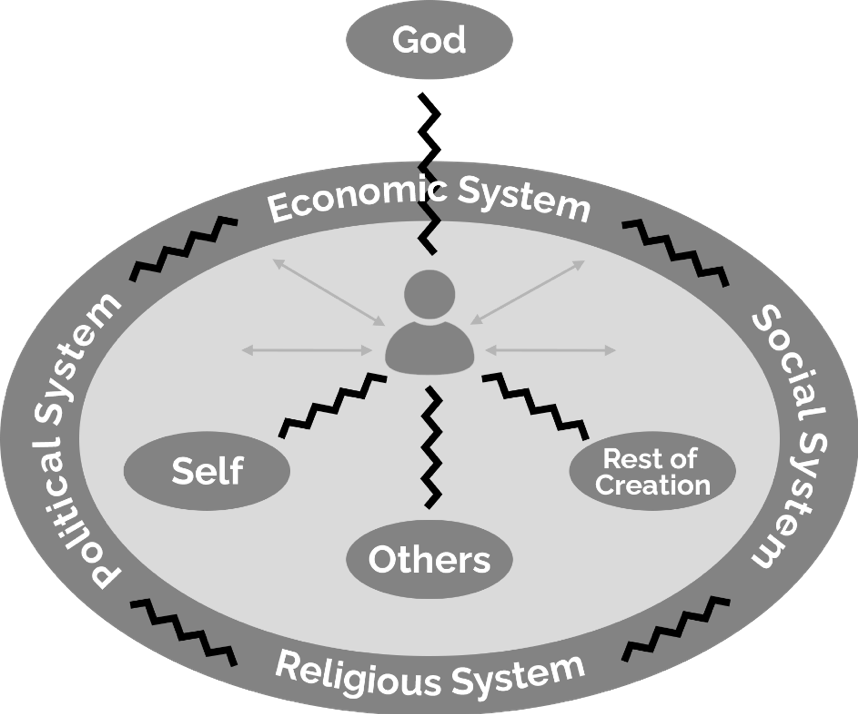



 JOEY OTT