
Nathan Mayo
Network Director
Read more from Nathan


In poverty alleviation, it is easy to get swept up in the “tyranny of the urgent.” We pay so much attention to immediate needs that we neglect to think much about the future. However, there are many important problems an organization must solve that will not yield to a simple flurry of activity. We need to solve complex problems like how to grow our organizations, maximize long-term impact on clients, change the character of deprived neighborhoods, or create effective joint efforts among multiple organizations in a community.

Even when we carve out time to think or meet about these hairy problems, the most common result of such a “strategic planning session” is either a broad vision of change or a list of ambitious goals.

“We envision a community in which all churches work together in unity to help people flourish.”

“We plan to grow our donor base by 20 percent next year.”

Of course, specific goals and broader mission and vision statements are all important, but they aren’t the same as a strategy.

A strategy is a plan of action designed to achieve your vision and goals. Strategies must change as situations change, even if the mission remains the same.

Without a deliberate strategy, you can justify any set of inconsistent, vision-oriented actions. Imagine you have an economic development vision for a small town and a $100,000 budget. You could conduct any number of initiatives, from building an affordable housing unit to painting a mural or providing a small business startup loan. It’s possible that each of these actions may align with your vision, but lack of a long-term strategic plan will likely result in poor outcomes.

A good strategy has at least three elements (adapted from the book Good Strategy, Bad Strategy, by Richard Rumelt):

  • A clear diagnosis of the problem – an outline explaining the primary causes of the problem.
  • A guiding policy – a focal point that describes what the organization will do in response to the problem.
  • A mutually supportive set of actions – a coordinated set of specific plans which amplify each other.

A strategy containing these essential elements will allow you to achieve your ultimate mission and whatever mile-marker goals you have set along the way.

There are countless ways to respond to a community economic development problem—each dependent on the details of the situation. Here are two examples:

Strategy 1:

Problem: Living-wage jobs are available in our town, but much of the population doesn’t have the technical skills to take advantage of them.

Guiding Policy: Raise awareness of and access to the town’s medical supplies manufacturing jobs.

Action Plan: Build a bridge between the industry and the community to make residents aware of the opportunity through plant tours and local block parties with representatives and booths from the facilities. Build a training and internship program in coordination with the facilities and local community college to train talent in the small town.

Strategy 2:

Problem: Most people can find decent employment, but exorbitant housing costs make it difficult to get ahead.

Guiding Policy: Lower housing costs through increased supply.

Action Plan: Lobby the city council to pass an ordinance allowing additional dwelling units on existing property. Work with a developer to clear community support hurdles halting work on an in-progress housing development.

These are just two of the many different strategies that could be used to support community economic development. Of course, of all the possible strategies, some will yield extremely high returns, others marginal returns and others will have no impact.

Determining which plan will generate the most success is similar to the scientific method. A scientific hypothesis is an educated guess informed by deep expertise in the subject and then subjected to rigorous testing. We can apply the same process to strategic formation with the following approach:

 

1) Widen your options

There’s a good chance that you “already know” what strategy your organization needs to pursue. There’s also a good chance it was one of your initial ideas when you thought about the situation. When your mind generates a solution to a complex problem, it’s like being rescued from a choppy ocean by a life preserver. It’s natural to cling to that idea for the security it provides. However, the first “life-saving” idea you find is unlikely to be the best solution to the problem. Say a more secure lifeboat comes along later, representing a better solution to the problem – it’s going to require you to let go of your original idea and swim to it, which can be very difficult.

The best way to keep from getting stuck with a single poor strategy is to generate more than one option at the outset. Good ways to do this include getting independent ideas from people with different perspectives on the issue. For poverty-related issues, this could include people in poverty of various sorts, people who work with them regularly, True Charity Network members from other communities, and scientific research on the topic.

Another way to generate ideas is the “vanishing options test.” Imagine that it was impossible to implement your preferred strategy: what would you do instead? What if your second-choice option was impossible, and your third? This method forces you to identify multiple, unique ideas to diagnose the problem, create the guiding policy, and develop action plans.


2) Multi-track and fail fast

Once you have a range of possible solutions, you can reality-test your assumptions to eliminate some of them. For instance, two team members may disagree about the relative need for job skills vs. financial management skills for ministry clients. A little field work can identify which of these two issues is most pressing by asking a small sample of people to share their budgets, which can be analyzed to see whether lack of income or better financial management is the most pressing need.

However, many strategic questions can’t be resolved so easily, and you may be left with 2-3 promising possible strategies and split opinions about which to pursue. In this case, it may make sense to pilot small experiments with multiple strategies simultaneously while establishing clear benchmarks for relative performance and identified windows to reevaluate the projects. After a few months or a year of trial data, you should be ready to drop the strategies showing less promise and commit to those performing best.

A poor solution is to pursue multiple, non-mutually supportive strategies indefinitely. If businesses with 100,000+ employees generate higher profits when they pursue single strategies, then it seems sensible that resource-constrained nonprofits would need to be especially diligent about focus. 

Suppose you’re a visionary who gets bored by the idea of focusing effort on a few actions. While your visionary gift is likely a big asset to your organization, it can also tempt you to “chase two rabbits and catch neither.” Your best approach is to find advisors who are more pragmatic to help you catch one rabbit at a time. Determining when multiple actions are coherent and supportive vs. disjointed and inefficient is often a difficult judgment call for the wisest of leaders. When in doubt, default to doing less, better and you can always expand your efforts later.


3) Focus your solutions over time

The 80/20 rule observes that 80 percent of outcomes often come from 20 percent of efforts. For example, in a company’s sales department, 80 percent of sales often come from only 20 percent of customers. Similarly, you will often find that within a single strategy, some of your action steps yield much better results at a lower cost than others. 

If you run a youth gang prevention program, your in-school education efforts may not be definitively improving the situation, but your after-school clubs may very well be having a measurable impact. While both of these efforts are a part of the same strategy, it may be time to cut one of them. Alternatively, your afterschool program and your in-school education may be having similar effects, but the afterschool program may cost five times as much per student. In this case, it may be time to cut or reduce your effective afterschool program and redirect resources to expanding in-school education.

Just because you have two programs worth keeping doesn’t mean they should each consume half of the resources. If a retail store sells books and candy, the astute store owner will allocate the shelf space for each product until the profit per shelf space is equal, which will most likely be 95% books and 5% candy, not a 50-50 split. 

Similarly, a small amount of one program may generate beneficial outcomes that justify its resource cost, but scaling the program up won’t necessarily be worthwhile. You may do six community block parties annually to recruit applicants for your financial literacy programs. Upping this amount to 12 parties a year is likely a waste of effort, but cutting them back to four a year may give you the most efficient ratio of results to effort. 

You can use an objective measure like “hours of staff time setting up block parties per new program applicants from the block parties” to help optimize how many block parties you perform. You could learn through trial and measurement that a block party takes 40 hours of staff time to set up and at four parties per year, you get 16 applicants at a cost of 10 hours of staff time per applicant. With six parties a year, you get 20 applicants at the cost of 12 hours of staff time per applicant.


4) Factor in Sustainment

In business, a good strategy generates profit, which funds the enterprise. Sustainment is often separated from impact in nonprofit work. An organization with poor results can be well-funded if it presents itself well, and an organization with excellent results can go under if it doesn’t raise enough cash. It’s okay to acknowledge that certain approaches are more attractive to donors, volunteers, and grantors in your community and to lean towards strategies that are easier to fund. But you simply can’t let the resources pull you away from your mission or into strategies that are ineffective or counter-productive—doing so results in what is referred to as “mission drift”.

Also, don’t underestimate your power to re-educate supporters on what strategies you believe are best. If you have expertise and evidence, you can likely convince a major donor that it’s time to wind down an old program she has been funding for years and launch a different one.

You also need to deliberately invest in your own organizational infrastructure and avoid the pull toward the nonprofit starvation cycle.

A strategy is not a vision, a mission, or a set of goals. It is a plan that provides a clear diagnosis of a problem, a guiding policy to address it, and a coherent set of mutually supportive actions. A good strategy can be the difference between outsized success and decades of frustrating and fruitless effort. You can dig a ditch with spoons using fifty volunteers, or you can dig it with one using a tractor. Strategic thinking rarely feels urgent, but it is always important—make time to do it well.


For two great books which inspired some of the ideas in the article check out:

Decisive: How to Make Better Choices in Life and Work by Chip and Dan Heath

Good Strategy, Bad Strategy: The Difference and Why it Matters by Richard Rumelt


Strategic thinking requires you to identify and measure outcomes which will show progress towards your mission and help you assess the performance of your strategic plans. True Charity Network members have access to a detailed toolkit for Outcomes Measurement.




Jeff Lofting
Director of Education
Read more from Jeff


In 2000, Watered Gardens Ministries opened the doors of its small outreach to the poor in Joplin, MO. After having practiced “handout charity” for the first few years, co-founders James and Marsha Whitford realized that their good intentions had failed to bring about the impact they had hoped for – they were seeing very little change in the long-run situations of those with whom they engaged.

As a result, the outreach shifted to offering numerous programs that challenge individuals to be a part of their own solution through relationship and accountability. A primary aim has also been to walk alongside those in need to help them become free from dependency on government assistance.


Working Toward Freedom from Welfare and Dependency

As well-intentioned as government assistance might be, Watered Gardens Ministries operates upon the belief that welfare is problematic in numerous ways: 

  • Individuals are complex, as are the reasons they are in poverty, and transactional programs cannot effectively dig in to determine the root causes. 
  • It displaces “smaller, closer” entities that are more capable of identifying the root cause of their circumstances, such as family, friends, the church, and local resources. 
  • Welfare is sourced from compulsion versus compassion from the “giver” and results in a lack of accountability within these government programs.
  • We are all created to be producers and not just consumers, and government assistance creates dependency that perpetuates in one’s life, and even generationally.
  • And, long-term dependence on government assistance is detrimental to people’s health and well-being (gotc.us/4AC7 and gotc.us/4AC8).

Because those at Watered Gardens are driven by the desire to see those with whom they come alongside break free from dependency to and into a more flourishing life, they have had to grapple with whether and when to verify that a client has given up government benefits to participate in its programs. Their approach might be instructive to how you design your own programs.


Lessons from Watered Gardens Ministries


Distinguishing Categories of Need 

As you consider whether and when to verify if a client is receiving government benefits, it’s important to understand the difference between categories of need. 


Relief is a need for emergency and temporary assistance in order to reduce immediate suffering within a true crisis. These relief situations might be caused by external factors, such as a natural disaster, a car wreck, or a sudden health condition. Often in our work, though, relief situations are caused (at least in part) by internal factors, those chronic to the individual such as addiction, mental health issues, or the inability to retain stable full-time employment. 


Development is the next step in helping the individual avoid any future need for relief, whether caused by internal or external factors, by targeting the conditions and causes that accompanied such a need even existing. This requires walking with the individual to accurately determine the underlying causes and strategically working to address them, such as building savings, strengthening social networks, finding stable employment, or receiving mental health or addiction interventions. Ultimately, the aim is for the individual to move closer to a holistically flourishing life.


In the Relief Context

When individuals come to Watered Gardens for relief, or emergency and temporary assistance, the ministry understands the need for their immediate needs to be tended to. Once that need is met, though, ministry staff work with the individual to understand the underlying causes of their circumstances.

Part of the process of one going from dependency to experiencing freedom comes from an individual grasping the detrimental role that welfare has played in perpetuating his circumstances – the “safety net” is less a net to catch him when he falls and more of a net in which he gets caught and cannot get free. So, during their stay in shelter, guests meet with the ministry’s care coordinators to begin building a relationship and identifying root causes. Guests are not only educated about the rationale behind getting free from welfare, but they’re helped to formulate a vision of a life of self-sufficiency, one without government assistance. 

As care coordination continues, guests are connected to alternatives to that assistance, and even helped to call the relevant agencies to decline continued benefits, if the guest so chooses. (Note that this often requires follow up with the guest by care coordinators due to the extended process the government requires to decline benefits – when you are tangled in a net, it takes some time and effort to get out and often requires the patient help of others.)  


In the Development Context

If a guest chooses, though, to transition into a process of development and enter Watered Gardens’ long-term men’s recovery program, Forge, they are required to give up all government assistance. Of course, they are not forced to give it up, but it is a requirement to enter the program. If they choose not to give up government benefits, they are choosing to not participate in the program. 

Once they enter the program, Forge acts as a bridge from that assistance to being self-sufficient. During the first two phases of the program, a member of Forge goes through education that includes spiritual formation along with life and job readiness training. As long as he fulfills the requirements in those first two phases, he receives what he needs for day-to-day life. In subsequent phases, Forge members transition to full-time employment and move to transitional housing, continuing the transition from dependency to self-sufficiency. 

To verify that Forge members have given up government assistance, Watered Gardens care coordinators will often be on speaker phone with the individual as he is declining further benefits. Of course, this is the individual’s choice – they’re not “under duress” of any sort. 

As mentioned previously, dropping benefits is rarely (if ever) immediate, so care coordinators make it a point to follow up with them to ensure they follow through with the paperwork sent later. There are a few incidents where members have “flown under the radar” – for a time. The truth eventually comes out during their time in the program. For example, if a Forge member gets sick, an appointment might be made by the ministry at the local Community Clinic, a privately funded charitable healthcare clinic. But, the Forge member might let it slip that he’d rather go to the hospital. Why? Because he still has Medicare or Medicaid.  

Ultimately, a trust relationship is central to the program, and it’s understood by Forge members that giving up their government benefits is a requirement because the program is intended to help them transition from dependency to freedom from welfare.


So, as you consider whether and when to verify government benefits, make sure to consider an individual’s category of need and the aim of your specific programs. If it’s intended to help an individual needing emergency and temporary assistance, consider educating him on the harm of dependency. However, if that client continues into a developmental program, continue to educate but consider walking alongside your client to transition off of government assistance. 

There is no way to come up with a system that forces an individual to give up government benefits – that goes against the nature of true charity that is individualized and relational, based on trust and choice on the part of the individual. However, the principles of true charity, practiced by Watered Gardens Ministries, can serve as a framework from which to guide discernment and establish operational procedures.


Avery West
Membership Engagement Director
Read more from Avery


This article was originally published on August 22, 2022 in The Gospel Coalition.


“She had an abortion appointment the next day. She’d already been to the pro-life pregnancy center, and I had no idea what to say.”

My friend sighed as she told the story. The new Dobbs decision, combined with this recent encounter with a struggling single mother, motivated us to start searching for programs—and if nothing existed, to start one ourselves.

In this new post-Roe world, many Christians and churches desire to support the women who carry their babies to term. The issue isn’t whether caring communities will go about this important work, but rather how they’ll do it.

Here are 10 ways your church can foster relationships with women in need and build a culture of life.


1: Call your local pro-life pregnancy center. 

Ask what their present needs are and how you can help. Be open to things you could do outside of Sunday morning. Could you donate 10 hours a month of your bookkeeper’s time? Host a baby shower in your space? Ask a church member to help them with a specialized skill like social media marketing or outcomes measurement? Commit to organizing a meal train when babies are born?


2: Make church baby-friendly.

Especially if children are welcome during the main service in your church, mothers might be keenly aware of every peep their little ones make during the service. Put new parents at ease by making it clear that their babies and toddlers are a part of Christ’s body. Create a space for nursing mothers, make sure you have changing stations in the bathrooms, and laminate pew cards explaining that children are welcome!


3: Open a maternity library or host a clothing swap event.

Any woman who has been pregnant knows that ill-fitting clothes can have a real effect on her sense of dignity. Maternity clothing is expensive and hard to thrift, so your church can help by gathering gently used maternity wear and either hosting a one-day event or devoting a section of your building to a maternity library, where women can “check out” clothes for a few dollars. Be sure to make the experience relational and welcoming by having coffee or lemonade on hand and inviting the mothers to sit and chat.


4: Create accessible ways for single moms to serve.

Women who have overcome heartbreaking challenges and chosen life have so much to give! Welcome them into volunteer opportunities by providing childcare during VBS or one-day service events. Most importantly, let them know that your church family values and needs them by getting to know each individual’s unique gifts and then asking for help in those areas.


5: Offer childcare or a co-op.

Do your church’s Sunday school rooms sit empty during the week? Put them to use! Many single mothers struggle to afford daycare, and churches can step into the gap by offering childcare at a discount. For mothers struggling financially, you could even offer a co-op alternative, where moms become trained classroom aides and help out with the kids one day a week in exchange for free tuition.


6: Start an Embrace Grace support group.

Women who are overwhelmed by a recent positive pregnancy test don’t just need diapers; they need a family. Embrace Grace is an international organization that trains churches at no cost to launch support groups for pregnant women and single moms and dads. If you aren’t ready to start a group, consider downloading their pro-love social media toolkit or hosting a “love box” party—assembling boxes that can be given to moms at a local pregnancy center.


7: Support alternatives to foster care.

Your church can walk with families at risk of entering the foster care system by partnering with outstanding groups like Better Together or Safe Families. These organizations offer help to parents in need by offering job coaches, parent mentors, temporary host families for their children, and more.


8: Host a finances or jobs class.

Many single parents feel stuck working long hours away from their children at low-paying jobs. By providing a meal, free childcare, and a soft skills class, you can make a huge difference in the lives of struggling parents. The best part? Your church doesn’t have to reinvent the wheelFaith and Finances and Jobs for Life are excellent examples of faith-based, relationship-oriented programs with a proven track record of success.


9: Facilitate mentorship.

Welcome young mothers into your community by creating the space for deep relationships. Consider establishing a mothers’ mentoring initiative, creating an adopt-a-grandparent program for single parents, or adding a mentoring component to an existing premarital counseling, baptism, or benevolence ministry. Check out True Charity Initiative’s Mentoring Model Action Plan for tools and guidance.


10: Fill in the fatherhood gaps.

Children growing up without a father are more likely to fall into poverty and substance abuse and to continue the cycle of broken families. Fathers in your church can come alongside single mothers by providing positive male role models for their kids. Programs like Fathers in the Field help your church facilitate these relationships.

Whether your community is big or small, high church or low, urban or rural, you can reach out to women and children in need. Grab a friend and introduce one of these ideas to your pastor—we did, and our church now hosts a “New Mom Community Night” every Thursday.

Praise God, the woman we were praying for didn’t go through with her abortion. And praise God, now we have a community into which we can welcome her.


Jeff Lofting
Director of Education
Read more from Jeff


For many in the nonprofit sector, talking about ourselves doesn’t come naturally. Many would prefer to just go about our work with others hearing about and understanding the work we do by word of mouth. Although this certainly might occur to a small degree, public awareness efforts can be enriching for your organization, those you serve, and your greater community. There are several reasons for your organization to consider public awareness efforts.  


  1. To help others “catch” your vision and mission.  You might be passionate about what you do and how you do it, but how is this being communicated to others outside your organization? Why should they be energized, as well, to address the need in an effective manner? A public awareness campaign can help light a fire in the heart of those in your community.
  2. To educate those in your surrounding community about the central issues you are addressing and the rationale for the solutions you are pursuing. Your organization exists for a reason. A public awareness campaign brings these issues to light and helps your community understand how and why your organization employs the approach it does.
  3. To connect like-minded individuals in your community with opportunities to help further your mission. There are undoubtedly others who see the same needs but are unaware of how to effectively address them, whether through financial support, volunteering their time and effort, or lifting your organization up in prayer. A public awareness campaign brings these opportunities to light and can provide a call to action to these like-minded individuals.


Maybe your interest is piqued, but how do you get started?


1: Form Your Message 

The essential first step is to determine a cohesive overarching message of your public awareness campaign. It’s recommended that this be rooted in the mission, vision, and values of your organization. Distill this down to what your organization is doing, why you’re doing it, and how

Take, for example, a fictional organization, Feed the True Need (FtTN), that facilitates a food co-op, a membership-based community of those struggling to pay for food. These individuals meet weekly to cooperatively order, unpack, and sort the food that they all take home at the end of the work session. In addition to relationships built with others during that time, members meet with volunteer care coordinators who walk with them through the process of setting and meeting goals to help prevent this need in the future.

In summary, this organization seeks to help meet individuals’ physical needs and address the underlying causes (what) by empowering those individuals through the building of relationships and reawakening the dignity of contributing to their own progress (why and how). 

What is it about FtTN that might excite those in the general public, something that the vast majority of their community can grab ahold of and buy into? It’s likely the “empowerment” aspect. Who wouldn’t agree that empowering individuals is not a positive effort? 

This might serve as the overarching message of FtTN’s public awareness campaign: empowerment

Out of your organization’s overarching message will flow themes. You’ve established a message that will resonate with your audience; your theme helps bridge the gap between your “what” and your “why”/“how.”

In the example of FtTN, their “what” is helping to meet physical and address the underlying causes. Their “why”/“how” is empowerment through building relationships with other members and volunteers and re-establishing and facilitating challenge and exchange, individuals contributing effort for something they need, instead of unhealthy dependence on others. 

So, the themes of FtTN’s public awareness campaigns are relationships and exchange. These will serve as the topics around which the message will be reinforced, simultaneously educating the public, visioncasting, and connecting like-minded individuals with opportunities to serve a purpose they are passionate about.

Watered Gardens Ministries’ Executive Director, James Whitford, and Director of Advancement, Travis Hurley, have worked together for several years to become more effective in making those in Joplin, Missouri, and the surrounding area aware of the insidiousness of dependency and effective solutions to combat it among those in poverty. They’ve found success in educating the Joplin community about alternatives to handout charity and the impact Watered Gardens has had through practicing these very alternatives. 

They recently shared a few mediums and strategies they used when they got started and what they learned, much of which can be applied within your own public awareness strategy.


2: Determine Your Medium(s)

Radio and/or TV Public Service Announcements (PSAs)

One hesitation that many nonprofits have in launching a public awareness campaign is the cost. When James and Travis began their public awareness efforts, they discovered that radio and television stations have a requirement to “air programming that is responsive to the needs and problems of its local community,” and they have available space specifically for this purpose. Travis explains, “That’s what prompted us to get started without money.”

These radio and TV spots can be quick and simple to produce with the help of your local stations. Travis recommends that you get started with a 60-second radio PSA. These involve a much smaller investment of time and production—video PSAs add a labor-intensive visual element—and have the potential to reach thousands in your community. 

For PSAs, James and Travis recommend the following:

  • Limit radio PSAs to 60 seconds and TV PSAs to 30 seconds. 
  • Start with an engaging story that is relevant to your message and theme.
  • Succinctly communicate your point.
  • Use background music and an ending tagline that is consistent among your PSAs. For example, “This is [name] from [your organization] reminding you that…” This helps your audience immediately recognize it as your organization’s with each new PSA.
  • Provide a call to action such as, “Visit [your organization’s website] to learn more about…”

Contact your local radio and TV stations to learn more, to introduce your organization, and to start building a mutually beneficial relationship: promoting your organization and helping their station meet PSA requirements.

Digital Billboards

If you were surprised that free radio and TV airtime is available in your community, you might be shocked to know that you can display a billboard for free or at a very low cost. If you have digital billboards in your city, many billboard companies will throw your organization’s graphic into the rotation on a space-available basis.

A benefit of this medium is that billboards generally must be kept simple—they consist of an attention-catching image, a very brief phrase communicating your message, and a call-to-action (e.g., a website for more details). 

Simply call your local billboard company to see if this option is available; if so, request specifications for the design.

(These are only a few of the mediums you might consider, those with the lowest entry cost to get started. We’ll feature more options in the future.)


3: Develop Your Content

Once you’ve identified your medium, build your content around your overarching message and themes, always making sure to provide a brief connection to your overarching message. This ensures each PSA or billboard is consistently grounded.

As you prepare your public awareness campaign, a necessary element in communicating your message and themes is the inclusion of personal stories of those impacted. Stories engage the heart of the audience and prepare them for the rationale of what you do.  

For example, Denton Bible Church, a True Charity Network member in Texas, ran a food co-op similar to the fictional Feed the True Need above. During that time, a handful of co-op members passed away. In each case, other co-op members showed up en masse to their funerals, sometimes outnumbering family or friends. The food co-op succeeded in building a connected community where the food pantry had not. 

This story demonstrates the relationships—the social capital—built that’s essential to an individual being empowered to find freedom from material poverty.

Most won’t have the skill sets to fully develop the content, whether writing a PSA script or creating billboard graphics. When needed, bring in individuals in your community that resonate with your message and have the skill sets needed, giving them additional opportunities to use their giftings for a meaningful purpose.

Lastly, Travis emphasizes the need to plan with enough foresight, considering the seasons (“What is going to be on people’s minds when you launch the project?”) as well as specific giving campaigns you might have planned to connect to your planned projects. He says that planning ahead one quarter out is usually a safe rule of thumb.

We cannot emphasize the importance of providing others with the chance to join in the good work you are doing, but they have to be made aware of the “what,” “why,” and “how.” The True Charity Network provides resources that can help further this effort.  Network members have access to lessons on sharing their message, as well as billboard templates and starter scripts for PSAs. Non-members can learn more at truecharity.us/join.


James Whitford
Founder & CEO
Read more from James


Jump to:

How Are We Doing? | Dependency & PaternalismLook Up | Expect Up | Size Up


This article was originally published in the May/June 2022 issue of the Citygate Network digital publication, Instigate.


Some days more than others, I wait with just a bit more earnest desire for the new heaven and new earth Peter wrote about at the end of his second letter (2 Peter 3:13). Nationally, we’ve seen homelessness rise for the last handful of years, and for the last few decades, the poor have been slipping into deeper poverty. On the world stage, we’re witnessing events that none of us have seen before unless we were around for the Second World War and the Spanish flu. Whew. Things are far from the perfected end we read about in Scripture — that day when all things will be made right, or fully justified, as they ought to be.

But, as compassionate ministry leaders, you and I live and work in a world much more granular than homeless counts, poverty levels, quarantine numbers, or inflation rates. We’re dealing with unique individuals, some who have dashed dreams, others wounded hearts, and many with broken minds or bodies or both. It rarely takes more than a five-minute conversation with a person in one of our missions to recognize injustice: not the injustice levied by some past abuser or a corrupt institution, but the unjust condition that’s simply opposite of the final and just condition described in the Bible.

In his book, Pursuing Justice: The Call to Live and Die for Bigger Things, Ken Wytsma describes truth as pertaining to what is and justice as what ought to be. This idea of justice elevates us above discussions of social justice or distributive justice and points us toward biblical restorative justice. As we pray for God’s will to be done on earth as it is in heaven, we are praying for this kind of justice — that life around us in our families, ministries, and communities would be more as it ought to be. For many of us, our passionate pursuit of this is the dedicated work of our lives. It is for justice that we fight, with great faith and hope of helping one person at a time step into a better life — one that is more as it ought to be.


How Are We Doing?

Well, it’s a hard calling with a tough job to match, isn’t it? Yet we’re a driven and motivated bunch, and certainly those qualities, with earnest prayer, have resulted in some great testimonies from our missions and ministries. It’s time to level up, though. I know, I know. Level up? Are you kidding me? I can barely keep pace at the level I’m on! I get it. There’s no more drive or motivation to muster up. I’m with you, and I’m not suggesting you muster it up. I’m suggesting you transfer it. Right, transfer your motivation and drive to those you’re helping. Successfully transferring that motivation to the person you’re motivated to help is one way to bring just equity into what is often an unhealthy and imbalanced relationship, one in which the recipient is dependent and the giver, paternalistic (not to mention overworked!).

You might recall Robert Lupton’s five steps to dependency from his book, Toxic Charity: How Churches and Charities Hurt Those They Help (And How to Reverse It): If you give something to someone once, the person will appreciate it. If you give it a second time, he’ll develop an anticipation that you might do it a third. If you do it a third time, he’ll expect you’ll do it a fourth. A fourth time, he’ll feel entitled to the transfer, and a fifth time, he’ll be dependent on you for it.

Appreciation, Anticipation, Expectation, Entitlement, Dependency. Because we live in community with the people we help, this type of unhealthy reliance is not without its countereffect on the well-intentioned charitable soldier. Consider these five steps to paternalism that occur in concert with the downward march toward dependency: Giving something to someone results first in a sense of exhilaration. Again, and you may feel a deepening purpose in relation to whom you’re helping. A third time and you’ll feel necessary. A fourth, essential and a fifth, paternalistic. Exhilaration, Purpose, Necessary, Essential, Paternal.


How Are We Doing?

Well, it’s a hard calling with a tough job to match, isn’t it? Yet we’re a driven and motivated bunch, and certainly those qualities, with earnest prayer, have resulted in some great testimonies from our missions and ministries. It’s time to level up, though. I know, I know. Level up? Are you kidding me? I can barely keep pace at the level I’m on! I get it. There’s no more drive or motivation to muster up. I’m with you, and I’m not suggesting you muster it up. I’m suggesting you transfer it. Right, transfer your motivation and drive to those you’re helping. Successfully transferring that motivation to the person you’re motivated to help is one way to bring just equity into what is often an unhealthy and imbalanced relationship, one in which the recipient is dependent and the giver, paternalistic (not to mention overworked!).

You might recall Robert Lupton’s five steps to dependency from his book, Toxic Charity: How Churches and Charities Hurt Those They Help (And How to Reverse It). If you give something to someone once, the person will appreciate it. If you give it a second time, he’ll develop an anticipation that you might do it a third. If you do it a third time, he’ll expect you’ll do it a fourth. A fourth time, he’ll feel entitled to the transfer, and a fifth time, he’ll be dependent on you for it.

Appreciation, Anticipation, Expectation, Entitlement, Dependency. Because we live in community with the people we help, this type of unhealthy reliance is not without its countereffect on the well-intentioned charitable soldier. Consider these five steps to paternalism that occur in concert with the downward march toward dependency: Giving something to someone results first in a sense of exhilaration. Again, and you may feel a deepening purpose in relation to whom you’re helping. A third time and you’ll feel necessary. A fourth, essential and a fifth, paternalistic. Exhilaration, Purpose, Necessary, Essential, Paternal.


How Are We Doing?

Well, it’s a hard calling with a tough job to match, isn’t it? Yet we’re a driven and motivated bunch, and certainly those qualities, with earnest prayer, have resulted in some great testimonies from our missions and ministries. It’s time to level up, though. I know, I know. Level up? Are you kidding me? I can barely keep pace at the level I’m on! I get it. There’s no more drive or motivation to muster up. I’m with you, and I’m not suggesting you muster it up. I’m suggesting you transfer it. Right, transfer your motivation and drive to those you’re helping. Successfully transferring that motivation to the person you’re motivated to help is one way to bring just equity into what is often an unhealthy and imbalanced relationship, one in which the recipient is dependent and the giver, paternalistic (not to mention overworked!).

You might recall Robert Lupton’s five steps to dependency from his book, Toxic Charity: How Churches and Charities Hurt Those They Help (And How to Reverse It): If you give something to someone once, the person will appreciate it. If you give it a second time, he’ll develop an anticipation that you might do it a third. If you do it a third time, he’ll expect you’ll do it a fourth. A fourth time, he’ll feel entitled to the transfer, and a fifth time, he’ll be dependent on you for it.

Appreciation, Anticipation, Expectation, Entitlement, Dependency. Because we live in community with the people we help, this type of unhealthy reliance is not without its countereffect on the well-intentioned charitable soldier. Consider these five steps to paternalism that occur in concert with the downward march toward dependency: Giving something to someone results first in a sense of exhilaration. Again, and you may feel a deepening purpose in relation to whom you’re helping. A third time and you’ll feel necessary. A fourth, essential and a fifth, paternalistic. Exhilaration, Purpose, Necessary, Essential, Paternal.


Dependency and Paternalism

Though intentions may be honorable, both local and national efforts to address poverty through simple, transactional charity not only have failed to close the income gap but have widened the relational one. A strange codependency between the recipient and the provider continues to feed the hungry without ever solving hunger, shelter the poor without solving homelessness, and transfer wealth without ever empowering people to create it themselves.

Across our land, people are reading the papers or watching the news, shaking their heads, wondering how the problems of poverty and homelessness can be solved. Let’s provide the answer. We are the leaders to set a new standard, modifying or creating innovative programs that flip the steps. Yes, flip the steps to dependency and paternalism, leading a renewed national vision of communities marked by an exhilarated and appreciative people, not codependent but interdependent. In fact, our goal should be to bring these two groups so close together that we can’t tell the difference between them. Can the provider be a recipient and the recipient a provider?

These ideas sound a little lofty, I’ll agree. Here are some practical questions to ground us a bit: How do we shift the balance of our programs from relief towards development? How can we meet vital and basic needs repetitively without also being complicit in the dependency trap? How can we motivate the people we help to do more to help themselves?

How can we level up?

Look up, expect up, and size up.


– 1 –

Look Up

Being a member of Citygate Network, it’s unlikely you have a cultural problem in which staff or volunteers at your mission look down on people. But do they “look up” to people? Looking up to a person is to admire a personal quality, respect an achievement, or recognize a gift in a person. That’s tough when you’re sitting across from someone who has been ravaged by the elements, is dazed by the latest drug, or is wildly confused and incoherent. Where is that quality, achievement, or gift to admire, respect, and recognize? This is where compassion fails us. Don’t get me wrong — compassion is vital and we’re certain to fail without it. It’s awakened by the injustice and brokenness we see in lives around us and it is what fuels us to act, but it is Christ’s vision that enables us to see beyond the physical to recognize the inherent dignity and worth in even the most wretched and wrecked soul. Through the eyes of Christ, we are able to see beyond the physical to the imago Dei — the image of God. And when we do see it — that nobility of God residing in a person — our faith is suddenly ignited to believe that what ought to be is attainable.

When Jesus landed on the shore of the Gerasenes, he was met by a naked, self-destructive man who lived among the tombs. You know the story. Jesus saw what ought to be. He delivered the man from his demons and left him clothed and in his right mind (Luke 8:35). When Jesus stepped out of the boat and first saw this tormented and possessed man approach Him, don’t you think He also saw a man clothed and in his right mind? We need Christ’s vision if we’re going to “look up” to people we serve.

One way to develop the look-up culture in your ministry is to adopt the right terminology. Are the people you serve “residents” or “guests”? Are those in your social enterprise “clients” or “partners”? The culture of looking up is also reinforced by a ministry’s core values, ensuring that respect of inherent human dignity is included. Noble creation, imagebearer, human dignity, highly esteemed, ennobled may be words to consider in the adoption or revision of a core value. As an example, one of the core values at our mission is Human Dignity — Every Person is a Noble Creation. Regardless of how you choose to emphasize it in your ministry, remember this truth: What you value is what you cultivate, and what you cultivate becomes your culture. So value “looking up.”


– 2 –

Expect Up

How you and I view people informs how we treat them, and how we treat them influences how they respond. If we look up to a person and genuinely respect his or her God-given gifts and abilities, then shouldn’t we “expect up,” also? Having no expectations communicates, “You’re unable.” Lowered expectations speak, “I don’t think you can do it.” But right expectations of a person communicate, “I believe in you.” Those are four words too many have never heard before. And remember, how we treat people impacts how they respond. If we don’t “expect up,” who will rise up?

“Expecting up” is a major encouragement and motivation to people, and we see it throughout Scripture. The word if is found over 1,400 times in the Bible, often linking God’s expectation to some reward or blessing. Second Chronicles 7:14 is one of those that many of us know by heart: “If my people, who are called by my name, will humble themselves and pray and seek my face and turn from their wicked ways, then I will hear from heaven, and I will forgive their sin and will heal their land.” God’s expectation for us is clear, and many of us are motivated by it! We also see expectation in the New Testament. In John 8, Jesus verbalized His expectation of the woman He had forgiven of adultery: “Go now and leave your life of sin.” I’m sure the blend of His grace and expectation motivated her to change.

In our ministries, motivation by expectation starts with a search for the ability and gifting of a person. Expect to find it. This is the practice of function-based categorization. Rather than simply qualifying a person as a recipient of a particular program because of his or her poverty level or disability (dysfunction-based categorization), consider placing equal energy during your assessment on uncovering a person’s capacity, potential, and functional ability. You may have a tool that helps with this, or you might want to consider a SWOT box assessment tool. This tool helps any person consider not only Weaknesses and Threats but, more importantly, Strengths and Opportunities in the areas of education, work, relationships, and health. True Charity has a SWOT box assessment tool you can use; you can find it here: www.truecharity.us/swot

If you discover the person you’re assessing has ability (and most do), then expect exchange. That’s not to say that there aren’t situations in which one-way handouts are necessary, but they should be rare and few. Most people have the capacity to exchange a little of their time and talent for what they need. Expect it.

The father of modern economics, Adam Smith, noted something very simple but profound in his seminal work, The Wealth of Nations: “Nobody ever saw one animal by its gestures and natural cries signify to another, this is mine, that yours; I’m willing to give this for that.” Although we intuitively know this, its implications are weighty. Exchange is a unique aspect of humanity found in markets. So when we strip people of their opportunity to exchange something they can do for something they need, we also strip them of some aspect of their humanity. An expectation of exchange spares both parties from falling into the trap of dependency and paternalism.

Practically speaking, consider establishing an “earn it” program. Creating a way for people to exchange a little of their time to earn vouchers that can be traded for basic needs is a powerful way to “expect up” and break free from an unhealthy dependency model. It’s not an easy lift to shift your model of ministry to an “earn it” model, but its rewards are great. Having folks work in various spots of your ministry or help in one of your social enterprises for even short amounts of time to earn an item from your thrift store or food from your pantry is an empowering form of charity that reminds people they were created to be more than the recipients of someone’s benevolence. Your community will likely embrace your new approach as you communicate your inspiring belief in the people you serve and how you are providing them opportunities to experience the joy of purposefulness and contribution.

Depending on the size and history of your ministry, the work of transitioning to an “earn it” model can vary. It’s not the only way to level up your expectation, though. You might start with good goal writing. Taking case management beyond resource connection to dreaming, planning, and establishing goals is a great way to introduce expectation. I prefer the PIVOT acronym to guide the process. Goals should be action steps that Point to the vision, are clearly Identifiable, Verifiable, Owned by the individual, and Time-driven. 

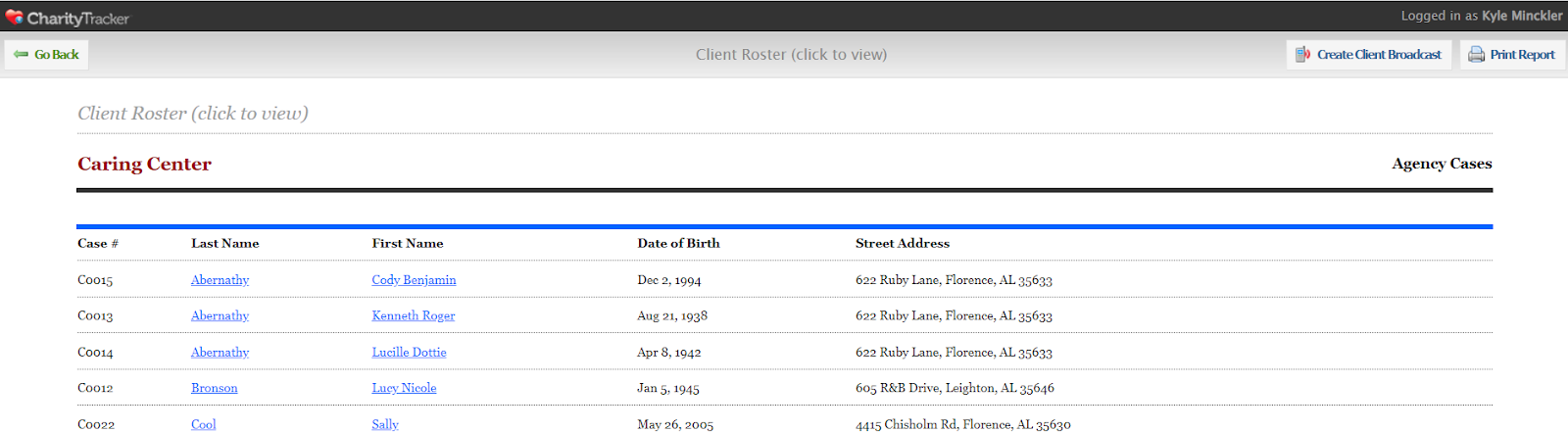
Lastly, sharing those goals and other case management information with like-minded organizations serving the same families and individuals is another way to address unhealthy dependency in your community. There are different tools to accomplish this, but one easy, web-based option is Charity Tracker. In one Oregon community, we use Charity Tracker to connect one ministry’s thrift store to a vocation-training ministry in the same town. Rather than continue with a handout model for folks who have no money, the thrift store allows people to shop and then tallies the time required to earn the items, enters that information in the Charity Tracker system, and then sends the individuals down to the training center. Once the time is completed, personnel at the training center enter it in the system and the people are free to pick up their items from the store.

We’ve connected scores of churches and nonprofits together with this tool which aids in ministering more seamlessly and cohesively, and stems the tendency for dependency to form in an otherwise benevolent but disconnected community. This type of practical collaboration collectively signals to a larger audience, “We’re expecting up!”

– 3 –

Size Up

Looking up to the inherent dignity of every person and then matching it with right expectations are vital to motivating and empowering people. However, doing this is no more important than measuring the results. If we don’t “size up” or compare our results to our own expectations, we’ll never know if the cultural and programmatic changes we’ve made are actually making the difference we hope to see. We must measure what matters. Beyond outputs like number of meals, pounds of food, nights of shelter, etc., we must establish outcome domains like employment, social capital, and spiritual growth as well as the indicators that help meter progress in those areas. These may include jobs landed, social capital score changes, or progress on the Engel Scale (a spiritual-growth measurement tool).

For example, at Watered Gardens Ministries, we have three primary outcome domains for most measurements: Connections, Career, and Character. Under our outcome domain “Connections,” we measure how well we do at reconnecting people to family or helping them form new relationships in the Church. So we now also measure recidivism, with a hope to see people will be returning less to our shelter!

Sizing up requires brutal honesty and painful humility. My experience has been that when sizing up the progress in our programs, we often have to swallow our pride and make changes in the ways we’re doing things. Outcome development and training is worth the time and effort. Remember, Jesus came to radically change lives. That change is measurable.

♦    ♦    ♦

Looking up, expecting up, and sizing up is a simple formula to answer the call of our cities and our nation. More importantly, it is the way we empower people in poverty and honor God who has entrusted us with a mission so close to His heart. May God’s peace, passion, and wisdom continue to reign in your life and direct your calling!


Reprinted with permission from Citygate Network. All rights reserved.


Avery West
Membership Engagement Director
Read more from Avery


Many people in chronic poverty long to be respected, to have their gifts discovered, and to have someone simply listen as they share their goals and dreams. An effective mentoring program can help facilitate this needed support, allowing the poor to move toward a more flourishing life. How do you ensure, though, that your program promotes respectful relationships and affirms each individual’s unique assets? Check out these three ideas for empowering your mentees.


1: Consider Mentee-Initiated Matching

When mentorship is one aspect of a larger class or program, it might be appropriate to work with participants as they seek out their own mentor. This may be someone who has informally served that role for them in the past, or someone they respect at work or church. This method works best when the program director has an established relationship with participants so they can dialogue to determine if the suggested mentor is a good fit and how they would approach that conversation.

In addition, try encouraging mentors, as a defined period of mentorship comes to a close, to help the mentee think through who in his life might be able to serve as an informal mentor going forward.

Supporting an individual as he makes this decision and initiates the conversation helps reinforce the fact that he can, in fact, make positive changes in his own life.


2: Train Mentees

While mentor training is pretty universal, training mentees is just as important! These trainings often focus on evaluating one’s life, seeking out areas for transformation, and developing goals. 

Mentee preparation might take the form of a 12-week class, one training session, or simply a packet of questions to fill out before meeting with a mentor the first time.

Training mentees in simple budgeting or creating SMART goals can help them maintain ownership of their growth. Then, when they enter the mentoring relationship, the mentee is the main actor in creating goals, while the mentor assumes the supporting role.  (Network Members: You can learn more about SMART Goals in the TC Takeaways video of the same name.)


3: Have Both Parties Set Goals

Everyone has goals. Whether growth looks like staying off of drugs, reconnecting with a spouse, or losing 15 pounds, we all are striving to live a more full life. 

When both the mentor and the mentee set goals, checking in each week or month feels less like grading homework, and more like shared accountability. This mutuality fosters the respect and encouragement that is essential for true relationships.


As you pair individuals with mentors or add mentorship to an existing program, remember, mentees aren’t recipients of a service, but rather, members of a community. Each person brings unique gifts to the table, and it is our honor to help them discover and make the most of those gifts.


Inspired to start your own mentoring program? There are more ideas where these came from! True Charity Network members, check out for our Mentoring Model Action Plan. The detailed plan, tools like applications and trainings, and tips from mentoring program directors will help you develop a ministry that fosters real relationships. 

Not a member yet? Explore Model Action Plans here


This article is just the tip of the iceberg for the practical resources available through the True Charity Network. Check out all of the ways the network can help you learn, connect, and influence here.

Already a member? Access your resources in the member portal.


Nathan Mayo
Network Director
Read more from Nathan


Once leaders start to understand the difference between relief and development, they naturally look for ways to address root problems in clients’ lives through programs that integrate classes, relationships, and other opportunities for personal growth. However, since development isn’t something that can be done “to” someone, the person for whom the programs are designed must be willing to embrace the opportunity.

Individuals who aren’t ready to commit to a program will often squander resources and not experience any positive impact. Maybe this means dropping out of a class after a few sessions, or receiving a significant amount of assistance designed to help them get out of a financial bind, only to make choices that put them in the same bind the following month. This is not only frustrating to ministry leaders, but it is demoralizing to clients who may feel like they will never see change. Furthermore, it derails other clients, who would have succeeded, but get sidetracked by seeing the apparent failure of the less committed.

We should optimize our programs to maximize the chance that people will stick with them. There are plenty of techniques ranging from providing text message reminders to working through transportation and childcare barriers. But we also need to make sure we have the right people in the programs to begin with—people who are most ready to benefit from change.

One intuitive approach is to use a screening process consisting of application forms and interviews to vet people’s motives. This can be beneficial, but even the best interviewer will be hard-pressed to accurately assess a stranger’s motivation and commitment. Not to mention that the screener will also have to be the “bad guy” and make a subjective determination of whether someone is allowed in the program.

There is another way. It’s a way that reveals critical information to the charity and simultaneously gives the client more control over his or her situation. It was also memorably illustrated by the rock band “Van Halen.”

Van Halen pioneered many techniques in the modern concert. Their shows integrated unprecedented quantities of lights, electronics, and other heavy equipment. For a Van Halen concert to succeed, venues had to be ready. To that end, Van Halen had a 53-page contract specifying the hundreds of minute details necessary for the setup. On one page of the contract, they even detailed the snacks which needed to be ready for the band members backstage – including a bowl of M&M chocolate candies with a note that all of the brown M&M’s needed to be removed from the bowl.

This was more than rock band diva behavior. This was a brilliant application of “self-selection.” When the Van Halen band manager showed up on site before the concert, one of his first stops was the bowl of M&Ms. If the venue had done a good job and followed the contract thoroughly, the M&M’s would be as ordered–no brown pieces present–and more importantly, the wiring, speakers, stage and the rest would likely all be to specification. If the brown M&M’s were present, it meant that the venue was probably not ready to rock. There were only a few hours to go over everything with a fine-toothed comb and ensure that the other details weren’t messed up, which could result in a dangerous incident or injury.

The venue received clear instructions and then signaled through their own actions whether they were “ready to rock.” In the metaphor, clients are like venues. Some are “ready to rock” and some not, but how can we get them to signal to us whether they are?

Van Halen venues had to show that they were ready, willing, and able to follow a detailed contract. Clients who are ready to develop must show that they are willing to make at least some effort to improve their situation, given the opportunity and ample encouragement. Like Van Halen, we can create a deliberate context for “self-selection.” Instead of a lengthy contract and chocolate candies, we can use the principle of “challenge.”

Challenge is anything that requires effort on the part of the client. This can be something that helps only them, such as goal setting and achievement. It can be something that allows them to help others outside of the program, such as community service. Alternatively, they can “pay it forward” by volunteering for the nonprofit running the program or paying a service fee. Many more examples are included in the excellent programs we feature here. In general, the level of challenge is scaled against what the client is receiving from the program. (It isn’t full compensation but covers some fraction of what they receive.) For a budgeting class or food co-op, it doesn’t have to be very large; for a residential rehab or college scholarship program, it would need to be more significant. As your program evolves, you can tweak the level of challenge until you find that the majority of the people entering the program are ready and able to benefit from it.

There are other reasons to offer an up front challenge, such as the fact that creative work or goal setting tends to expand someone’s sense of self-worth, but the self-selection aspect is also critical. People who are ready to grow will be willing to put forth effort on the front end. 

When a handout program becomes more developmental and starts integrating challenge, you will usually see the number of clients served decline–often by half or more. While this fact is scary to nonprofit leaders, the clients that keep coming are not a random sample of the original crew; they are a self-selected bunch who are more likely to benefit from your programs. Even though fewer people are coming, more people are meaningfully helped, because you start with the right people in the room and are then able to invest more relational and financial resources into helping them. In fact, it’s common for total results to improve–not just “average” results, but the total number of people who leave poverty increases even as the total number of “clients served” decreases.

“Rock and roll” is relatively new, but charity self-selection through challenge is ancient wisdom. Historian Marvin Olasky points out that early American charity workers frequently used what they called a “work test” to determine whom they should assist. For able-bodied men, this was typically splitting firewood in exchange for food or other assistance. In biblical times, God commanded the Israelites to leave some of their crops unharvested so they could be “gleaned” by the poor and the travelers (Leviticus 19:9-10). The fact that they left crops in the field rather than distributing bread meant that there was a lot of work a poor person had to do to harvest the grain and process it into food. In some ways, it was even harder than it would have been to work one’s own fields, since the grain left standing was more widely scattered. No one would have taken advantage of this system because they were too lazy to work their own land; only those with legitimate circumstantial need would have self-selected this “gleaning” form of charity.

What does challenge mean for the people who aren’t ready? We can continue to love, pray for, and engage them in conversation, but we cannot force them to grow–and it is both unhelpful and arrogant to try. 

Given our limited resources, the most successful programs will invest heavily in people ready to embrace change. The good news is that we don’t need to be clairvoyant to determine who those people are. We can let them tell us, by offering them a challenge. Those who rise to the challenge are the real rock stars.


Network Members: For more information on the topic of challenge in charity, check out the True Charity Takeaway titled The Earn-It Model and the Earn-It Program Model Action Plan.

Non-Members: Learn more about Network membership at truecharity.us/join.


Nathan Mayo
Network Director
Read more from Nathan


What gets measured gets managed—even when it’s pointless to measure and manage it, and even if it harms the purpose of the organization to do so.” This classic quotation from business scholar V. F. Ridgway provides a lot of insight about what’s wrong with the nonprofit world’s obsession with measuring overhead rates and hints that we would be better off managing to a different measurement. 

It’s not controversial to state that organizations with adequate staff, better training, better facilities, better technology systems, and salaries that reward good work tend to produce better results. In business, having “state-of-the-art” tools is lauded—in the nonprofit world, all those things are considered overhead. “Overhead” makes nonprofit leaders cringe. “Overhead” is something you must apologize for. 

Nonprofit culture embraces a “Valley Forge” mentality. Like Washington’s Continental Army, we’re proud of being overworked and underfunded. However, this approach often doesn’t lead to very good outcomes in the present or in history; desertion rates in the continental Army were as high as 20%.

The effect of this culture in charities is something called the “Nonprofit Starvation Cycle.” This phrase, coined by the Stanford Social Innovation Review, refers to relentless slashing of general administrative and fundraising costs (i.e. overhead) and ending up with fewer resources for programs over time. 

This starvation cycle results from a back and forth between nonprofits and funders. Funders (both individual donors and granting organizations) have unrealistic expectations about what overhead rates should be; nonprofits amplify those flawed expectations by scraping by without complaint and underreporting their expenses (there are a lot of accounting gimmicks which IRS rules allow). This vicious cycle drives continual underinvestment in the infrastructure necessary for healthy organizations and high levels of impact. 

To make matters worse, not only does the overhead metric encourage underinvestment, it also encourages inefficient investment. Organizations that rely heavily on volunteers and in-kind donations for their programs tend to pay their remaining staff to manage the broader organization and solicit for those in-kind donations. This can be a highly effective model, but it looks bad on paper when “low overhead” is the goal. Since volunteers are unpaid, this means most of the money is being spent on management and in-kind donations solicitation (overhead). So an organization that figures out how to do twice as many programs with their limited resources ends up being forced to report a higher overhead rate on their tax returns.

To find an alternative, we must understand the reason why donors care about overhead rates in the first place. 

Donors are concerned about overhead because they are trying to do the most possible good with their charitable dollars. The desire to get the most “bang for buck” is sensible and is the same desire that guides how people make all of their purchases. However, in consumer decisions, no one cares about the metric of overhead. When people decide whether to buy an iPhone or an Android device, they don’t compare overhead rates. They look at features, reliability, and results.

When smart consumers become smart givers, they would probably rather look at metrics around results. Unfortunately, most nonprofits don’t report outcomes, instead they report quantity of activity (outputs) and overhead. 

The problem is that overhead rates are a poor proxy for results. The fixation on overhead makes the erroneous assumption that all programs are equally effective. If all programs are equally effective, then all that matters is the percentage of money that makes it to programs. But if all programs are not equally effective, then the efficacy of the program must be calculated alongside the overhead rate.

Think about it this way. Imagine you could give a $10,000 donation to one of two organizations, both of which serve youth in poverty. If all you know is that one has a 10% overhead rate and one has a 40% overhead rate, your decision is easy—the lean nonprofit will get your gift. If you knew more about their results, would you change your mind?

One organization has a simple free coat and school supplies giveaway model. Most of their funding goes to buying those giveaway items, which are considered program expenses. Overhead rate: 10%. Of the $9,000 that makes it to programs, they probably can’t track what happens as a result, but let’s say we happen to know that the $9,000 in free things will translate into one kid who leaves poverty. 

The other organization has a very staff-intensive mentorship model. They spend a lot on staff training, outcomes measurement systems, they have a good manager to coordinate case management, and have a nice facility to make kids feel safe. Overhead rate: 40%. Of the $6,000 that makes it to programs, their outcomes data shows that will result in four kids who leave poverty.

With the low-overhead organization, your gift would help one child escape poverty. In the high-overhead organization, your gift would help four children escape poverty. Once again, your choice is easy, but it just happens to be the opposite conclusion you would have come to by looking at overhead rates alone.

If we start measuring results, does that mean we can stop worrying about overhead? Absolutely. Overhead was only ever a very crude approximation of effectiveness. Generations of managing with the primary goal of limiting overhead have resulted in half-starved nonprofits that are significantly less effective than they could be. Measure results, forget about overhead.

The good news is that more major funders are interested in outcomes than ever before. A grant or major donor will almost certainly ask you about outcomes. Even smaller donors can be easily educated. If someone asks about overhead, you say “by overhead, I presume you’re trying to figure out how much good your dollars will do here. I can give you an even better way to gauge that. Let me tell you about the impact per dollar of our programs.”

Measuring outcomes gives you the antidote to the nonprofit starvation cycle. By showing funders the numbers that matter, you can stop chasing a metric that rates you higher when your organization is starving. Manage to outcomes, and you will notice that as the people you serve flourish, your organization can flourish alongside them. 


Measuring outcomes is critical, but it’s tough to know where to start. We’ve got you covered! True Charity Network members can access our Outcomes Measurement Toolkit for a step-by-step guide on how to measure outcomes in your organization. 


This article is just the tip of the iceberg for the practical resources available through the True Charity Network. Check out all of the ways the network can help you learn, connect, and influence here.

Already a member? Access your resources in the member portal.


Travis Hurley
Director of Advancement
Read more from Travis


Whether the sentiment is new or just new to me, more and more nonprofit leaders are looking at ways to eventually become “completely self-sustaining.” By this, they mean that they would like to build enough of an endowment or revenue generation programs that they no longer need to rely on donors.

I believe this is a mistake for most nonprofits. It is true that businesses can do much good without reliance on donations, and there may be some social enterprises which would be better with a non-donor driven business model. However, for the typical nonprofit, the desire for donor independence misunderstands the foundational nature of the relationship. The proper relationship is one of interdependence. Much like the relationship between bees and flowers, where bees pollinate the flowers and the flowers feed the bees, both donors and nonprofits benefit from their connection. 

The pressure to sever this tie often stems from a faulty view of fundraising that sees it as a necessary evil to be eradicated as soon as possible. I see fundraising as part of the five essential ministries listed in Ephesians 4:11-13: apostles, prophets, evangelists, pastors, and teachers. Biblical fundraising can rightly be viewed as a teaching ministry opportunity to be honored, not eliminated.

To be clear, efforts to become partially self-sustaining should be encouraged. If a nonprofit is already diligently building healthy relationships with donors, it may be able to generate additional revenue through income-generating social enterprises. By growing the pie, they create financial resilience and make donors more confident. They also create opportunities to empower clients to “pay it forward” and develop useful skills, especially those dealing with mental or physical challenges and who are unable to perform duties in a manner that adds to the revenue base of a self-sustaining social enterprise.

But should a charitable organization become completely self-sufficient? I don’t think so. Here are three reasons why nonprofits should maintain at least partial dependence on support from a donor base:


1) It helps a donor do good deeds

Doing good deeds is what donors want to do, understanding the principle that “it is more blessed to give than to receive.” By maintaining at least a partial reliance on donors provides them with opportunities to partner in the work when volunteering their time may not be an option. Often the time invested by a donor in generating resources to steward for charitable purposes precludes their own ability to volunteer time and energy onsite themselves. Their finances are how they partner. To eliminate the need for their investment is to rob them of opportunities to partner with the nonprofit in doing good work.


2) It helps an organization stay on mission

The matching of a donor’s passion with a nonprofit’s mission is a beautiful thing. When it’s not “your money,” you’re more likely to be conscientious about the results you report to the one who gave it. A mission that measures outcomes and is able to report those to a donor who truly wants to see a return on his or her investment in the work is likely to have some exciting donor meetings every year. And sharing outcomes doesn’t have to be all about “wins.” Sharing the failures and discussing lessons learned gives an opportunity for the donor to know the nonprofit better and speak wisdom into it, too. Maintaining at least partial dependency on donors heightens a nonprofit’s fiscal responsibility which helps the non-profit stay on mission.


3) It helps both parties dream bigger

If a nonprofit’s current budget can be met by their own social enterprising efforts, and donors are no longer needed but want to be part of the work, somebody isn’t dreaming big enough. The vision of an organization can be unleashed by a mutually dependent relationship between the ministry and its donors.


By maintaining a mutually dependent relationship donors get to do good deeds, the organization is more likely to stay on mission, and both parties get to dream bigger. There’s a lot to like about that dynamic, so why work to eliminate it?


Nathan Mayo
Network Director
Read more from Nathan


Knowledge is usually a necessary first step to change actions — though it is often not sufficient by itself. While many nonprofits provide classes and training opportunities, we owe it to our clients to ensure that they are really learning. One of the most basic tools to allow you to gauge progress for a developmental class or program is a pre and post test. 

If you’re not using a curriculum with pre-made testing, you’ll have to design the test yourself. Here are five checks to ensure your test does what you need it to.


1) Ensure that your test focuses on your key learning objectives.

If you have an hour or two of instruction, you’ll probably only be asking 5-10 questions at the end. You need to ensure those questions are representative of the most important content covered. If you only test minor facts and technical terms from the content, you haven’t proven that clients have learned what matters. In general, you want to avoid testing vocabulary. Sometimes vocabulary is important, but usually, the concepts are more significant.

Start by asking yourself, “If learners remember how to do only a few things a year after the course, what do I want them to be?” Those elements should be your key learning objectives, you should emphasize them in the content, and test for them.


2) Determine the level of learning required—recognition vs. recall.

Recognition is a lower level of learning than recall. You may recognize a woman in the store, but not be able to recall her name. Multiple choice and true/false questions test recognition of the right answer. “Fill in the blank,” essays questions, and practical demonstrations test recall. Both levels of learning can be appropriate to test, but make sure you identify what level of learning you need for your learning objectives. 

For example, if you are trying to help a learner with vehicle maintenance basics, he doesn’t need to be able to draw a coolant temperature warning symbol from memory, he only needs to recognize it when he sees it.

On the other hand, it would be useful for him to recall from memory that when he sees the coolant temperature warning symbol, he should immediately pull over and turn off the engine.

Thus, a multiple-choice question is appropriate for the symbol identification and a short answer question is best for the action steps. There are higher levels of learning than recognition and recall which you can also explore—they are all mapped out in Bloom’s Taxonomy. This includes things like synthesizing multiple pieces of new information to navigate an unfamiliar scenario.


3) Ensure the test is difficult enough to gauge learning

When you are designing your test, give it to a few people who you think could benefit from the content of the course. If the average grade on a pretest is in the 70-100% range, then either your students already know your course material, or your test isn’t difficult enough to gauge it. Ideally, a pre-test will return results in the 0-70% range. If it’s too easy, consider changing some of the recognition questions to recall questions, or making the multiple-choice answers more difficult. You can also focus on any questions that nearly everyone gets right on the pre-test. Those questions should be replaced.

Once you establish that it is not possible to get a high score on your pre-test without knowing the material, then you can use the pre-test to gauge whether a prospective learner could benefit from the test. This ensures you don’t ask people to sit through a class they are unlikely to benefit from. Alternatively, you could ask that person to assist in teaching the class by leading discussion or practical exercises. Often, people can take their knowledge to the next level when they are asked to teach what they know.


4) Make the pre and post tests comparable

The easy way to make a pre and post test comparable is to make them identical. Some people object that this makes it easy to only focus on the answers to the pre-test and ignore the other material in the course. You can mitigate this by not letting learners keep their pre-test for reference and not going over the correct answers. Additionally, if the test focuses on the key learning objectives, then people’s hyper-focus on the pre-test topics is not necessarily a problem. 

However, if you don’t wish to have an identical pre and post test, they should be very similar. Perhaps you focus on different aspects of the same basic piece of information for each question. Additionally, in order to ensure that the difficulty level of the two tests is identical, you should rotate the order of the tests. Give half of the learners version A at the beginning and version B at the end. Give the other half of the learners version B at the beginning and version A at the end. If the tests are comparable and your sample is large enough, pre-test and post test average scores should be about the same regardless of the order of the versions. If version A or B is much easier than the other, it will become obvious in the averages over time.


5) Ask about attitude

Remember that knowledge is not the only thing that counts. Many times, less tangible attributes like confidence, values, and attitude have a larger influence on a person’s results. Someone could “learn” something, but disagree with it. Save a few questions to test for these critical attributes and see if your course moves the needle on something other than knowledge. 

For example: “on a scale of 1-10 (with ten being “Extremely Confident”) how confident are you that you can manage your money well?”

Ask questions about attitude in a way that tries not to lead people to your preferred answer. Use neutral language and ask learners for their opinion on issues.

For example: “Please provide your opinion on the statement, ‘Kids should make most of their own decisions without parental direction.’ Do you strongly agree, agree, neither agree or disagree, disagree, or strongly disagree?”

You can determine someone’s values by using a scenario-based question that forces prioritization among multiple good things.

For example: “Imagine that you discover your spouse has committed a non-violent crime. In your opinion, which of the following values is most important? Loyalty – help protect your spouse from retribution; Integrity – encourage your spouse to turn him or herself in; Mercy – overlook the incident and don’t bring it up.”


All of these five approaches are good ways to ensure your classes translate instruction into meaningful improvements in people’s lives.


James Whitford
Executive Director
Read more from James


“Dependency is merely slavery with a smiling mask.” Years ago, I read this line in The Tragedy of American Compassion by Marvin Olasky. I’ve never forgotten it. More than its shocking tenor, I have remembered it because I’ve experienced it. For more than twenty years, I’ve been fighting poverty and have come to realize that the fight in America is less about filling a gap in basic needs and more so to help people find freedom from a government that promises to perpetually meet them. It is a noble cause to help people find their freedom from dependency, even from a benefactor who wears a “smiling mask.” And now, more than ever, we should be those liberators. According to the Urban Institute, 1 in 5 Americans are dependent on some government welfare program. And, the risk for even greater government dependency is on the rise with the recent 25% increase in the Food Stamp program (SNAP) and an expanded school lunch program, free child care, and an extension to the already expanded child tax credit—all in the Build Back Better Act now threatening to become law by the end of the year.

What can we do? It is a daunting task to consider how to influence policy and policy makers. Although I think a focus on policy-driven welfare reform is vitally important, some easier wins may come through a lighter lift by turning our attention to our local community; more specifically, the people we help who are struggling in dependent poverty. Here are four keys we’ve found effective in helping them to get free.

1. Relate

“You don’t know what it’s like!” I’ve heard it, and it’s true. I’ve never been dependent on welfare. I can’t personally relate to the fear of leaving a government program—a fear that has been conveyed to me many times by others. However, I do know people who can relate and who have broken free from the fear that once tethered them to the state. Bring them in. Ask them to participate in case management meetings or to share their inspiring story with a group. Another option might be to share a video of someone’s success story, like this one of April.

Don’t forget that the ability to relate doesn’t just occur through experience; it can occur by building real relationships, too. Through long-term relationship, we were able to help April and many others find their freedom from government dependency. In that relationship, we both encouraged and educated. I recall one man who received a government-paid cell phone in the mail at our mission. I shared with him a copy of a cell phone bill that had a typical “universal service fee.” After learning that this is the fee passed on to consumers from a government tax on cell phone companies to pay for his “free” phone, he lost interest in the state’s program. On other occasions, I’ve shared with groups at our mission the truth that the government doesn’t have any money of its own. It all comes from other people. Many have turned away from government programs when they realize this truth. Why did they listen? Because we build relationships with people, and they know we really care.

2. Replace

In part, the benefit of building relationships is that it expands the person’s social capital. The greater one’s social capital, the less the demand to remain dependent on some far-removed support. Building confidence that the state’s support can be replaced is important. By no means should we think to compete by handing out goods and services like the government. However, when it comes to meeting basic needs of people, it’s important to build trust that those can be replaced by a compassionate supportive community.

There are two things that we’ve done that have been helpful here. First, we have intentionally built greater capacity to meet those basic needs. For example, we expanded our food pantry to become a client-shopping market with the basic food groups and evening hours. It was a lot of work, but if we want to help people break free from food stamps, we must provide some alternative. Consider how you might do the same. Second, develop a resource listing of private charities in your area, be supportive of them, develop relationships with them and refer people to them. We host a fundraiser event every year that raises thousands of dollars for other private charities in our city. These like-minded missions are much less likely to sign people up for welfare, and by linking arms, you increase your capacity and your clients’ confidence to break free!

3. Resist

Hopefully, as you work to build both a culture of relationship as well as capacity to replace some of what welfare offers, you’ll couple those changes with resistance to do what is so common in organizations like ours: sign people up for welfare programs. It may be what you’ve always done, but unless you feel that being dependent on government help is better than being free from it, you should resist pointing your clients toward it as a solution for them. At our mission, every staff member and volunteer signs an agreement to always refer people in need to the closest source of private help before referring them to any state-funded program. Sure, there are times when we’ll have to point people toward government help, but we certainly resist doing so. You can, too. This could be built into some of your program policies. For example, one of the admission criteria for our long-term residential recovery program is “no welfare.” Food stamp cards are turned in, government subsidized phones are turned over, disability pursuits are abandoned. Implicit in your resistance to sign people up for government help is your belief in your clients’ ability to succeed without it. What a great thing to communicate— “You can do it!” 

4. Recognize

In a day when dependency on a government program is not only rarely discouraged, but often promoted, breaking free is a brave and noteworthy act deserving of recognition. One person suggested the “Finer Diners Club,” an exclusive group of those who’ve voluntarily given up their food stamp (EBT) cards to then enjoy a nice dinner with other club members where they’re recognized for their achievement. At our mission, we do something even simpler. We have a “Wall of Heroes” made of EBT cards that were voluntarily given up. The names of each person are there for everyone to see.

Like me, you may also believe that government dependency in America today is a national epidemic. Although it’s policy driven from the top, I hope you’re encouraged to consider how relating with your clients through testimony and relationship, replacing what the government is doing with more compassionate and wiser means, and recognizing people who make the bold step to break free are some practical ways you can begin helping people find freedom from that master with a smiling mask.


Want to influence government policy? True Charity Network members have regular opportunities to share their perspectives and stories with policymakers.


Savannah Aleckson
Events Director/Adjunct Instructor
Read more from Savannah


Imagine that a game-changing grant opportunity is on the line for your nonprofit, dependent on your ability to reliably answer this question: how many elderly, disabled veterans did you help in the last three years with a night of shelter? If you’re able to prove that you’ve helped a significant number of this specific group with this particular form of assistance, you could receive a large sum of money that could be groundbreaking for your programs. Now the question is: can you prove it?

While an opportunity like this might send the average nonprofit leader into a frenzy rummaging through old file cabinets, searching through long-archived records, and painstakingly trying to piece together the right information, you don’t have to be the average nonprofit leader. Instead, you can be the nonprofit leader who uses CharityTracker’s web-based software. While known for its primary feature of tracking client assistance records between nonprofits to avoid duplication of services, CharityTracker also has a robust reporting feature that allows you to mesh data to give you what you need to know.

For Watered Gardens Ministries, the aforementioned scenario wasn’t hypothetical at all—a $75,000 grant was awarded to Watered Gardens because its staff was able to demonstrate how many elderly, disabled veterans had been helped with a shelter night over the previous three years. It was a relatively quick, painless process with a big pay-off thanks to the data aggregation that CharityTracker provides for a community.

While neither the True Charity Initiative nor Watered Gardens Ministries own CharityTracker (it’s owned and operated by software company Simon Solutions), we’ve found the software so useful that we love to share it with everyone we know. Here are three reports that can be run using your CharityTracker software:

1. Assistance Report

An assistance report is a great way to consolidate data about who you’ve helped recently with a specific assistance. For example, if you wanted to see how many food baskets were received by clients in the last month, you could do that in a cinch via an assistance report. 

Best uses: 

We love the assistance report for getting a quick glance at services rendered. This information can be used for a variety of purposes, but one great application is as a roll call sheet for an educational class or for a shelter night. If you display the data in table format, you can see who received the specified assistance in a reader-friendly way.

Things to consider: 

Because assistance reports are set up to give detailed information, including info on every case who received the assistance, it’s best suited for short timeframes and for situations in which it’s important to know who received the assistance.

Example:

Below is an example of an assistance report.* Note that it is in table format, a format conducive for rosters.

2. Categories Report

Perhaps you don’t need as much detail in your report about who received each assistance; maybe you just need the raw numbers about how much assistance you gave in a particular time frame. That’s a simple task with a categories report. A categories report is a no-frills roll-up of how much assistance you gave by category, whether that be your food pantry, shelter, clothing store, educational class, etc. 

Best uses:

If you want a simple breakdown of the services your organization provides, this is the report for you. This report is optimal for rolling up total services over a longer period of time, such as six months or one year.

Things to consider:

This report lacks specificity, so if you need more info on who received the assistance, opt for an assistance report instead. It’s important to remember that outputs (the services you provide) are not equal to outcomes (the impact of your services). While it’s certainly good to know what resources you’ve provided both for your own purposes and to inform your donors, make sure you’re also tracking how those services are helping your clients achieve self-sufficiency and a better life.

Example:

Below is an example of a categories report,* showing how much assistance was given in a specific category over a period of time.

[/et_pb_text][et_pb_image src=”https://www.truecharity.us/wp-content/uploads/2021/12/reports-1.png” title_text=”reports 1″ url=”https://www.truecharity.us/wp-content/uploads/2021/12/reports-1.png” url_new_window=”on” _builder_version=”4.9.2″ _module_preset=”default”][/et_pb_image][et_pb_text _builder_version=”4.9.2″ _module_preset=”default”]

3. Outcomes Report

For the nonprofit ready to take the first step into developmental, hand-up charity, the outcomes feature on CharityTracker is a handy place to start!

Best uses:

An outcomes report is great for getting a high-level overview of the goals your clients are working toward. You can see a breakdown of goals that have been set with your clients over a certain time period: for example, you could look back and see how many goals were set in the categories of education, finances, and spiritual health in the last year.

Things to consider: 

The outcomes tab is a great feature, but one that is only available to CharityTracker Plus and Pro users. If you’re currently using the basic package, we recommend upgrading to the Plus version. The outcomes feature, along with several other fantastic additions, makes it well worth the money! You can see a feature and price breakdown of each CharityTracker package here.

Example: 

Below is an example of an Outcomes Goal report, showing a broad overview of the number of and progress toward financial goals.*

Not using CharityTracker, but convinced you should be?

You can check here to see if there’s a network in your community. Even if there’s not, it still could be a worthwhile tool for internal tracking.

If you need help with CharityTracker, whether to get your own organization up to speed or get a network started in your community, True Charity is happy to help! True Charity Network members are eligible for a half-day CharityTracker training for $200 plus travel. If you want to get your whole community on board, consider hosting a CharityTracker training as part of our 1 day Foundations Workshop. It’s an educational event designed to get the key players in your community talking about the principles and practice of effective charity.

For more info on training options, members can click here; nonmembers can contact info@truecharity.us.


*These reports were gathered from a demo website and do not reflect real data of actual clients. If you would like to experience the reporting tool yourself, the demo website is a great place to learn! Navigate to the following website: plusdemo.charitytracker.net. The login info is demo@charitytracker.net in both the name and email information fields. Once you’re in, you can find the “Reports” tab under the “My Agency” tab.


Travis Hurley
Director of Advancement
Read more from Travis


The value a good volunteer brings to a non-profit can be hard to measure. But a recent study by the Independent Sector tried. They concluded the value of a volunteer’s time would equate to $28.54 an hour. Wow! Based on that figure, the time, talent, and effort given over the course of one year by volunteers across all non-profit efforts in the United States becomes an equivalent monetary contribution that reaches into the billions. That’s a value that doesn’t show up in a ministry’s profit and loss reports, but it should convey just how important a strong volunteer program can be for a non-profit’s bottom line.

So, how strong is your volunteer program? 

As the advancement director not only for True Charity but for Watered Gardens Ministries as a whole, I oversee ours. I work with a team that values the contributions of our volunteers, and we have one guiding principle that informs three key areas of recruitment, training and retention:

Our Guiding Principle: We Serve the Volunteers. They Don’t Serve Us (They Serve the Clients). 

Watered Gardens is in year twenty two of ministry and, for the first ten years, it was completely volunteer-driven. Even as paid staff members have come on board, the bulk of the shifts filled are from volunteer seats. This is not by accident. In fact, the mission and vision statements of our organization explicitly state that we serve those who volunteer. The mission: Watered Gardens exists to serve the local church in its mission to help the poor. The vision: We want to see the local church boldly engaged with the poor relationally, responsibly, and compassionately.

It can throw people for a loop to hear that a ministry offering services to the poor like a thrift store, a grocery store, beds for overnight shelter, and long-term programs for men, women, and moms with children does not exist to serve the poor. But the DNA of Watered Gardens is intentionally structured this way. Everything we offer is part of an overall program designed to help volunteers from the local church serve the most vulnerable among us in a way that builds new relationships and resolves issues of poverty. Without volunteers serving, our mission can’t be fulfilled and our vision will never be realized. Assuming there is no mission drift, here are three implications for a volunteer program that result from having the guiding principle stated above:


Key Area #1: For Volunteer Recruitment, Is Your Ministry Structured to be Reliant on Them?

When your guiding principle is to serve the volunteers, your success should be measured in part by how many you have. Examine all of the services you offer and see how many are led and filled by volunteers. If you say volunteers are essential but your program can go on with or without them, that’s a problem. And the volunteers will know it. So if there’s a vacancy in one of the volunteer seats but there’s no change in services provided, are you really reliant on that volunteer? For example, if you can’t secure a volunteer to serve as the overnight resident assistant, are you willing to not offer shelter that night? If you can’t secure a volunteer meal crew to serve dinner that evening, are you willing to close the kitchen for that meal?

Tying your outputs and outcomes to the strength of your volunteer program will ensure that volunteer recruitment remains a top priority. In addition to volunteer-oriented mission and vision statements, this prioritization should be reflected in the prominence and ease by which people can explore volunteering on your website. At Watered Gardens, the “volunteer” button is as prominent as the “give” button on the home page. This priority should also be reflected anytime your ministry is given a platform from which to present. At Watered Gardens, we ask for volunteers from any church stage, at any table in the lobby, before any social organizations that invite us, and from every social media platform we utilize.


Key Area #2: For Volunteer Training, Does Your Ministry Empower Them to Own and Excel at their Jobs?

When your guiding principle is to serve the volunteers, your success should be measured in part by how reliable they are. Examine your on-boarding process for volunteers and see if you are setting the right expectations and equipping them with the tools essential for success. Is there a volunteer orientation that helps new volunteers get acclimated to your ministry’s mission, vision, and processes as well as afford them opportunities to meet key staff members? Is there an up-to-date volunteer handbook they can reference as they get started and run into unanticipated hiccups in the day-to-day outworking of ministry? When a volunteer can’t make it in, do they know whom to contact? If they don’t make contact and simply don’t show up for their scheduled time, do you have a process in place to follow up with them?

Viewing volunteers as empowered co-laborers of the ministry and essential, albeit unpaid, workers will require a comprehensive volunteer training program. In addition to an initial orientation and a volunteer handbook, this empowerment could also be achieved with clear job descriptions for every volunteer seat, clear expectations for timeliness and conduct, as well as a way for the volunteers to confidently offer feedback. At Watered Gardens, we encourage new volunteers to shadow those with more experience, to ask questions and offer ideas for improvement, and we provide intentional means for securing such feedback through regular surveys of current volunteers.


Key Area #3: For Volunteer Retention, Do You Show Appreciation for Them?

When your guiding principle is to serve the volunteers, your success should be measured in part by how long they stay. Though not mentioned in the previous section, an effective training program is vital to retention. A deliberate on-boarding process communicates the value your organization places on its volunteers. Conversely, the easier it is for them to hop on board, the easier it will be for them to hop back off. And when those volunteers do show up, faithfully and repeatedly, are you letting them know how thankful you are? And are you able to thank them by name?

Showing appreciation to your volunteers can be as simple as knowing their names. At Watered Gardens, we gather pictures of our volunteers and send an email to staff every morning with names, faces and the work areas for that day’s volunteers, so staff can build friendships along the way. Watered Gardens also puts a spotlight on a key volunteer every year, featuring them on our social media and in our letters to donors. In addition, we hold quarterly volunteer appreciation events which are designed to provide food, fun and fellowship away from the ministry campus, purely as a way to say “Thank You” for all the work our volunteers do. Finally, we also conduct exit interviews with those we haven’t retained, asking the kinds of questions that will help us do a better job in the future.


Conclusion

Your non-profit organization may not always know the motivation that brings a volunteer to your doors. But the more clearly you convey the essential nature of their involvement, the more thoroughly you equip them to succeed, and the more demonstratively you appreciate their efforts, the more likely you are to have a strong, thriving volunteer team that takes ownership of the mission and their role in it, becoming the backbone for an increasingly effective and cost-efficient ministry.


Avery West
Director of Community Initiatives
Read more from Avery


Here at True Charity, we are big believers in challenge. You’ll hear different words for it—exchange, employment, reciprocity—but the basic idea is that, in order to do charity well, we must affirm the unique capacity of every human being. Many people living in chronic poverty wrestle with feelings of inadequacy or low self-worth. In order to attain healthy relationships and fulfilling jobs, most people need some intermediate stepping stones. Check out our curriculum database for classes that focus on strengthening relationships and social capital. 

Earn-it projects and social enterprises are two stepping stones on the path toward fulfilling work. Continuously handing out goods and services to people in need is unlikely to inspire them to exercise their own gifts and capacity.

There are many ways to create reciprocity and rid charity of the perpetual giver-receiver dynamic it so often embodies. Social enterprises, or businesses that meet social needs, provide innovative and sustainable solutions to individuals and communities. The earn-it model, employing individuals to meet their basic needs, also serves a crucial role in many people’s path out of poverty. So what is the difference, and why does it matter?

The most essential difference between these two forms of challenge is the needs of the individuals being employed. Many types of social enterprises exist but, in this article, we’ll focus on what Randy White, social enterprise consultant, referred to at the 2019 True Charity Summit as “integrated” enterprises—where “the activity of the business overlaps with its mission.” These businesses often focus on formal employment of people who struggle to get and keep jobs, such as individuals recovering from addiction, incarceration, prostitution, or poverty. Individuals employed by such enterprises have often just completed or are simultaneously working in some kind of rehabilitation program. Employees benefit from life skills training, mentorship, and help finding next steps for employment. 

Individuals who can commit to formal employment in a social enterprise have some kind of stability. Whether the individual has achieved independent housing and basic life skills, such as budgeting and grocery shopping on their own, or those components are externally supported by some kind of rehabilitation program, that employee is in a position to take a long-term job. 

Individuals who become “partners” in an earn-it project, though, are not formally employed, often due to an amount of instability in their lives. Partners work for short periods of time (often 30 minutes to a few hours) to earn basic needs, such as food, shelter, or a shower. These individuals are not in a temporary crisis, and therefore one-way giving, or relief would be unlikely to improve their situation. Rather, they are experiencing chronic poverty and need basic needs met on a short-term basis, but they also need encouragement to begin a path out of poverty. Individuals in need of earn-it style employment often live on the margins of society and may suffer from trauma, addiction, mental illness, or homelessness. 

Employing someone in bracelet-making or recycling for an hour allows the individual to retain his dignity and creates a context for a volunteer or staff member to engage him in meaningful conversation. Remember, though, the path of relief, rehabilitation, and development (which you can read more about here) is an upward trajectory. Individuals should always be moving toward a greater level of self-sufficiency. Partners who can become employed should be encouraged to use the earn-it project as a stepping stone to formal employment—perhaps a social enterprise might be a good fit. For some individuals who suffer from severe mental or physical disability, though, working hard to create beautiful items and forming relationships with other partners and volunteers is a fulfilling life. 

Social enterprises and earn-it models also vary in the way they operate economically. While it’s not true of every social enterprise, most of them act as businesses. They pay their workers with the revenue created by the product they sell. In order for a business to run effectively, an employee making $15 an hour must actually produce at least $15 worth of net revenue every hour on average. 

Earn-it projects, though, are not self-sustaining. Various factors such as addiction, trauma, or disability makes sustainable revenue production difficult for partners, yet they are still paid a market rate (or better) in the goods or services they receive. Because the main goal of the earn-it model is to retain dignity, not to create revenue, those projects may actually lose money.  

The best way to get a sense of the differences between social enterprises and earn-it models, and to see if either might fit your ministry well, is to research what other groups are already doing. Social enterprises like Klamath Works, Unshattered, and For Victory provide an essential step for people escaping cycles of brokenness. Earn-it models are less common, but Watered Gardens’ Worth Shop and Degage Ministries’ Degage Dollars program show that even those who might think they have nothing can still bring their unique gifts to the table.

If you think an earn-it model might serve your community well, check out our Earn-it Project Model Action Plan (MAP), which includes detailed guidance, practical tools, and informative videos to help you start your own project. If you haven’t joined the True Charity Network yet, you can see an overview of all of our MAPs here.


Nathan Mayo
Network Director
Read more from Nathan


An in-depth survey on who uses expensive payday loans and why showed that lack of financial knowledge was a significant factor. According to the surveyors, “On several occasions, borrowers in focus groups equated the simple interest rate (e.g., 15 percent for a loan with a $15 per $100 fee for two weeks) with the Annual Percentage Rate disclosed for a credit card (which might be 15 percent on an annual basis).” This lack of knowledge can and often does lead to terrible financial decisions. 

While critics often assert that the poor are the best money managers by necessity, the evidence does not support the claim. In the Federal Reserve’s tri-annual financial survey, the top quartile of households scored about 38% better on very simple financial literacy questions than the poorest quartile. Upon closer examination, this lack of financial literacy is not a special characteristic of poverty but rather is a secondary connection to lower formal education among low-income households. 

Certainly, knowledge is not the only barrier to financial prosperity. If the poor had more income, they would also have an easier time maintaining cash savings, investing, and not needing payday loans. But, insofar as they sometimes do have other options, more knowledge would certainly benefit them. The poor are more likely to fall for “rent-to-own” schemes to pay for household appliances. Of the 12 million Americans who use payday loans each year, most do not use them for emergencies but rather take an average of eight loans a year and pay $520 in interest. Seventy-seven percent report using payday loans for recurring expenses, including cable subscriptions or optional purchases such as weekend getaways. 

In fact, this missing financial knowledge may be even more important to the poor than to the middle class, because the middle class often have default access to asset building tools like 401(k) plans and home ownership. Wealth building tools are more democratized than ever—with as little as $1 and internet access, anyone can invest in funds with quality stocks and bonds, but you must be informed in order to take advantage of them.

To non-profit and policy leaders the solution seems simple: educate the poor. Unfortunately, such education often has far less impact than intended. According to an oft-cited analysis of 90 studies, the average effect of financial education interventions on behavior is a depressing 0.1%. There is a relationship between pre-existing financial knowledge and better decision making, but most financial training interventions did not improve behavior, even if it did temporarily increase knowledge. 

There are numerous explanations of why this might be. According to the study, financial knowledge decays over time such that it has no effect on behavior at about 18 months. This may be in part due to conflicting information from non-experts and biased financial advice from people selling products. Other studies suggest that giving people financial information that is too technical may intimidate them and reduce their confidence, which actually causes worse financial decisions.

On the positive side, there is good evidence that we can improve people’s financial decisions, but the approach must be strategic. If a program is only teaching clients about the power of compound interest, it is unlikely to accomplish anything.

First, focus on cultivating financial soft skills. Some of the best predictors of good financial decisions are basic numeracy, propensity to plan, confidence in ability to research, and willingness to take prudent risk. A course can focus on instilling confidence, making prudent risk seem acceptable, and teaching people how to find reliable financial information rather than merely giving them the information. Keep all the information as simple as possible and action-oriented to ensure you do not intimidate learners with jargon.

Second, create opportunities for immediate application. Financial education is far more effective when delivered just prior to a financial decision. A nonprofit could use a mentoring program to help a client build and enact a budget and save for financial goals. They could use part of the instructional time to help people compare accessible investment opportunities or insurance options and sign up on the spot. Nonprofits can also offer a boost to people moving in the right direction via a program like a matched savings account, food co-op, some additional work opportunities for the under-employed, or access to an interest-free loan to pay off high interest debt. 

Third, build a supportive community. When people are in doubt, they tend to do what they perceive others like themselves are doing. You can leverage this principle, called “social proof,” by using a class structure that allows people to share their achievements and aspirations with others. While studies show this effect is powerful, it can also backfire. If the class is mandated and a significant fraction of the attendees aren’t happy to be there and aren’t planning to apply the knowledge, this effect can be contagious. Additional evidence shows, if the class is mixed-income and the middle-class attendees are sharing goals that would be unattainable by poorer participants, this can also demotivate poorer participants and cause them to save less. 

It is possible to do all three things well, as programs like the Faith and Finances Curriculum demonstrate. One independent assessment showed dramatic improvements in financial behaviors, including emergency funds, budgeting, and conversations about money with loved ones at the end of the course. 

This topic is an important reminder to nonprofit leaders that increasing knowledge is often not enough to inspire change. We must care about the effect of our programs on people’s actions, and we must not cease until we see our activity is generating results. 


True Charity Network members have access to detailed reviews of several popular financial curricula available for churches and nonprofits. Network members can click here to view the Curriculum Review Database. Non-members can click here to learn how to get access.


This article is just the tip of the iceberg for the practical resources available through the True Charity Network. Check out all of the ways the network can help you learn, connect, and influence here.

Already a member? Access your resources in the member portal.