
 STEVE LYON, ThM
Editorial Director
Read more from Steve
Listen to this article:
Check out True Charity Ennoble on Apple Podcasts and Spotify.
Introduction
On the off chance you haven’t noticed, God loves to do big things in small places.
Take the creation of the universe, for example. Everything that exists from an incomprehensibly small, dense singularity. Bam Whoosh! Wow!!!
Then there’s Bethlehem: the Savior of the World from a town so small it was “too little to be among the clans of Judah” (Micah 5:2). A spot on the map. A pip-squeak. The runt of the litter, if there ever was one. Wow x 2!!!
Let’s put Shell Knob, Missouri on that list as well. That’s because if you nose around the southwest corner of the state a bit and look past vacation homes on Table Rock Lake, you’ll come across a three story monument to Jesus’ creative handiwork known as His House Foundation.
Every day, inside and outside its walls, another chapter is written in the remarkable story of His relentless power and ability to recreate lives, restore families, and impact a community.
To fully appreciate what a great story it is, it’s worth a moment to note …
It All Started With a Dream
In this case, that’s not a metaphor. Twenty-six years ago, Trina Colwell, a realtor in Kansas City (and now also President of His House Foundation and Program Director of F.U.E.L. Academy), had two occurrences of a literal dream that persuaded her God was leading her to begin a ministry that would help families in crisis. She had no idea what that would look like or where it would be. But a board was formed in Kansas City and nine years later, a new board and 501(c) 3 in Shell Knob came to fruition.
They started small, sponsoring worship nights. In time, area churches approached them about beginning a community-wide youth group. That led to a free Tuesday night community meal at two locations, where 400 meals were served.
The board’s interaction with the community in those days burdened them with its needs: impoverished families for whom Tuesday night was the only warm meal of the week — and kids needing love and attention, including one 10-year-old boy who’d never slept in a bed.
That’s when the Lord’s Foot hit the accelerator. In Trina’s words, “He began to test our faithfulness.” He helped the board and staff (all of whom, to this day, are volunteers) understand much of the poverty they saw was driven by addiction or a lack of employment or education. More was needed than what they were doing.
So …
The Dream Became a Drive-by
There was this three story building. It had failed as an independent living center and memory care facility. It was just sitting there. And every time Trina drove by it, the Lord prompted her to look at it. And wouldn’t you know, she ended up listing it.
You know where this is going, don’t you?
A million dollars worth of upgrades made it ready for a list of prospective buyers. The Foundation was seventh on that list. All six ahead of it backed out for one reason or another. The owner (not a Christian; in fact, he mocked Trina’s faith) offered to sell it to them for half of its $1.3 million dollar selling price AND agreed to carry the difference between the $500,000 they could afford and the $650,000 needed to buy it — interest free for five years.
On October 18, 2019, the deal was signed, sealed, and delivered — and on March 6, 2020, the Tuesday night meal moved to that location (though it eventually ended due to COVID).
Number seven on the waiting list. The building had twelve rooms suitable for families. In Trina’s dreams years before, “7” and “12” had figured prominently. Wow!!
The Pivot
Like many organizations founded on a dream and the desire to be a Christ-like model of servanthood, His House began with the conviction the best way to accomplish that was to, “serve, serve, serve.” In other words, the more they could dole out unrestricted, indiscriminate charity, the more they could imitate Jesus and impact people for Him.
Case in point: During the “free Tuesday meal” years, they didn’t ask people to pray — and didn’t preach the gospel. The objective was to just love on people. That continued during the Foundation’s first year of operation.
But there was a problem. In Trina’s words, “There was no level of commitment on the people’s part. So we found ourselves cooking the meals, cleaning the building, and mowing the yard — while our clients were on vacation.” In other words, it hit them they had unknowingly created unhealthy dependency among those they were serving.
That changed after a visit to Southwest Missouri Coalition of Charities event in Monett, Missouri. While there, Trina heard and later talked with True Charity’s Vice President of Operations and Programs, Nathan Mayo. He helped her understand the value of work as a pathway to dignity and that people must be sacrificially invested in their success to achieve freedom from poverty. In Trina’s words, “Our program was transformed from that point on and we continue to use its tools and teachings.”
Robert Lupton’s “Five Steps to Dependency” (shared in James Whitford’s True Charity Takeaway on Empowering Expectations) also significantly impacted everyone’s thinking. Trina relates it to her father’s wisdom in telling her when she was 10 if she wanted a ten-speed bike, she’d have to work for it — and only then would he consider helping her. She did and as she puts it, “I took such good care of that bike because it cost me something.”
That translates into every person at HHF having a ministry they must be faithful to in order to stay in the program. In other words, there are no jobs at His House. Every duty that needs regular attention — cleaning floors, doing yard work, cooking meals, or doing other things necessary to keep things ship-shape — is an act of service designed to restore dignity by teaching clients that work is a primary way they can glorify God and serve others.
Even so, HHF’s first priority will always be to present the gospel so people can place their faith in Christ. Following that is the application of True Charity principles to help restore families. That’s why Trina is quick to point out that while many who walk through their doors deal with addiction, His House Foundation is not a rehab facility. Instead, they count on Christ’s restorative work as the fuel needed to restore broken relationships (2 Cor. 5:17).
Speaking of “fuel,” it serves as the acronym for their residential life transformation academy (which began in the months following their move to the new building):
- Families (bringing families together through comprehensive support systems)
- United (providing advocacy to reunify families)
- Educated (providing life skills, parenting, and discipleship training)
- Loved (creating an atmosphere of unconditional love and acceptance)
Currently a three year program, hopes are to expand it to four, allowing an additional year of stability and life prep for those who need it. They also look toward establishing a rotational system of client assistance, i.e., six new families in each year, six out, to expand their transformation footprint.
The Payoff
Trina admits NIMBY (“Not in my backyard”) was an issue for some when HHF began. But the community impact — and resulting widespread support — has been overwhelmingly positive. Drug and family courts regularly refer cases, noting its success in reunifying families is faster than other programs.
Area employers have learned faithful, hard-working people come out of their “Jobs for Life” training and regularly contact HHF to find good employees. Kylyn (pronounced “Kay-Lynn”) Young and her mom are perfect examples. After successfully completing the program, Kylyn is attending Crowder College in pursuit of a nursing degree. And her mom, having started at Walmart when they entered the academy, is now going through their management training program.
As well, schools report F.U.E.L. parents are more involved with their children than the community at large. And on the ministry front, its graduates have gone on to teach and lead worship in local churches.
Last but certainly not least, His House uses our Toolkits to train their mentors and volunteers on True Charity principles, stressing the value of dignity as they serve those in need.
Wow!!
Lessons for Leaders
“Serve, serve, serve” does not mean indiscriminate charity. Christ-like compassion means sacrificially doing what’s in another’s best interest. Generally speaking, that doesn’t mean what’s easy for them and convenient for the charity-giver. Effective charity requires a committed relationship in which the charity giver discerns the most appropriate way to help and does with, not for — and the recipient takes responsibility for their journey out of poverty. Rarely, if ever, is a handout a hand up.
Work is an important pathway to dignity. God created us to work and derive pleasure and satisfaction from it as we provide for ourselves and benefit others (Gen. 2:15; Eccl. 2:24–25, Eph. 4:28). In doing so, we mimic the work He did at creation — and does every day — fulfilling our role as His image bearers (Gen. 1:27-28). Effective charity places high emphasis on equipping others with the knowledge and skills they need to “go out there and show others what God is like when they do what they do.”
Avoid the temptation to release people in life transformation programs too early. In his first year in F.U.E.L., Jim (not his real name) struggled with its requirements. But after a while, he adjusted and did well. He planned to graduate high school (the first in his family to do so) and attend college. But the summer after graduation, he returned home, fell in with his old friends, got a job, and abandoned plans to attend college. In retrospect, His House realized despite success in the program, at 17, he wasn’t ready to make wise decisions on his own. Thus, as mentioned earlier, the ministry hopes to expand F.U.E.L. to four years to help future residents avoid the same mistake.
Ready to make the shift to more effective charity?
Trina’s advice is, “Don’t let fear captivate you.” You may not know all the details of what’s ahead and how your dream is going to come about. No worries. He’ll take care of you and see things through in a way that’s best for Him (Matt. 6:33).
As another step in your partnership with Him, why not join the True Charity Network, where you can access a multitude of resources and helpful tips from people and organizations like Trina and His House Foundation? It’s the best way we know to pivot from present programs to next-level success!
Already a True Charity Network member? Get access to all of your benefits through the member portal.



 BETHANY HERRON

 BETHANY HERRON



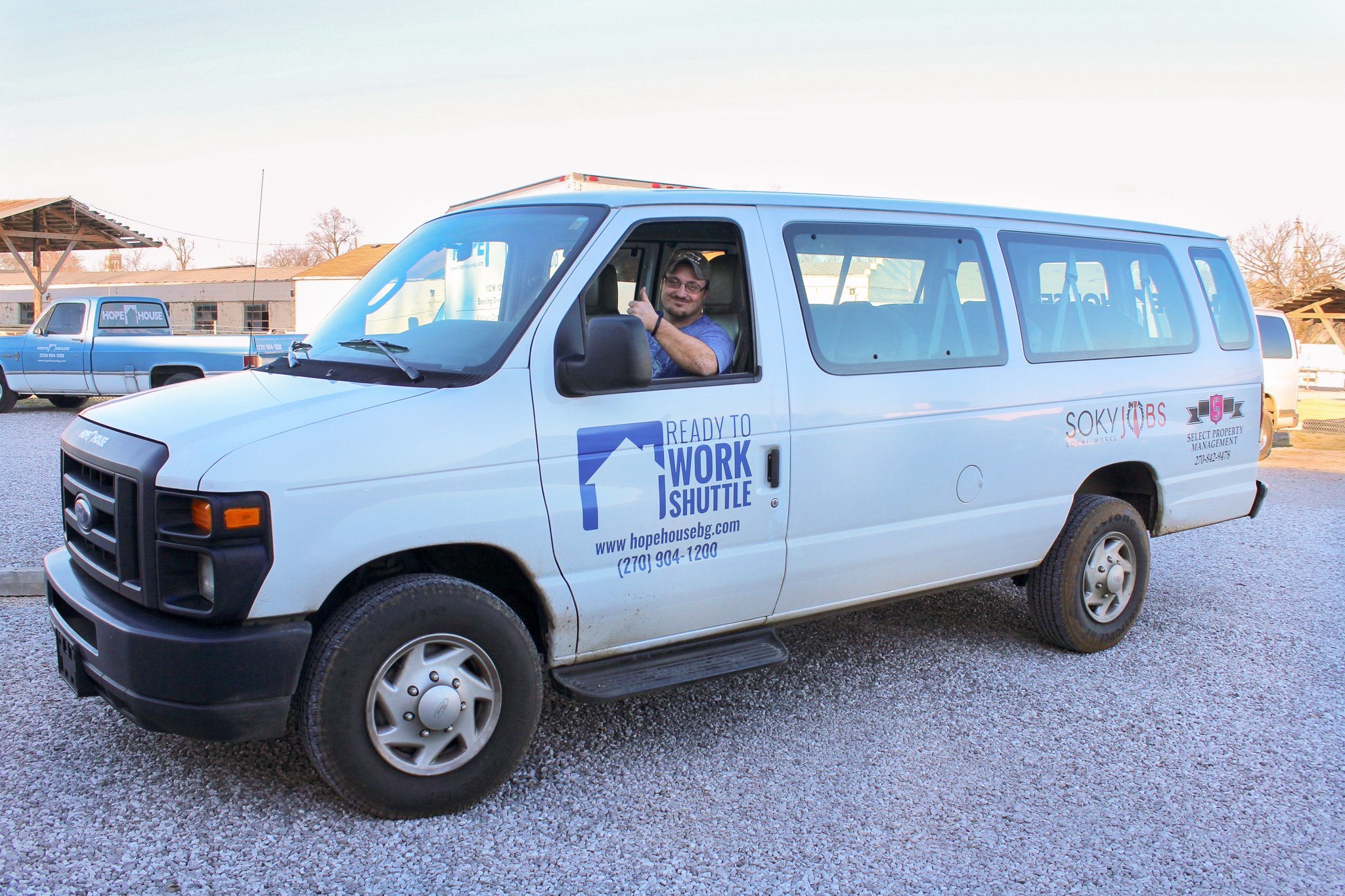
 Hope House of Bowling Green, Kentucky is removing that barrier with their

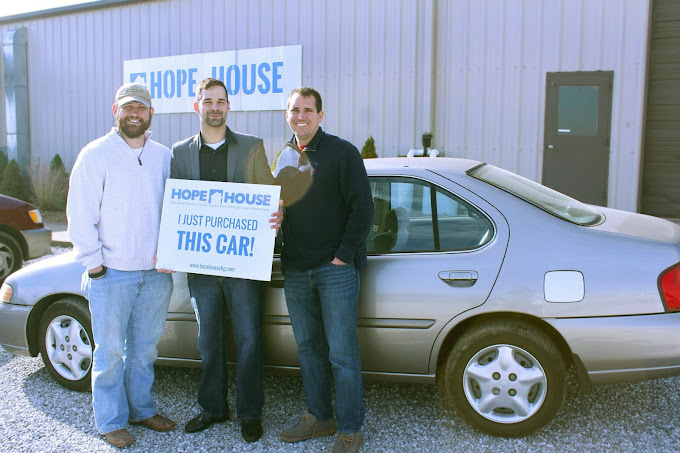 For those ready to own their own transportation, Hope House offers another service to their community – its