
The Power of Affiliation and Subsidiarity in Poverty Alleviation

 James Whitford
Co-founder & CEO
Read more from James
Listen to this article:
Check out True Charity Ennoble on Apple Podcasts and Spotify.
What Is the Principle of Affiliation?
“What’s really going on here?”
If you’re like me, you ask that question often. Too many times, people at our mission approach me with a need — and a story — and as I begin to ask other questions, it doesn’t take long before I’m asking that one.
“Who knows what’s going on?” is just as important.
The answer is “someone who really knows that person.” That’s why, before we help someone, we practice affiliation, which is finding out who might be more knowledgeable about the situation and have more responsibility to help. Failing to do so means we risk missing the mark of accurate charity and disrupting the right order of relationships that should exist in any healthy society. To learn more, visit university.truecharity.us.
Affiliation and Subsidiarity Go Hand-in-Hand
Affiliation in effective charity is closely tied to the Catholic social teaching called subsidiarity which means matters ought to be handled by the smallest, lowest, or least-centralized competent authority. In other words, before a local mission steps into help, has the person’s immediate family done their part? Before the government steps in, has the local mission rendered assistance, etc?
When larger, more centralized forms of charity step in, rightful responsibility and better forms can be pushed out. The tough part is we don’t always know when that’s happened — which is why asking the right questions is so important.
A Real Story of Affiliation and Subsidiarity in Action
Let me share an example: John sat at my desk, telling me his need and his story. And yes, I thought to myself, “What’s really going on here?” That led to another question: “Where’s your family? Do you have parents who are alive, [John]?” He said his mother lived in California, they hadn’t been in touch for years, and assured me she wouldn’t want to talk to him.
I asked if he had her phone number. He didn’t. I asked if he recalled where she lived. He did, so I looked her up in the white pages and found the number. I asked his permission to call her. He agreed and moments later, I was on the phone telling her he was sitting right across from me.
Then the magic happened.
She asked to speak with him. I wish you could have seen him as I handed over the phone and watched him say, “Mom? …” While I don’t remember the conversation, the result was amazing. Two weeks later, his sister flew in from California, stood in the foyer of our mission in southwest Missouri, embraced her long-lost brother … and took him home.
John was a chronically homeless man who came to our mission with some basic needs. Convinced he’d permanently burned the bridge to his family, he had no thought of asking them for help. With a little advocacy — and with regard for subsidiarity — the employment of affiliation paid off.
To be realistic, that doesn’t always happen. Yet there are many times it does, which means our first act of aid should be to call upon closer relationships to render help.
Three Practical Steps You Can Take to Apply This Principle Today
- When you engage someone in need, ask “Who’s most closely affiliated with this person?”
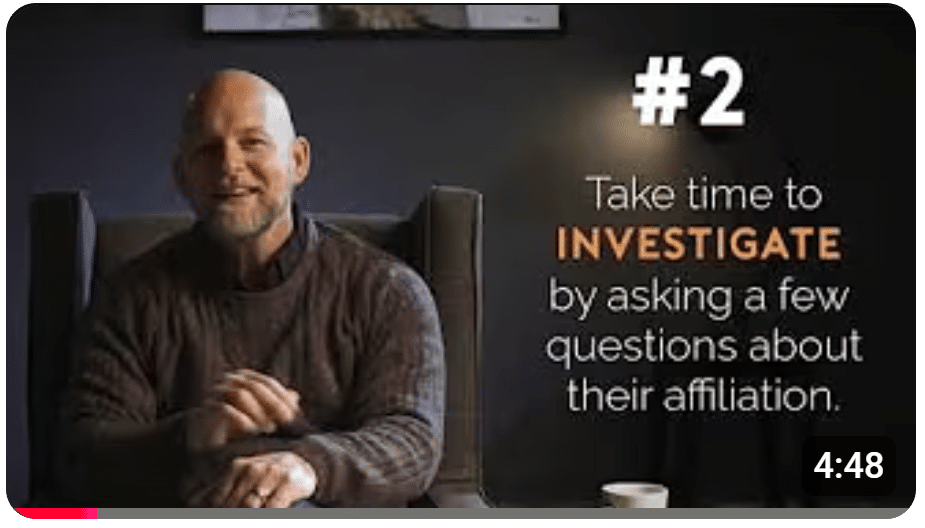
- Investigate by asking questions like, “Where’s your family? Do you have a church? Do you have a friend who’s helped you before?”
- Make a call. It can help you understand more and … who knows? It might result in an amazing moment of reconciliation.
Now let’s go out there today, fight poverty, and win.
Want to make your charity efforts more effective? Learn more about True Charity’s proven principles by following the Ennoble Podcast on your favorite listening platform.