
Leading Through Change: Lessons from Hope Counseling Center’s Bold Switch
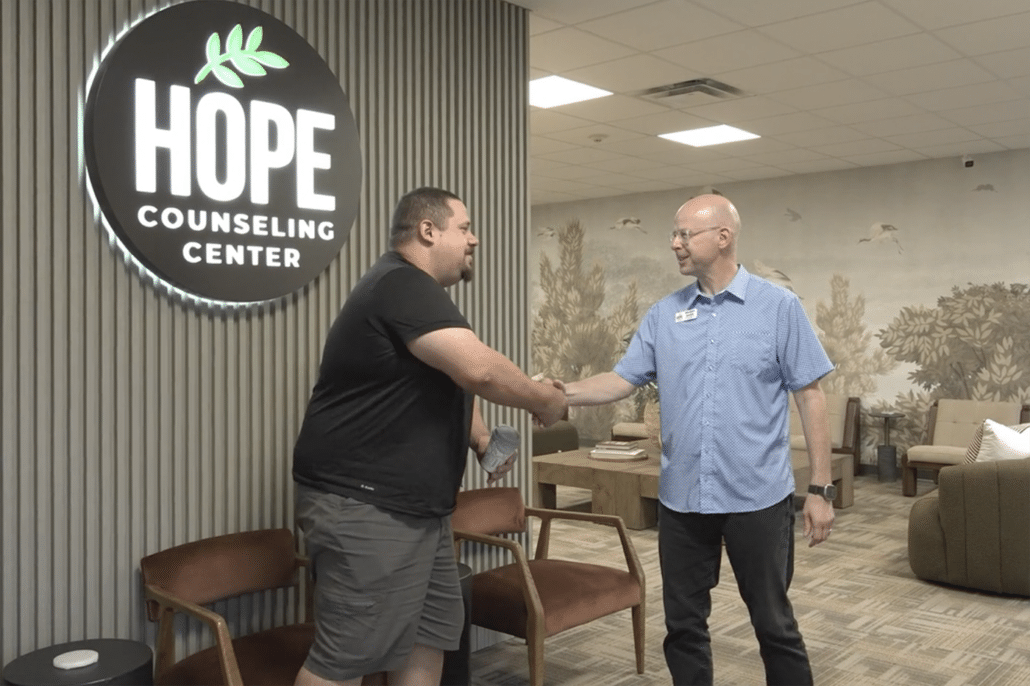 Hope Counseling Center in Branson Missouri
Amanda Fisher
Community Engagement Director
Read more from Amanda
Listen to this article:
Check out True Charity Ennoble on Apple Podcasts and Spotify.
Many nonprofit and ministry leaders serving people in poverty eventually come to a difficult crossroad: Realizing their current model is ineffective and/or unsustainable, they face changing what they do — or closing for good. If they choose the former, knowing how to navigate that change can be unclear and overwhelming.
True Charity Network Member Hope Counseling Center in Branson, Missouri (formerly Faith Community Health), is an example of how to successfully make that transformation with courage, clarity, and purpose.
Founded in 2009, FCH launched to address a clear need in the community: affordable primary care for working families who earned too much to qualify for Medicaid but were still uninsured or underinsured. For years, the clinic effectively and relationally filled that gap. But when Missouri expanded Medicaid in 2020, thousands of those families became eligible for coverage.
The result for FCH was unsustainable. Its patient base collapsed, leaving them with medical staff, equipment, and supply costs that outpaced incoming donations and patient fees by $30,000 – $40,000 per month. They faced a brutal financial reality: do something radically different or funds would run out and their doors would close for good.
Instead of clinging to the status quo, Executive Director Kyle David confronted the challenge head-on and advocated for change aligned with the community’s needs. He knew the mission — to address the need for affordable care — had not changed. But their strategy had to.
In early 2023, the Center piloted a fee-for-service mental health counseling program designed to expand access for uninsured individuals. Using a sliding-scale model based on family size and income, clients could determine their cost upfront through an online calculator, ensuring transparency and affordability.
A waiting list formed immediately, making clear the community’s most urgent unmet need was no longer primary healthcare. Instead, it was accessible, affordable mental health services. Armed with that data, the organization fully pivoted to its current mental health model, rebranding as Hope Counseling Center.
Their decision was confirmed immediately. In just three weeks, they received $350,000 in private grant funding — and within two years the center grew from one full-time counselor to five (fully booked within 60 days), plus two interns.
In the Summer of 2025, they added Bridge to Hope, a separate, donor-funded program for clients with no means to fund their mental health care. Once eligibility was verified through required documentation, clients were eligible for up to five sessions per year, with additional sessions approved on a case-by-case basis.
For organizations ready to tackle shifting their program to better serve the needs of the community, Kyle offers this advice:
- Know your data and use it to assess whether your current model is still the best way to serve your community. The Center’s financial situation, the impact of the state’s policy, and the results of the mental health pilot experiment were imperative for Kyle to know in order to advocate for long-term change. He used the data to make informed decisions and build a compelling case for action. Charitable efforts should be outcomes-driven, which means knowing and analyzing your metrics and using them to drive change rather than guessing about your next move.
- Big change requires trust in leadership, so build board buy-in through relationships and honesty. When Kyle originally presented the shift, HCC’s board rejected it. He responded by meeting one-on-one with board members to understand their goals for the organization, address their concerns, and answer questions. He clearly communicated the data and that maintaining the status quo was not a sustainable option. As a result of his efforts, the board eventually approved the pivot — unanimously. A founding board member even affirmed the new mental health model fulfilled the organization’s original mission, just through a different avenue.
- Serve clients with graduation in mind. Kyle says HCC’s goal “is to work ourselves out of a job” by being different from many counseling practices that rely on long-term, open-ended care. Instead, they focus on “graduating” clients when possible, helping them identify specific, attainable goals within six to eight sessions. (Those needing long-term care, i.e., medication or inpatient psychiatric assistance, are referred to professionals who can help). Afterward, clients may continue with occasional check-ins, such as monthly follow-ups, to maintain progress. This approach not only empowers clients to move forward but also prevents long waitlists, keeping services available to community members with the most urgent needs.
- Commit to team members’ health. In addition to the stress of HCC’s organizational changes, Kyle knew mental health work carries a high level of burnout. His team’s health was vital for success. He prioritized showing genuine care through an open-door culture, encouraging them to process their challenges and give feedback. He also ensured they had sustainable caseloads. HCC’s counselors typically have 28-30 sessions per week, while competitors often expect 40-45. That leaves room for decompression, conferring with colleagues, completing documentation, and making phone calls. The result has been high job satisfaction with ZERO staff turnover since launching the new model.
Whether the political climate, a government program, a natural disaster, or other event provokes the need for change, a shift in programs is never easy. It requires courage, humility, and a willingness to look at community needs with fresh eyes. Hope Counseling Center has demonstrated that shifts focused on real client needs, accompanied by thoughtfulness and transparency, can breathe new life into an organization and expand its impact far beyond what many thought possible.
Looking for more tools to help you engage more effectively with those experience mental illness? True Charity Network members have access to the Mental Illness and Trauma toolkit, which provides access to basic resources and training as it relates to those experiencing poverty. Network members can access the toolkit on the member portal. Non-members, learn more about the different toolkits we offer.
Image source: Hope Counseling Center in Branson, Missouri