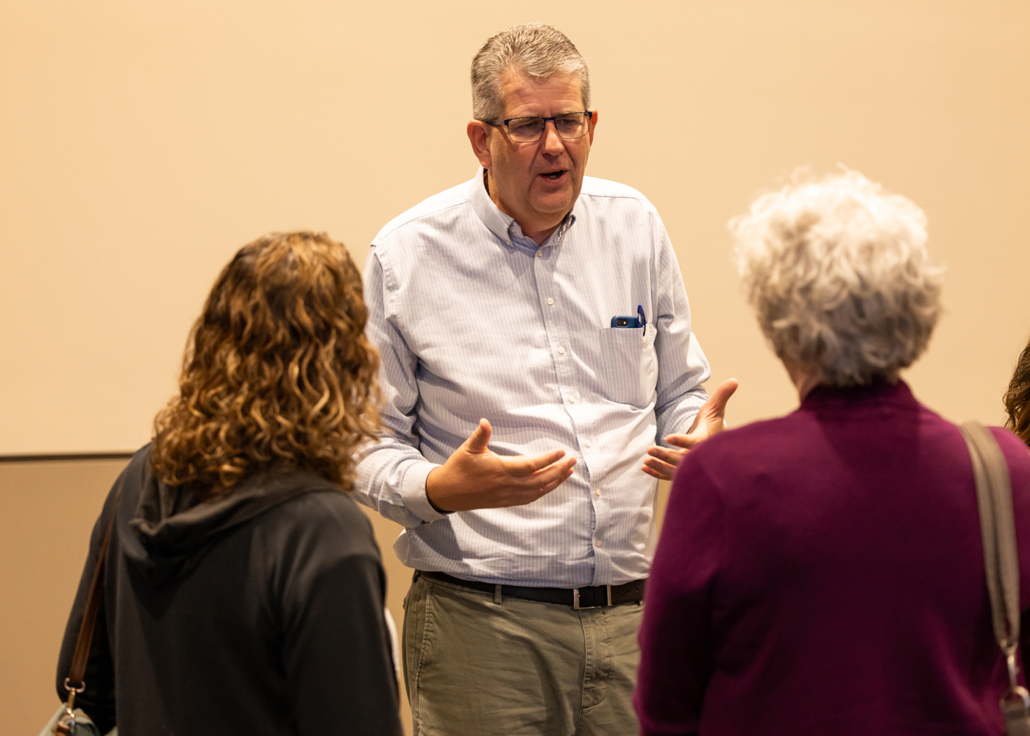

Nathan Mayo staff portraitNathan Mayo
Vice President of Operations & Programs
Read more from Nathan


Listen to this article:

Check out True Charity Ennoble on Apple Podcasts and Spotify.


It’s time to end this … system of exploitative lending that keeps Americans trapped in debt. Rates on all consumer loans and credit cards should be capped at 15%.” 

“I have such amazing service every time I go in to get a loan! I highly recommend coming in when you need a helping hand. They won’t let you down!” 

You shouldn’t be surprised both quotations are from people talking about payday lenders. One is Senator Bernie Sanders; the other is a representative Google review from a payday loan user.

According to a study by Pew Charitable Trusts, the average payday loan has a jaw-dropping 390% APR. In contrast, my standard-issue credit card charges 0% for the same two-week loan. Not only that, the average loan user rolls the loan over for five months and takes out eight loans a year, which costs him $520 in annual interest. Dig even deeper and you’ll find 69% of loans are used for recurring expenses and 8% percent for nonessentials like vacation and entertainment. This means most loans are used routinely to make ends meet, rather than for dire emergencies. 

With the poor spending so much in a cycle of dependence on high-interest loans, it looks like Sanders has a point. The system seems quite exploitative. Under such circumstances, it seems like the easiest way for the victims to exact a little revenge would be to post an anonymous review to warn others that “It’s a trap!!!” 

Yet, pick any city and search for payday lenders. I picked lenders in Fresno, California listed on Google Maps and scrolled through the top 50. Only five had a lower rating than four stars and many were five-star rated—with hundreds of positive reviews. As one said, “Almost thirty years I’ve been coming here, I can’t give enough five stars!” Compare that to banks in Fresno: 38 of the top 50 were rated lower than four stars. It’s not close, compared to other financial institutions, payday lenders are beloved by their customers.

So most customers like the system, but that begs another question: If customers like the system does that mean it’s good? 

Not necessarily. Just because people like something doesn’t mean it helps them achieve their long-term goals. Indeed, cigarettes may get good reviews—yet there are millions of chain smokers suffering from cancer or emphysema who regret their decision. 

On balance, there are responsible use cases for short-term loans. People with poor credit just getting started—or re-establishing themselves after a financial loss—may need a few days worth of margin to get by.

Yet the typical consumer uses them as an open line of credit—and the burning question is, “Why?” Ignorance is at least one factor, as people in poverty are measurably worse at financial literacy. Deceptive lender practices may be another contributor. Cultural norms are likely another, i.e., the same dynamic that drives many in the middle-class to remain in credit-card debt to “keep up with the Joneses.” 

Although market advocates prefer to believe the majority of human economic decisions are rational and that absolute bans do more harm than good, there’s decent evidence that banning payday lenders has net positive effects: When forced to quit, it shows that most former customers just choose not to use credit, rather than turn to a black market alternative. Similarly, the much-maligned Prohibition era effectively reduced mortality and violence, and improved health. And if junk food were banned, I’d eat less because while I enjoy it, I wouldn’t expend the energy to hunt down speakeasy burgers and fries. 

Yet, net positive effects are an insufficient reason to ban these lenders. Even Bernie Sanders doesn’t favor banning alcohol or grease ostensibly because he believes people ought to have some level of agency to make choices. 

Still “loan sharks’” immoral wealth at the expense of the poor seems to provide a rationale for restrictions on their lending practices, doesn’t it? 

Alas for the demagogues! Payday loans are a low-profit business. External industry analysis puts the average storefront lender’s profit margin at around 4%, half of a typical Starbucks franchise (9%) and three times less than mainstream commercial lenders (13%).

As counterintuitive as that seems, it makes sense. First, the loans are small and short-term, so anything less than a triple-digit annual interest rate would generate only a few pennies. Second, operational costs are very high, as the business model involves brick-and-mortar stores and full-time employees. Third, default rates are very high because most customers have been rejected by credit card companies and thus pose a high default risk. Finally, competition is steep, which forces payday loans to efficiently meet the demands of their customers. A typical small town will have half a dozen lenders and hundreds of online competitors. 

So three cheers for capitalism and 390% interest rates for the poor, right? 

Not so fast. 

The payday loan industry is a good example of a market limitation. Namely, free markets are based on exchange. They generate tremendous wealth through voluntary exchanges. However, if you can’t offer much value, you won’t receive much in return. That can leave low-income consumers in a vicious cycle of setbacks: They want to improve their situation but can’t recover from loans taken to cover the cost of flat tires, broken phones, or infected teeth. 

Politicians usually “fix” these problems by berating the market for its inability to provide unprofitable goods and services or by generating government subsidies for people in need. These aid programs are inevitably one-size-fits-all and create perverse incentives that don’t improve upon the market’s limitations.

Fortunately, the market and state are not the only shows in town. Civil society—a voluntary cooperative motivated by love—is a powerful third sector. If this sounds too good to be true, recall that hundreds of millions of Americans contribute very little to the market during the first 18 years of their lives, relying instead on their families’ generous support.

Other facets of civil society are well adapted to serve people in poverty. Extended families, neighborhood associations, religious communities, and nonprofits can provide education to those stuck in poor financial situations by poor choices … and offer better options to those for whom payday loans are their only viable source of credit.

Can private charity fundamentally change the financial system for the poor? 

It has in the past. Despite having drifted from their original purpose, pawn shops were invented by 15th century Italian monks to assist the downtrodden. Today, low-interest micro-loans and mutual lending circles carry on this tradition. Likewise, the True Charity Network is a national coalition of churches and nonprofits that empower people to exit poverty and lead flourishing lives. 

Part of those efforts center on helping people gain independence from payday loans. Member organizations offer relevant financial education, mentorship, transportation, affordable housing, awards for performance, scholarships, and temporarily subsidized food to help people get on their feet. Some even offer matched savings or no-interest cash advances in direct competition with payday lenders. This is accompanied by a gentle yet firm insistence that people do what they can to improve their situations.

Those who participate in such programs can end the use of routine payday loans via charitable options for borrowing in an emergency. This provides both a short and long-term solution, as growth in their relationships and financial stability eventually means they no longer need to rely on their church benevolence fund. While many in poverty already benefit from such solutions, many others could be helped if more Americans believed civil society is as competent to solve issues in poverty as Uncle Sam or Silicon Valley.

I would love to see payday lenders close up shop for the same reason smallpox specialists no longer exist—because there is no demand for their services. Such a shift is only possible when a robust civil society addresses root causes outside of the reach of both government programs and market innovations. 

This article was originally published by the Foundation for Economic Education.


Want to make your charity efforts more effective? Learn more about True Charity’s proven principles by following the Ennoble Podcast on your favorite listening platform. 


Cole Edmonson True Charity staff portraitCOLE EDMONSON
Marketing Specialist

Listen to this article:

Check out True Charity Ennoble on Apple Podcasts and Spotify.


When Charity Is Lonely

If you’ve been at this very long, you know charity done well can be lonely. 

Discouraged by the same clients returning for handout after handout, you may have read books such as When Helping Hurts, Toxic Charity, or The Tragedy of American Compassion and decided it was time to teach people to fish rather than keep handing them fish. You may have even felt the joy of helping them discover dignity and worth as they leave government welfare — and you want to see that kind of development take off across your city.

Or, you may be a philanthropist or policy thinker excited for the opportunity to join with others to amplify resources, focus efforts, and see more and more people flourish.

And yet … no one else in your town or county ‘gets it.’ Other ministries, nonprofits, and leaders around you keep taking the government money and expanding the handouts — and you end up feeling like a minority voice no one listens to about what effective help for the needy really looks like.

I encourage you to take heart. You are not alone. What if I told you there is a growing national collective of practitioners, thinkers, and supporters who are committed to teaching people to fish like you are — and they gather every year to support each other in that kind of charity work?

Come Join Us — and Find Your People

Each spring, hundreds from across the country gather for the True Charity Summit, a national conference of committed, like-minded charity givers (many of whom are True Charity Network members) to encourage and equip each other to embody compassionate charity. The Summit began in 2019 as a local training and networking event in southwest Missouri but has grown to over 250 attendees — and now takes place in larger metropolitan areas for easier attendee access.

Highlights from the 2025 Summit in Huntsville, Alabama included:

  • Three days filled with first-rate content and networking
  • Five general sessions featuring four keynote speakers
  • Six learning tracks featuring 30 breakout sessions
  • 20 exhibitors’ booths
  • 271 total registrants
  • 31 states represented

Our keynote speakers were Brian Fikkert (co-author of When Helping Hurts and Founder of The Chalmers Center), James Whitford (Co-founder and CEO of True Charity), Megan Rose (CEO of Better Together), and Jules Glanzer (Senior Consultant at The Timothy Group). 

Breakout sessions included:

As True Charity’s Marketing Specialist, I had the personal opportunity to interview over a dozen attendees at this year’s Summit. Over and over again I heard, “It’s so good to not be alone” and that attendees felt they had finally found their people. 

“The highlight for me …  is the relationships that you form, the access to people, to professionals, and to people who have experience …  and then being able to continue those relationships after the Summit.”

Nancy Eckhardt

Executive Director of Christian Job Corps of Madison County

Huntsville, AL


“The Summit has been for us just like a shot in the arm, a rejuvenation of energy of new ideas, of new connections, of new relationships that we can call on in a week or a month, of different organizations around the country who have been doing it longer than us and that we can learn from.”

John Ramthun

Executive Director of 6:8 

Sauk City, WI

Award Recipients

A Summit highlight is the recognition of organizations doing an outstanding job of effective charity work. Specifically, our Waypoint Awards honor True Charity Network organizations that have made significant strides on their path to effective charity through use of True Charity principles. Thus, they serve as worthy examples (or “waypoint markers”) for others on the same journey. 

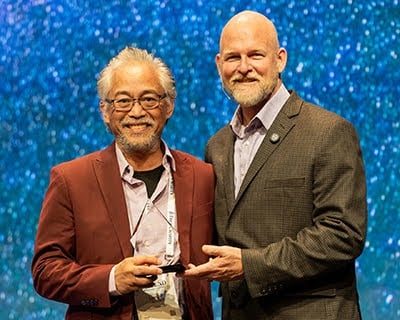
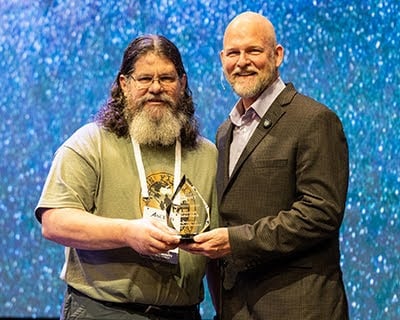
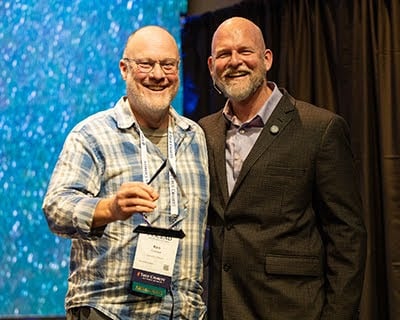
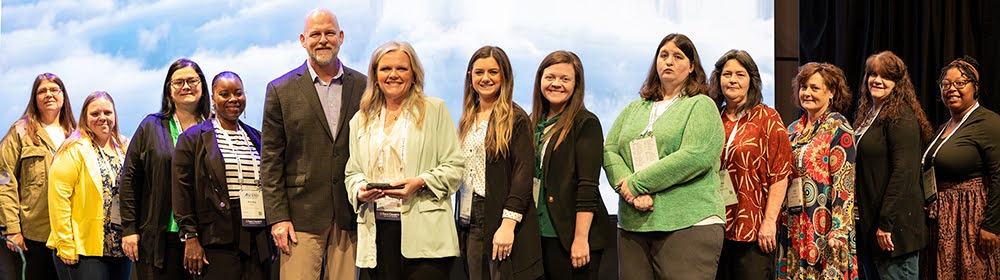
This year’s winners (pictured with True Charity Co-founder and CEO James Whitford) were:

LifePlan, Niles, Michigan

Highland Park Christian Church, Tulsa, Oklahoma 


Good News at Noon, Gainesville, Georgia

The Excellence in Charity Award recognizes an organization with an outstanding commitment to empowering, relational, and results-driven charitable practices. This year’s winner was:

The CARE Center, Huntsville, Alabama

Will You Join Us Next Year?

Summit 2025 was certainly one for the books. And while it has come and gone, network momentum continues to grow — which means real, lasting change is happening for more and more people! Next year, I hope you’ll join us so you can add your voice to the growing number of attendees eager to share how the Summit has had a massive impact on their organization. 

“The Summit is a place where you find like-minded people in one place who are doing your work. And it’s not about just dumping information. It’s a network of people who connect. … So you get inspired and go home, still connected because if you join the network, connection is what members do regularly. So come and attend the conference. It’s worth it.”

Lyndon Azcuna

Executive Director of LifePlan

Niles, MI


If you’ve been at it alone and are ready for a turning point, pencil in the True Charity Summit on your calendar for Spring 2026. Already planning to attend? Share this with someone who needs to join you next year. And, don’t forget to remind them they don’t need to wait an entire year to get connected — they can join the True Charity Network today!



James Whitford
Founder & CEO
Read more from James


Listen to this article:

Check out True Charity Ennoble on Apple Podcasts and Spotify.

If you’ve attempted to help others out of poverty for any length of time, chances are you’ve run into a question that no amount of concerted effort will make go away. It’s one that’s plagued just about everyone good-hearted and giving enough to try to make a difference:

“Is this doing anyone any good?”

Handouts lead to more handouts — to the same people. More handouts lead to expectations — from the same people plus others they tell about the stuff they’re getting. Expectations eventually lead to dependency that traps them in a hopeless cycle of enslavement to “what others can do for me.” 

Twenty years into poverty alleviation, I’ve seen it — and seen it everywhere. That’s why I’ve shared my thoughts in my new book, The Crisis of Dependency: How Our Efforts to Solve Poverty Are Trapping People In It And What We Can Do To Foster Freedom Instead. 

In the following excerpt, I share one of the most valuable lessons we can learn in moving away from that question so we turn our well-intentioned effort into truly effective charity. As I point out, doing so means moving one step closer to bringing justice to those we serve: 

Every few months, a handful of students from our men’s long-term recovery program spend a week with me and my wife. We have morning devotions together, eat together, work outdoors together, and enjoy time fishing, throwing horseshoes, or laughing around a campfire. These men all meet the standard definition of poverty, but there’s no sign of that during our week together. It’s seven days of sacrifice, effort, and solidarity rooted in compassion, responsibility, and relationship. These means to an end become an end in itself — justice. This isn’t easy but it’s beautiful. It is to desire being with more than doing for.

Bruce gets this. He lives in White Clay, Nebraska, with his wife, Marsha. They founded a ministry to help the Lakota Natives on the reservation in Pineridge, South Dakota. This particular reservation is one of the most impoverished areas in the Western Hemisphere, rivaled only by Haiti.

Once, Bruce and I were in his truck heading north from White Clay to Pineridge, and he was lamenting the constant barrage of short-term mission trips. He said something I’ve remembered for years: “James, I want people to stop coming and doing for the Lakota people. I want them to come and be with the Lakota people.” After living there for years, Bruce and Marsha have learned that good intentions often result in a lot of activity, but that doing for rather than being with is a means that falls woefully short of justice.

Bruce and Marsha have the hearts we all need — hearts to trade short-term, long-distance mission trips for short-distance, long-term relationships. And it is in those relationships that we get close enough to understand the real need. There are no “distant” fixes for poverty…

The last time I visited the Vietnam Veterans Memorial, I was there to see one specific name on a wall of 58,318 names memorialized for the ultimate sacrifice they paid on the battlefield: William H. Pitsenbarger, or “Pits.”

On April 11, 1966, thirty-five miles east of Saigon, twenty-one-year old United States Airforce pararescueman William Pitsenbarger was lowered through the trees by a helicopter into a firefight where injured Army soldiers were pinned down. He tended to their injuries and helped soldiers into the lift basket. When the helicopter began taking on enemy fire, the pilot called Pitsenbarger to return to the chopper, but Pits waved him on, remaining with the other wounded soldiers, improvising splints and stretchers out of vines and saplings. It’s estimated that he saved sixty men that day before he was shot and killed by a Viet Cong sniper.

Pitsenbarger knew the only way to help these men was to be in the fight with them. Dumping aid from a chopper would have been futile. Sure, they could have simply dropped crates of bandages, tourniquets, and morphine syringes, and then they could have flown away saying they did something for the injured. But Pits knew that in order for each soldier to receive what he really needed, he needed to be with them. Each man required individualized triage for his unique injury.

In other words, to do for them well, he had to be with them first.

The same is true for impoverished individuals. There is no way to shortcut the process of helping people out of poverty. Ultimately, it requires someone who desires “being with” before “doing for.” Unfortunately, our country and communities have a tremendous number of energetic planners who want to do something about poverty more than they want to be with people in poverty. And as long as that inversion persists, the poor will never receive the relational inspiration or the social capital required to escape poverty; they will never be welcomed into circles where new opportunities are born; and they will never be encouraged toward avenues that create wealth.


Help people gain lasting freedom from dependency! For more of these key principles, order your copy of James’ book today.  (Also available on Amazon.)


Bethany Herron staff portraitBETHANY HERRON
Vice President of Education
Read more from Bethany


Listen to this article:

Check out True Charity Ennoble on Apple Podcasts and Spotify.


“We just knew that we weren’t doing it well, but we weren’t really sure what to do. True Charity helped us find some of those answers.”

This feedback from one of our network members is a common chorus across our community. When I first joined the True Charity team, I felt it too. As a ministry spouse with years of experience in church benevolence, I always knew what we did wasn’t working. At the time, I chalked it up to living in a fallen world. “We live in a brokenness,” I often thought, “so there’s nothing more we can do.”

I’m glad I was wrong.

What a small vision I had of God’s redemptive work! And, what a surface-level understanding of the implications of mankind made in God’s image (the Imago Dei). Like many of our network members, I was fueled by compassion. Yet, I didn’t understand that how I practiced charity — and equally important, my hope for those in poverty — truly mattered. 

My charity was meant to be broader than simply sharing the Gospel and feeding the hungry. God created every individual with intrinsic value — and they aren’t hopeless. Quite the opposite — God’s heart for the poor is restorative. May our imaginations be awakened to consider the beauty to be found when relationships with God, others, self, and the rest of Creation are restored — not just for ourselves but for those in poverty. 


Where Do You Go When Something Feels Off in Your Charitable Practice?

“Without counsel, plans fail, but with many advisers, they succeed.” (Proverbs 15:22).

So, where should we go when something feels off? We seek counsel — from the Lord and from the Scriptures. But we should also seek it from others who have already figured out what works and what doesn’t.

One of the best places to find this type of community is the True Charity Network. It’s a hub for collaboration — a place to train, connect, and strengthen your poverty alleviation ministry — whether you’re not sure what to do next or have discovered something you must share with others.

Thinking back, I often wonder how our church’s benevolence programs would’ve changed if we had advisers in the field to learn from.

How to Tap Into the Resources Available

If you’ve ever explored one of our resources — whether it was a training video on mental illness or guidance on how to start a specific program — that information comes from our 220+ network members and resource partners who share what works (and what doesn’t).

But did you know this community doesn’t just exist scattered across the nation? Once a year, the True Charity Summit gathers practitioners like you to train, connect, and strengthen one another. 

Here’s What to Expect at the Summit

The True Charity Summit is more than just a conference; it’s a gathering of passionate individuals committed to seeing lives changed through effective, dignified charity. It’s a place where ministry leaders, nonprofit professionals, and advocates come together to advise one another towards poverty alleviation that leads to flourishing.

One past attendee put it this way:

“The Summit puts under one roof like-minded, servant-hearted individuals seeking guidance and direction on behalf of those they pray over in their daily walk. Sharing stories and best practices leads to problem-solving and inspiration by the Spirit. It takes a village to solve issues of this magnitude, and True Charity is a fabulous village resource!”

It’s simple. We are stronger together.

Where Has the Summit Been and Where Will It Be?

For years, Summit attendees gathered in communities close to Joplin, Missouri, near Watered Gardens, the rescue mission where True Charity began. But as the Network has grown, so has the reach of the Summit.

In April 2025, we’re taking it on the road — to Huntsville, Alabama!

With more space, more speakers, and more attendees than ever before, it’s set to be our biggest gathering yet. If you’ve been searching for advisors or wondering if there’s a better way forward, the answer is “yes” — and this is your chance to find that out.

What Does the Summit Content Look Like?

Each year, you’ll hear from dynamic, mainstage speakers who are experienced experts in the poverty alleviation space. 

In 2025, they include: 

  • Dr. Brian Fikkert — Founder of the Chalmers Center, Co-author of When Helping Hurts
  • James Whitford — CEO & Co-founder of True Charity and Watered Gardens Ministries, author of The Crisis of Dependency
  • Megan Rose — President & CEO of Better Together
  • Jules Glanzer — Senior Consultant at The Timothy Group, author of The Sound of Leadership

In addition, you’ll benefit from the networking and nitty-gritty that happens in over thirty breakout sessions.  

In 2025, you can choose from breakouts across five key tracks:

  • Building New Programs — Learn how to launch programs that truly empower people (rather than create dependency).
  • Program Refinement — Assess, measure, and improve your current programs for deeper relational impact.
  • Fundraising & Volunteerism — Develop strategies for attracting, equipping, and retaining donors and volunteers who believe in your mission.
  • Influence — Discover how to expand impact beyond your walls through advocacy, community engagement, and awareness strategies.
  • Infrastructure — Strengthen your mission from the inside out through leadership, sustainability, and avoiding burnout.

If you’ve been searching for a gathering of charity practitioners to learn and grow with – ones passionate about helping others move from temporary aid to true transformation, the annual True Charity Summit is for you! 

To learn more about the True Charity Summit, visit truecharity.us/summit.